Quotes

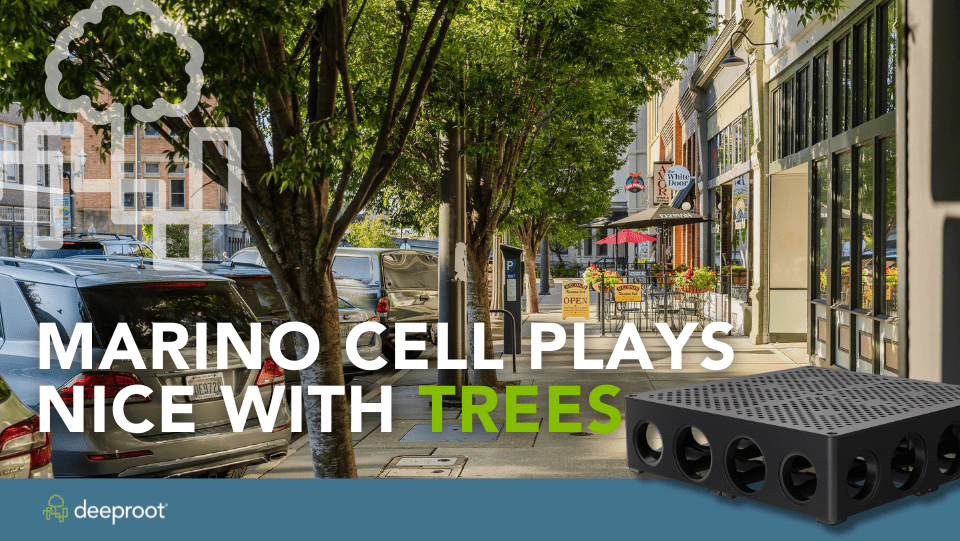
Marino Cell Plays Nice with Trees

Introduction Underground stormwater storage systems don’t always play nicely with trees. They’re typically designed as siloed subsurface systems — isolated from surrounding soil and root zones to reduce risk and simplify performance. Trees, on the other hand, require space, soil volume, and access to water to grow and thrive. The result is a disconnect. Stormwater… More
Read Article

Ask Jim Urban

Jim Urban, FASLA, is an expert on urban trees and soils — as well as being intimately involved in the development and design of the Silva Cell system. Author of the industry bible on urban forestry, Up By the Roots, Urban has also proven to be a fountain of wisdom for various inquiries about trees,… More

Read Article

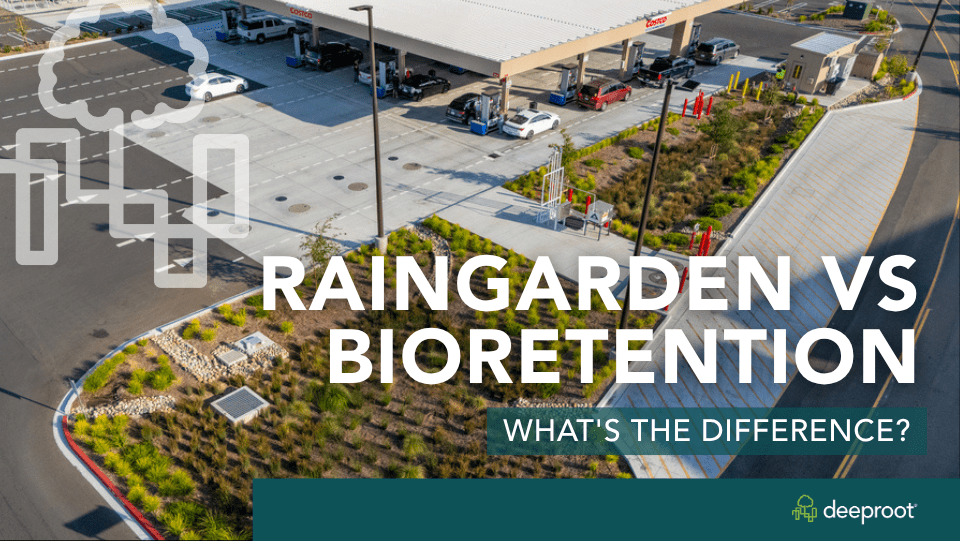
What’s the Difference Between a Raingarden and Bioretention?

Raingardens and bioretention facilities have much in common: both use soil and vegetation to collect, slow, and filter stormwater runoff. That is why the terms are frequently used interchangeably — even by stormwater agencies. Generally, however, rain garden describes a smaller and less engineered landscape feature, while bioretention refers to a stormwater practice designed to… More

Read Article

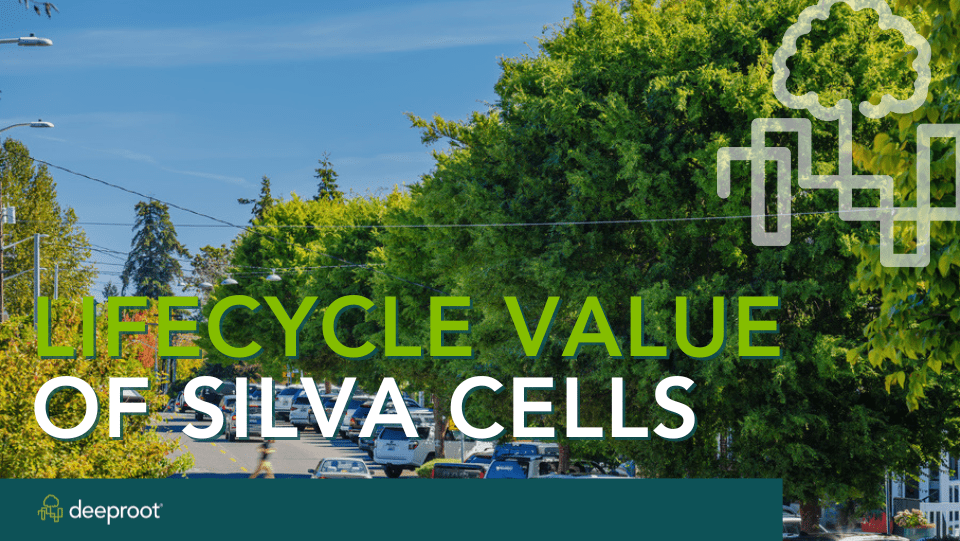
Lifecycle Value of Silva Cells: Research Proves Long-Term Value

Download our research overview document here. Today, the idea that urban trees need real soil volume to reach maturity is no longer controversial — it’s widely accepted among urban foresters and landscape architects. We also recognize that providing that soil volume, especially with systems like Silva Cells, represents a meaningful upfront investment. But decades of… More

Read Article

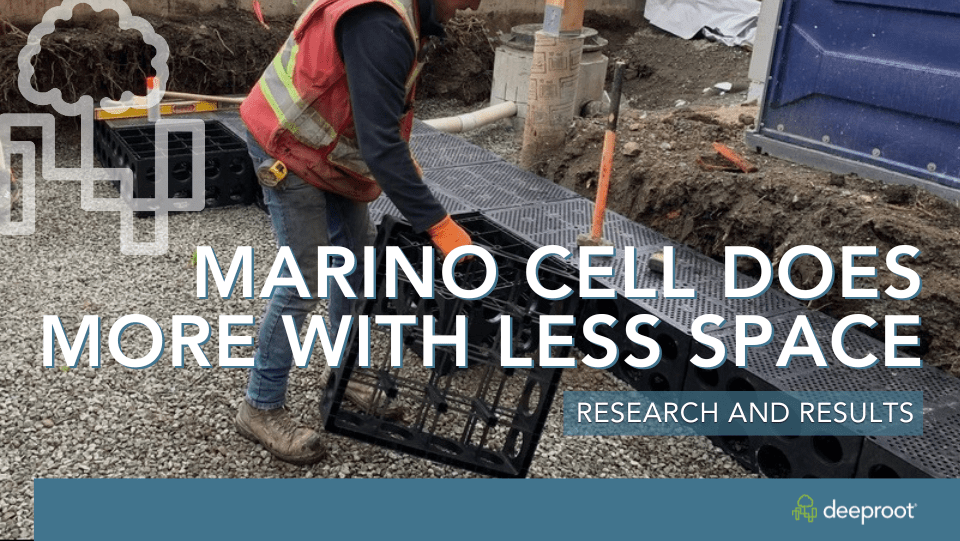
Marino Cell Does More with Less Space: Research and Results

The Challenge of Limited Space As cities grow denser and redevelopment accelerates, space is becoming the defining constraint of modern design — and as hardscape surfaces increase, stormwater management becomes more critical. But traditional stormwater infrastructure requires generous footprints (like raingardens) or deep excavation (like large storage tanks): two conditions that are often unavailable in… More

Read Article

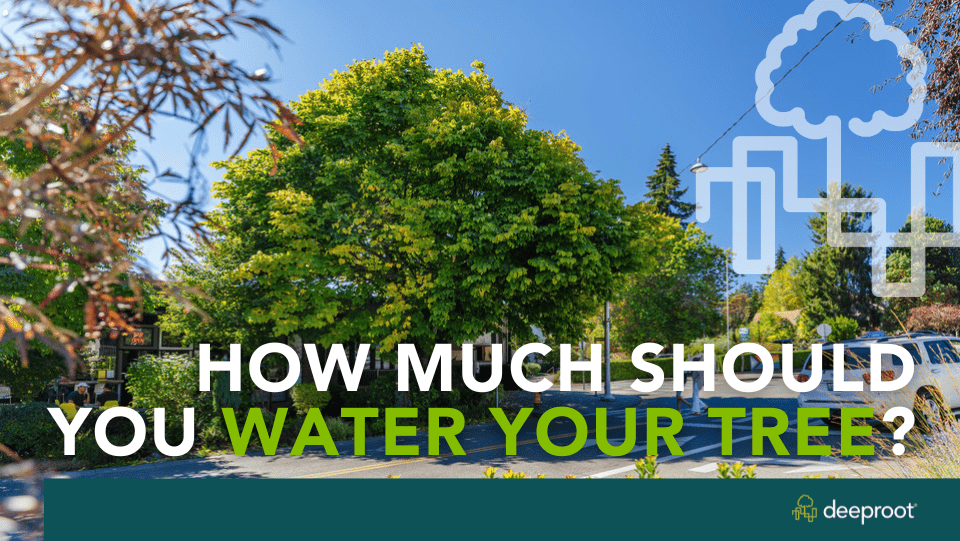
How Much Should You Water Your Tree?

Healthy trees can grow in even the most challenging urban environments, provided they receive enough water, soil, sunlight, and appropriate care. Vigorous urban trees help keep people healthier, cool cities during the summer, reduce energy use, support wildlife, raise property values, and make communities more welcoming. Yet heat and drought in many parts of North… More

Read Article

How Do Trees and Soil Help Clean Stormwater?

It is hard to tell just by looking at a tree-lined street, but soil and its microbes — in combination with trees — can form a powerful system for improving stormwater quality. Some pollutants are filtered or retained by soil, while others are taken up or transformed by plants and microorganisms. The U.S. EPA’s 2023… More

Read Article

Nature Does the Work

Introduction People often ask us how Silva Cell grows large trees and treats stormwater. The truth is: it doesn’t. At least not by itself. Silva Cell isn’t some magical, mechanical device that generates roots or filters water on its own. Instead, it’s a simple yet powerful framework that lets nature perform at its best, even… More

Read Article

Does Bioretention Still Work When the Ground Freezes?

The following Q&A on freezing grounds and bioretention was consolidated from three informational blogs by Peter MacDonagh, FASLA.   Bioretention is widely used to slow, filter, and infiltrate stormwater. But what happens in winter? Does frozen soil prevent infiltration? Do dormant trees and plants stop the water-quality treatment process? Research from Minnesota, New Hampshire, Connecticut,… More

Read Article

A Case for Trees as Municipal Assets

Introduction Why are streetlights and sidewalks considered municipal assets — but not trees? Most cities manage detailed inventories of their physical infrastructure: light poles, sewer lines, benches, trash bins, snowplows. These things are logged, valued, maintained — and budgeted for. They’re viewed not just as integral components of the public realm, but as long-term investments… More

Read Article

New SuDS Standards, Same DeepRoot Performance

DOWNLOAD A 1-PAGE PDF VERSION OF THIS CONTENT HERE Future-Proofing Your Stormwater Projects The UK’s updated SuDS standards, released in June 2025, outline clear priorities for managing stormwater in new developments — these principles include managing runoff at the source, mimicking natural drainage, reducing flood risk, improving water quality, and supporting long-term biodiversity and amenity…. More

Read Article

Dotted and Site-Smart: The Future of Green Stormwater Management

Introduction In traditional site design, managing stormwater often means carving out space for one massive underground tank. These vaults are designed to collect and hold stormwater until it can be slowly released or treated — but they come with major spatial and logistical challenges. In today’s urban environments, with space at a premium and infrastructure… More

Read Article

Join Our Newsletter

Sign up to our newsletter to stay up-to-date on news, updates, and product information.

Explore our archives

Interested in a DeepRoot product? Get a quote today.

Request a Quote [email protected]

Tel: 415 781 9700
Toll Free: 800 458 7668
Toll Free: 800 277 7668
Fax: 415 781 0191


Sign up to our newsletter to stay up-to-date on news, updates, and product information.