

Introduction
People often ask us how Silva Cell grows large trees and treats stormwater. The truth is: it doesn’t. At least not by itself.
Silva Cell isn’t some magical, mechanical device that generates roots or filters water on its own. Instead, it’s a simple yet powerful framework that lets nature perform at its best, even in the most challenging urban environments.
Nature already knows what to do — grow strong trees and filter rainwater. The problem is that in hardscape-heavy cities, we’ve taken away its ability to function the way it does in forests, fields, or wetlands. Silva Cell bridges that gap by creating space for nature to do what it does best. Let’s explore how.
Do Silva Cells Grow Trees? Not Exactly.
There’s a common misconception that Silva Cells somehow “make” trees grow or “clean” water like a piece of machinery. But that’s not what they are. Silva Cells are a load-bearing structural module designed to support the pavement, sidewalks, and parking zones above.
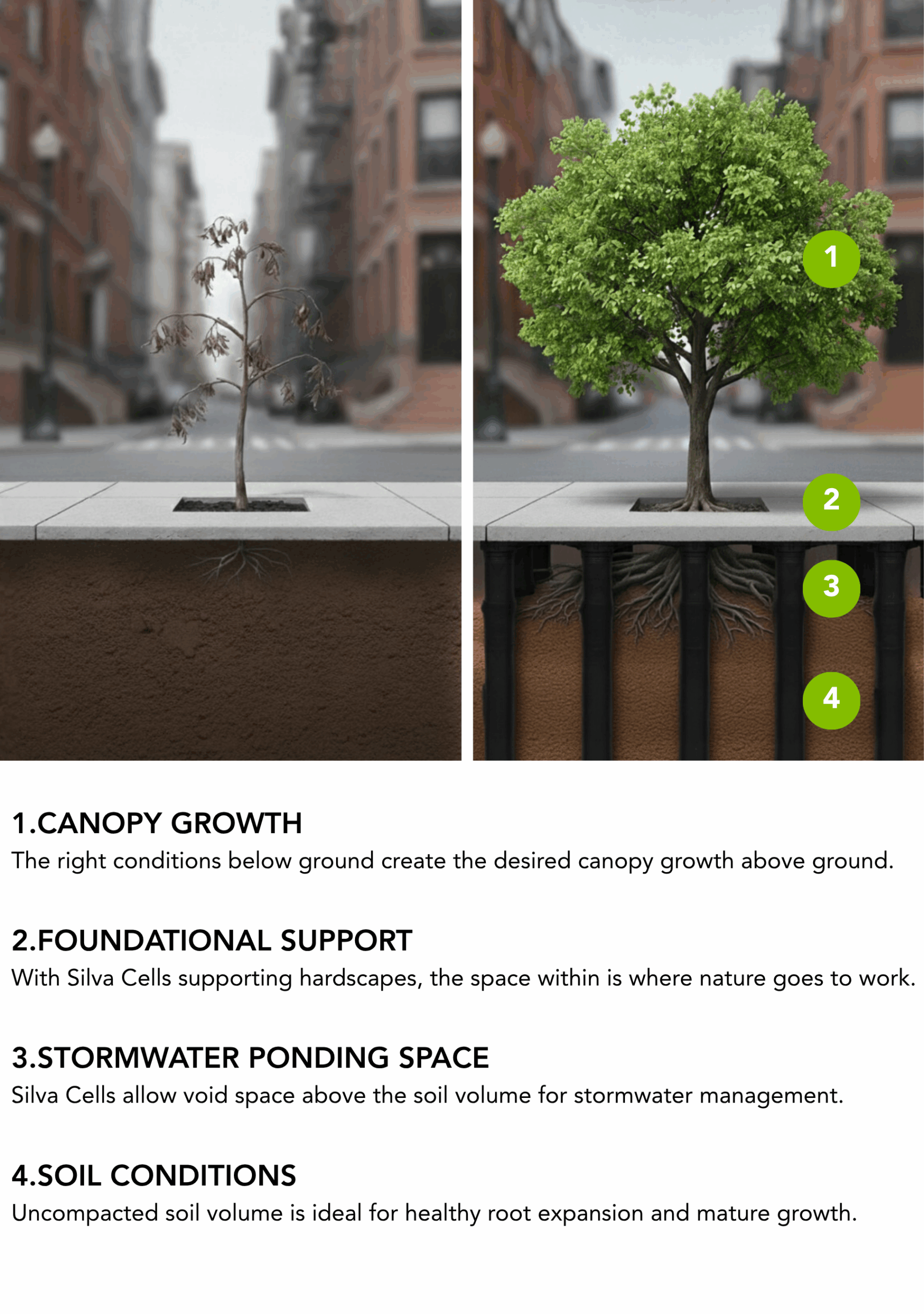
When soil has to support these hardscapes, it must be compacted to withstand heavy surface loads. That level of compaction makes the soil dense and airless — conditions that are inhospitable to tree roots. Roots need pore space for oxygen, water movement, and expansion. In compacted soil, they struggle to grow, often staying shallow, circling in limited space, or failing altogether.
By taking on that foundational task, Silva Cells free up the soil below from having to support the hardscapes above. That soil, once relieved of its burden, can return to its natural role — supporting tree roots and filtering water. Silva Cells don’t grow trees; they simply make it possible for trees to grow in places they otherwise couldn’t.
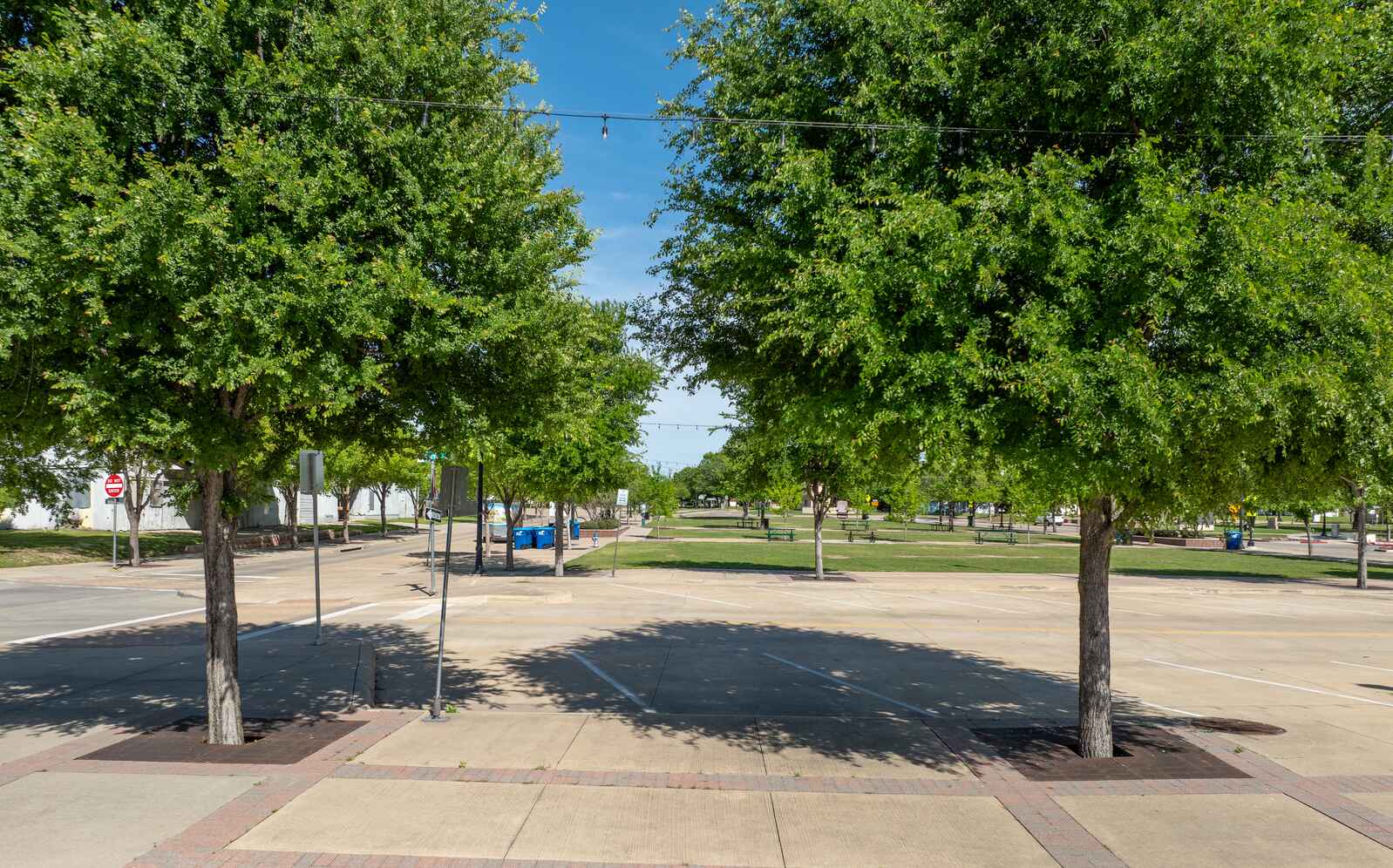
Sidewalk trees like these in Rowlett, Texas, are given the soil conditions they need to thrive with Silva Cells supporting the adjacent hardscape.
Create the Space — and Watch Nature Thrive
Nature already knows what to do. In forests and fields, soil breathes, roots expand, rainwater filters into the ground, and microbial life quietly keeps everything in balance. Trees grow tall and resilient not because of any invention, but because the conditions beneath them are healthy and uncompacted.
But in cities, those natural systems are disrupted. Soil is paved over, compacted to support heavy surfaces, and stripped of its ability to hold water or sustain roots. Rainfall races across concrete instead of soaking in, and trees are forced to survive in hostile, shallow pits. Without intervention, nature simply can’t perform the way it was designed to.
And that’s the real job of Silva Cells: to create protected void space underground where uncompacted, healthy soil can exist in an urban environment. Once Silva Cells establish this protected space, nature takes over. Roots spread and rainwater seeps into soil instead of racing across pavement. None of this requires mechanical intervention — just the conditions nature needs to do what it’s always done.
Soil is the Key
Healthy, uncompacted soil is the real engine of urban resilience. With Silva Cells, any type of soil can be placed within its void space — including ped-friendly, unscreened soil, which is most beneficial for tree health. This optimized soil can then perform more like nature intended, supporting both roots and stormwater management:
- Trees: Soil provides oxygen, water, and nutrients — the essentials for root health and long-term canopy growth. The larger the soil volume, the larger and healthier the tree.
- Stormwater: Soil acts as a living filter. As runoff passes through, soil particles capture pollutants while microbes break them down. Flow slows naturally, protecting downstream pipes and waterways.
In the end, it’s not the Silva Cell that grows trees or cleans water: it’s the soil. Silva Cells simply protect and optimize it so nature can do the job it was built to do.
How Silva Cells Let Nature Do the Work
Nature + Infrastructure
In modern cities, every square foot of space is contested by utilities, buildings, and transportation. That’s why Silva Cells are so valuable: they are an engineered piece of infrastructure that supports natural systems.
Installed beneath sidewalks, plazas, or streets, Silva Cells allow nature to coexist with dense development. They support resilient tree canopies that shade and cool communities. They manage stormwater on location, reducing the burden on aging sewer systems. And they do it all without requiring additional land or sacrificing hardscape space above.
The result is a partnership: engineered infrastructure protecting the needs of people, while natural systems provide the resilience, beauty, and sustainability that only nature can deliver.
Conclusion
Silva Cells don’t grow trees or clean water. But what they do do is just as important — they create the conditions for nature to perform in places it normally couldn’t.
By protecting soil and giving it space to function, Silva Cells allow roots to expand, trees to thrive, and stormwater to be filtered naturally. They aren’t a replacement for nature — they’re a quiet, structural partner that lets nature do the work it’s always done best.

Thank you for the article, Jacob Westlin. I appreciated your clear and scientific explanation of how the Silva Cell system works ; it doesn’t replace nature but allows it to function freely within the urban environment, making it a beautiful example of balance between technology and nature.