

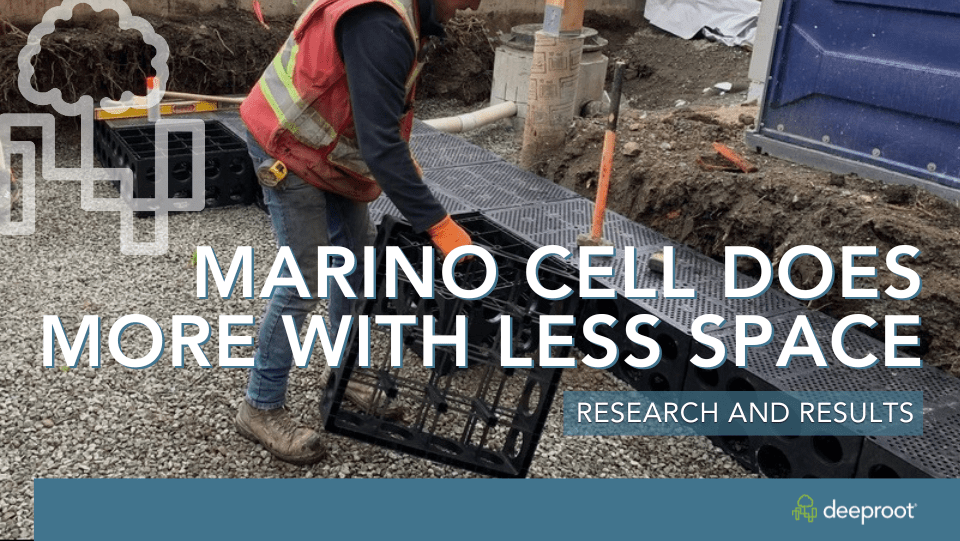
The Challenge of Limited Space
As cities grow denser and redevelopment accelerates, space is becoming the defining constraint of modern design — and as hardscape surfaces increase, stormwater management becomes more critical. But traditional stormwater infrastructure requires generous footprints (like raingardens) or deep excavation (like large storage tanks): two conditions that are often unavailable in today’s built-out urban environments.
These limitations don’t reduce the need for stormwater solutions. On the contrary, regulatory standards around detention, infiltration, and water quality are only becoming more stringent. Designers and engineers must meet high performance expectations within footprints that feel like they’re shrinking every year. In many cases, the limiting factor is not budget or design intent, it’s the simple reality that there’s nowhere to put stormwater.
This tension is pushing the industry toward systems that work smarter rather than bigger. Solutions that can compress performance into small or irregular spaces, work around existing utilities, and install close to the surface are no longer “nice to have” — they’re essential. And this is exactly the problem Marino Cell was designed to solve: a system whose success in constrained environments is now supported not only by real-world installations, but by independent research that confirms just how effectively it performs in the spaces where stormwater has never traditionally fit.
Marino Cell Was Built for This
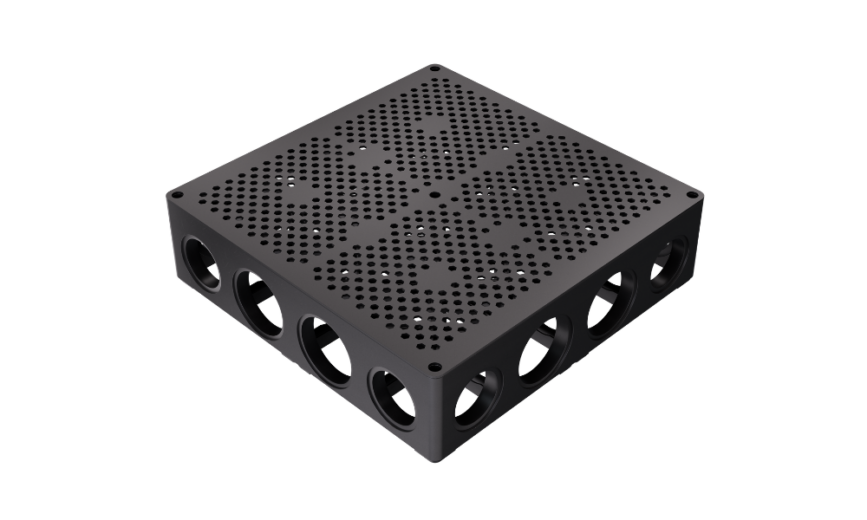
Marino Cell was engineered specifically for the sites where stormwater has traditionally struggled — or failed — to fit. Unlike vaults, tanks, or deep bioretention systems that require substantial excavation, Marino Cell thrives in the tight, the shallow, and the irregular. Its independent internal frame and modular structure make it adaptable to the spaces that used to be written off as “too complicated” for stormwater management.
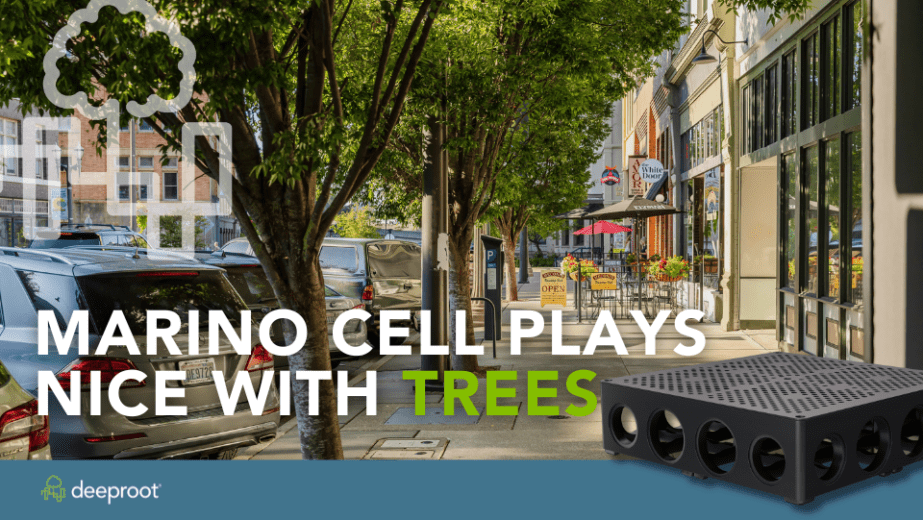
One of the defining features of the Marino Cell is its versatility: it’s both a zero-footprint solution (unlike surface-level raingardens) and a modular, shallow system that can capture stormwater where it falls (unlike a large, centralized tank). Designers and engineers no longer have to choose between performance and placemaking — Marino Cell allows both.
Its shallow installation capability is equally transformative. With minimal cover, the system works in constrained corridors, retrofit streetscapes, urban redevelopments, and sites with existing utilities that make deep systems impractical. And because it’s modular and stackable, Marino Cell can be configured to fill oddly shaped footprints or wrap around underground obstructions, allowing designers to build stormwater capacity in the negative space of a project rather than carving out dedicated real estate.
Together, these attributes unlock opportunities to:
- Add stormwater capacity to infill sites that previously had none
- Preserve surface-level function and public realm quality
- Build systems around utilities instead of relocating them
Proof in Practice: Emerson Street and Orchard Avenue
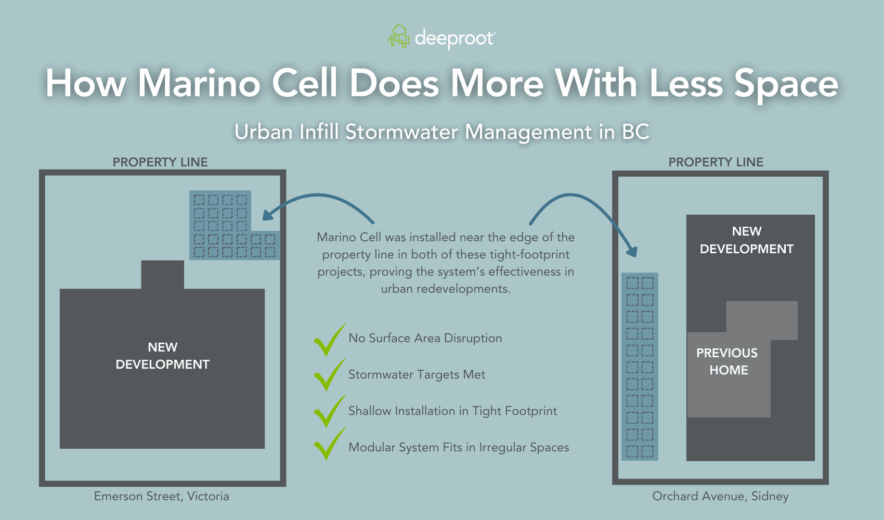
While the design intent behind Marino Cell is clear, its true value is revealed when it meets the on-the-ground complexity of real urban projects. Two recent installations — Emerson Street in Victoria and Orchard Avenue in Sidney, both in British Columbia — highlight just how effectively the system performs under constrained conditions.
Both sites were compact infill housing redevelopments tucked within already-built environments. Both had little to no available surface area for a traditional raingarden. And in both cases, designers needed stormwater management that wouldn’t disrupt the surface design — patios, walkways, and yard space still needed to function exactly as intended.
Marino Cell stepped into each of these conditions with the same advantage: it delivers performance in the spaces that are normally unavailable, unusable, or overlooked entirely. These BC installations demonstrate the system’s ability to turn constrained geometry into meaningful stormwater capacity.
Across both projects, Marino Cell enabled:
- Effective stormwater storage and infiltration within extremely limited footprints
- Shallow installation that avoided deep excavation
- Full preservation of surface use
- Modular flexibility that allowed cells to nest within irregular underground spaces
- Reliable performance that met municipal stormwater requirements
Backed by Independent Third-Party Research
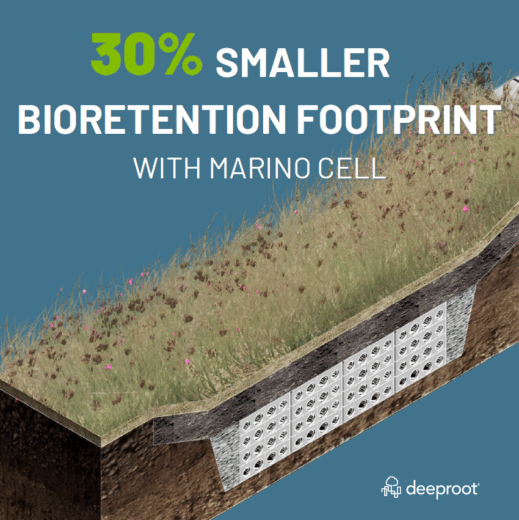
Real-world success is powerful, but we also sought independent verification to confirm the performance value of Marino Cell. A recent third-party study conducted by Geosyntec Consultants evaluated the system’s hydraulic and spatial efficiency compared to a traditional bioretention system. The results confirmed what field installations were already demonstrating: Marino Cell can produce equal or better stormwater performance with a significantly smaller footprint.
One of the study’s most compelling findings is that a raingarden paired with a two-deep Marino Cell system could maintain the same stormwater performance while reducing the surface bioretention footprint by approximately 30%. This is a substantial gain for designers working within tight space, redevelopments, alleys, or constrained streetscapes. Less surface area dedicated to stormwater means more flexibility for amenities above.
The study also validated the ability of Marino Cell to operate effectively at shallower depths, sustain structural integrity, and maintain infiltration and storage functions even when integrated beneath hardscape. In other words, the system not only works — it works efficiently, reliably, and measurably. Key outcomes from the research include:
- Equivalent stormwater performance with a significantly reduced surface footprint
- Verified effectiveness in shallow and structurally restricted conditions
- Strong applicability to urban infill, redevelopment, and SuDS/LID-driven designs
When field results and independent research point in the same direction, the message is clear: Marino Cell is redefining what compact stormwater solutions can achieve.
Looking Ahead: What Could You Do with More Space?
Stormwater management has historically been constrained by the idea that performance requires dedicated area. But the rise of compact, modular, high-capacity systems like Marino Cell opens doors that designers couldn’t walk through a decade ago. If stormwater can be tucked beneath paving, woven between utilities, or nested into leftover site geometry, space becomes an asset — not a barrier.
This creates a new kind of design opportunity. Plazas and patios can double as infiltration zones. Narrow boulevards can take on storage capacity without altering their form. Small residential developments can meet stormwater requirements without sacrificing usable outdoor space. And in infill projects, where every inch counts, compact systems can make the difference between “not feasible” and “fully compliant.”
The question now isn’t whether Marino Cell works in small spaces — it’s how many new design ideas those small spaces can support. We see this blog not as the end of a conversation, but as the start of one.
So, how will you use it?
What spaces on your next project might become stormwater assets instead of stormwater obstacles? How might compact, research-backed systems unlock new layout possibilities or help meet evolving SuDS/LID requirements?



Leave Your Comment