Quotes

Illustrated Guide To Using Trees and Soils to Manage Stormwater

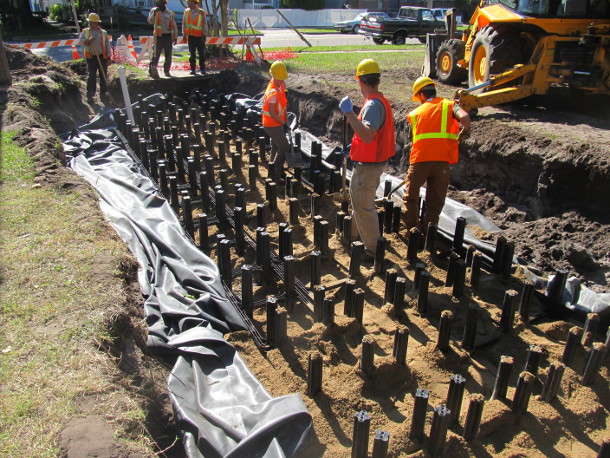
I’ve discussed using trees and soils (green infrastructure) to manage stormwater in two recent webinars. This is a rich and complex topic, so to help break it down into digestible pieces I organize it in to what I call the First Principles of Urban Stormwater Systems. Those first principles are listed in the illustration above…. More

Read Article

Seattle’s Urban Forest Stewardship Plan: 3 Action Items Worth Noting

In August, Seattle released their Urban Forest Stewardship Plan, the first comprehensive update to the previous Urban Forest Management Plan (2007) that set the goal of increasing Seattle’s tree canopy cover to 30 percent by 2037. The 2013 Plan is broken up in six sections: guiding principles and integrated approach, the importance of Seattle’s urban… More

Read Article

The Effect of Trees in Paving on Stormwater Runoff

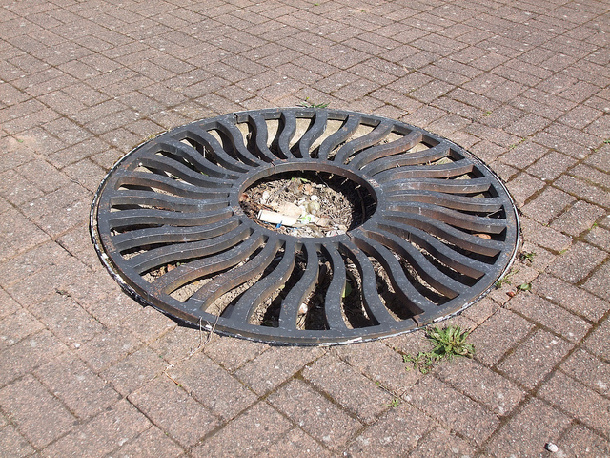
A study recently published in Urban Forestry & Urban Greening presents data showing that trees planted in paving can significantly reduce stormwater runoff. The results, published by D. Armson, P. Stringer, and A.R. Ennos, are taken from data collected in Manchester, UK from January 2011 to September 2011. The study created 5 test sites, each containing three 9… More

Read Article

Ask An Arborist

Ever wonder what kind of questions are asked at the “Ask An Arborist” booth at the local street fair? I spent a lovely afternoon recently with two colleagues at the Castro Street Fair in San Francisco. We handed out literature, shared reference books, and fielded questions like these.

Read Article

ASLA Releases Guide To Health Benefits of Nature

Over 50 percent of the global population lives in cities. Despite this – or maybe because of it – it is widely understood that spending time outdoors, in nature, instinctively feels really, really good to people. In fact, science supports that time in nature doesn’t just feel nice – it’s actually extremely beneficial for our… More

Read Article

Small Stormwater Projects: Great, But Not Enough

Last month, I read an article about the merits of starting small when it comes to stormwater harvesting projects. The article started with the statement that some cities that have evaluated stormwater harvesting have concluded that the investment is too large relative to the benefits. It then goes on to examine the town of Wrightsville… More

Read Article

New Zealand’s Ultra-Comprehensive Report on Bioretention Media

I spent a good part of last winter completing a  literature review on bioretention media for a revision to the Minnesota Stormwater Manual. So when I attended the Low Impact Development (LID) conference in St. Paul, MN earlier this month, I was very interested to learn of a recent specification coming out of New Zealand:… More

Read Article

Trees and Soils: Stormwater Superstars in the Greater D.C. Region?

Stormwater permits are maturing in the greater D.C. region, driven by Chesapeake Bay and Anacostia River restoration mandates.   Two of the three major Anacostia stormwater permits – for Montgomery County (issued in 2010) and the District of Columbia (issued in 2011), carry real clout in the form of retrofitting mandates with required numbers of impervious… More

Read Article

Tigard, OR Sets Soil Volume Minimum for Street Trees

We recently learned that Tigard, OR, a town of about 48,000 people that is part of the Portland metro area, has implemented an impressive soil volume minimum for trees planted in streets and parking lots: up to 1,000 cubic feet of soil per tree.

Read Article

Against Mulch

In a recent webinar discussing the first principles of using trees and soil for stormwater management in urban areas, I mentioned that I am often not in favor of using mulch. In fact, I said that if it were up to me, mulch would not be included by default in most planting specifications. After the… More

Read Article

Why We Should Be Specifying More Bare Root Trees

“Bare root” is the form that most trees take when nurseries begin the several year process of growing trees for retail.  The young trees must be handled carefully, are typically only available at certain times of year, and some species are sensitive to transplant as bare root stock. This has made it a bit tricky… More

Read Article

Seeing the Forest for the TreesTD Green Streets: Actions, Ideas, and Engagement

This article is the first of a series that aims to plant innovative, inspiring, and actionable seeds in the realms of community-building, art, and arboriculture. These seeds will be planted by providing readers with information on funding programs and opportunities for environmental projects alongside discussion of related concepts/projects in contemporary art. What will grow exactly… More

Read Article

Join Our Newsletter

Sign up to our newsletter to stay up-to-date on news, updates, and product information.

Explore our archives

Interested in a DeepRoot product? Get a quote today.

Request a Quote [email protected]

Tel: 415 781 9700
Toll Free: 800 458 7668
Toll Free: 800 277 7668
Fax: 415 781 0191


Sign up to our newsletter to stay up-to-date on news, updates, and product information.