Quotes

The Space Between the Pavement and the Tree

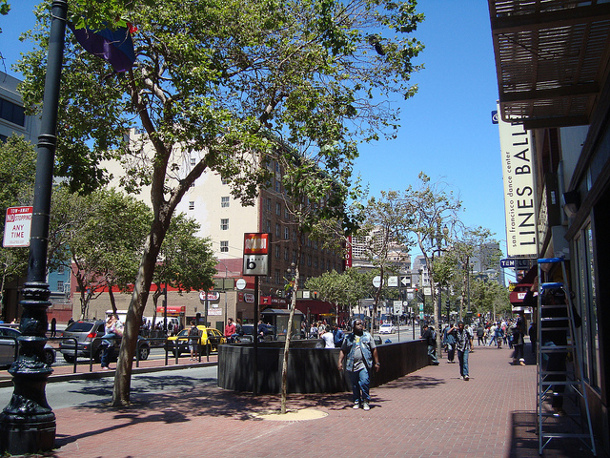
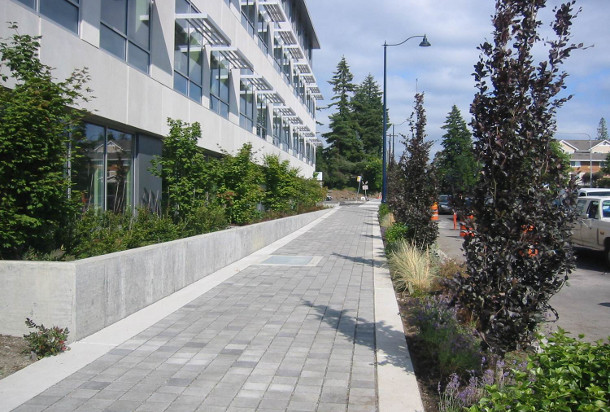
I often get the following question from designers: what do I do with the space between the pavement and the street tree? Typically, it’s a small space of anywhere from 16 to 64 square feet in which the tree is supposed to live, commonly known as the “tree pit.” Really, it is  an opening into… More

Read Article

Stomata

Video: Stomata Opening and Closing

You know how when you learn something in school, it sounds a little abstract until you actually see it? For example, I remember learning about what stomata are. Here is the definition according to Wikipedia: In botany, a stoma (plural stomata) (occasionally called a stomate, plural stomates)[1] (from Greekστόμα, “mouth”[2]) is a pore, found in the epidermis of leaves, stems and… More

Read Article

Suspended Pavement Study at the Bartlett Tree Lab, Year 9

Here is this year’s photo from the Bartlett Tree Lab study comparing different planting methods for urban trees. This year, we can also share a graph that demonstrates just how well the trees growing in suspended pavement are doing relative to the other treatments. 

Read Article

An Open Letter to the Complete Streets Movement

A large-canopy tree is a very beautiful thing. On this, most people will agree. But is not only beautiful—it also benefits its community. It provides shade and shelter, protects air quality, and reduces air temperatures, water runoff, and human stress. A street lined with such trees is a desirable place to live and work, and… More

Read Article

Illustrated Guide To Using Trees and Soils to Manage Stormwater

I’ve discussed using trees and soils (green infrastructure) to manage stormwater in two recent webinars. This is a rich and complex topic, so to help break it down into digestible pieces I organize it in to what I call the First Principles of Urban Stormwater Systems. Those first principles are listed in the illustration above…. More

Read Article

The Effect of Trees in Paving on Stormwater Runoff

A study recently published in Urban Forestry & Urban Greening presents data showing that trees planted in paving can significantly reduce stormwater runoff. The results, published by D. Armson, P. Stringer, and A.R. Ennos, are taken from data collected in Manchester, UK from January 2011 to September 2011. The study created 5 test sites, each containing three 9… More

Read Article

New Zealand’s Ultra-Comprehensive Report on Bioretention Media

I spent a good part of last winter completing a  literature review on bioretention media for a revision to the Minnesota Stormwater Manual. So when I attended the Low Impact Development (LID) conference in St. Paul, MN earlier this month, I was very interested to learn of a recent specification coming out of New Zealand:… More

Read Article

Against Mulch

In a recent webinar discussing the first principles of using trees and soil for stormwater management in urban areas, I mentioned that I am often not in favor of using mulch. In fact, I said that if it were up to me, mulch would not be included by default in most planting specifications. After the… More

Read Article

Why We Should Be Specifying More Bare Root Trees

“Bare root” is the form that most trees take when nurseries begin the several year process of growing trees for retail.  The young trees must be handled carefully, are typically only available at certain times of year, and some species are sensitive to transplant as bare root stock. This has made it a bit tricky… More

Read Article

Water = Life for Young Trees

For a newly planted street tree, adequate watering during establishment is literally a matter of life and death. The establishment period and amount of water can vary depending on climate, soil type and tree species. A street tree in San Francisco planted from a #15 nursery container usually requires 15 to 20 gallons per week… More

Read Article

Join Our Newsletter

Sign up to our newsletter to stay up-to-date on news, updates, and product information.

Explore our archives

Interested in a DeepRoot product? Get a quote today.

Request a Quote [email protected]

Tel: 415 781 9700
Toll Free: 800 458 7668
Toll Free: 800 277 7668
Fax: 415 781 0191


Sign up to our newsletter to stay up-to-date on news, updates, and product information.