Quotes

Is Soil Renewable or Non-Renewable?

Q: I recently got into a conversation with someone who claimed soils are a renewable resource because the nutrients in them can be replaced with fertilizers. But I’ve heard that soil takes a really long time to form, so that to me makes it non-renewable. What’s your opinion? A: The idea that soil is renewable… More

Read Article

How Trees and Soil Improve Water Quality

We write a lot about the benefits that trees and soils have on water quality. But what, exactly, do they improve? Back in 2011, landscape Nathalie Shanstrom tackled this topic, explaining in easy-to-understand terms what we mean by when we refer to water quality improvements. While seriously impaired runoff is not a concern on most sites,… More

Read Article

One Trees forgotten art project

OneTrees: The Forgotten Tree Art Project

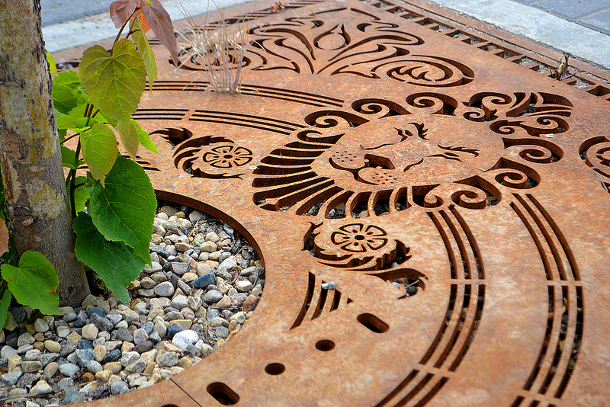
The other day, I passed a dead street tree in San Francisco Not an uncommon occurrence unfortunately, but this tree had once been on TV. The tree, a Paradox walnut, had been planted along with a second tree next to it as part of an art/science project called OneTrees designed by Natalie Jeremijenko. Jeremijenko cloned… More

Read Article

Is it “Soil” or is it “Dirt”?

A recent issue of the Ontario Association of Landscape Architects (OALA) magazine, Ground, contained a great discussion between nine professionals on the topic of soil. James Urban, FASLA, ISA, wrote to the magazine to add a few more comments to the piece – taking issue with the contention that what we plant in shouldn’t be… More

Read Article

A Brief History of Trees in Suspended Pavement

This was originally published on the landscape architecture blog The Field. When we talk about low-impact development and design today, the term “suspended pavement” comes up a lot, but it occurred to me recently that this term is rarely defined. Here is my attempt to do that by walking through suspended pavement’s history, uses, composition,… More

Read Article

The Basics of Tree Structure and Growth

Very often the “trees” that are added to architectural drawings or envisioned as elements of a new downtown landscape are only part of the structure: the aboveground portion that includes the trunk, the branches, the canopy, and the leaves. While this portion of the tree is usually the only visible part and thus captivates the… More

Read Article

How and When to Do a Soil Test

“The soil here is terrible.” This is something we hear a lot during design discussions. People often assume that soils in heavily developed environments can’t possibly be biologically sound for plant life. In some cases, this is true. But in others it isn’t, and the only way to know for sure is to do a… More

Read Article

Calculate How Much Money Your Trees Could Be Earning

How do you persuade someone to invest in having healthy, mature trees in their community? For some, the promise of access to nature, wildlife, and all of their tranquil side effects is sufficient reason.  For others, the prospect of saving on energy bills and reducing the heat island effect wins them over. Others might be… More

Read Article

Effects of Pavement on Tree Soil Organic Matter

One of our specialties at The Kestrel Design Group is designing urban tree systems (especially designing urban tree systems to maximize stormwater benefits). One question we are regularly asked on urban tree projects is whether or not soil organic matter will become too low or depleted when trees are surrounded by pavement and leaves are no… More

Read Article

“A tree is like a wine glass on a dinner plate”

In 1978, James Urban had a chance meeting with a man named Tom Perry that forever changed the course of his career. Tom was a microbiologist with a PhD from Harvard. He was working for the Forest Service and was assigned to the urban forest department because, to hear Jim tell it, Tom didn’t fit… More

Read Article

Minnesota’s Evapotranspiration Credit System for Trees

Last year, The Kestrel Design Group developed a formula for the Minnesota Pollution Control Agency to estimate evapotranspiration benefits from trees to include in their stormwater crediting system. This formula is one of the first – or possibly the first – in the country to formally quantify this benefit.  I spoke to Nathalie Shanstrom, a landscape architect… More

Read Article

Balance is Overrated An Interview with World Forestry Center’s Rick Zenn

The World Forestry Center is a nonprofit educational institution that was founded in Portland, Oregon in 1964. Their mission is to educate and inform people about the world’s forests, trees, and environmental sustainability and to increase public awareness of the benefits of sustainable forestry management – environmental, social and economic. Rick Zenn is the Senior… More

Read Article

Join Our Newsletter

Sign up to our newsletter to stay up-to-date on news, updates, and product information.

Explore our archives

Interested in a DeepRoot product? Get a quote today.

Request a Quote [email protected]

Tel: 415 781 9700
Toll Free: 800 458 7668
Toll Free: 800 277 7668
Fax: 415 781 0191


Sign up to our newsletter to stay up-to-date on news, updates, and product information.