

Introduction
Not long ago — as recently as 10–15 years ago — trees were often the first thing to go when design conflicts appeared. If roots might interfere with utilities, sidewalks, or foundations, the simplest solution was to remove the tree from the plan. Infrastructure came first; trees were treated as optional.
DeepRoot’s vice president Al Key saw this firsthand when he entered the industry over three decades ago. Utility conflicts rarely led to creative problem-solving — they led to omission. But even then, the conversation was beginning to shift. Designers and cities were starting to ask whether removing trees was truly the best long-term choice. This reflection marked the start of a slow but meaningful change.
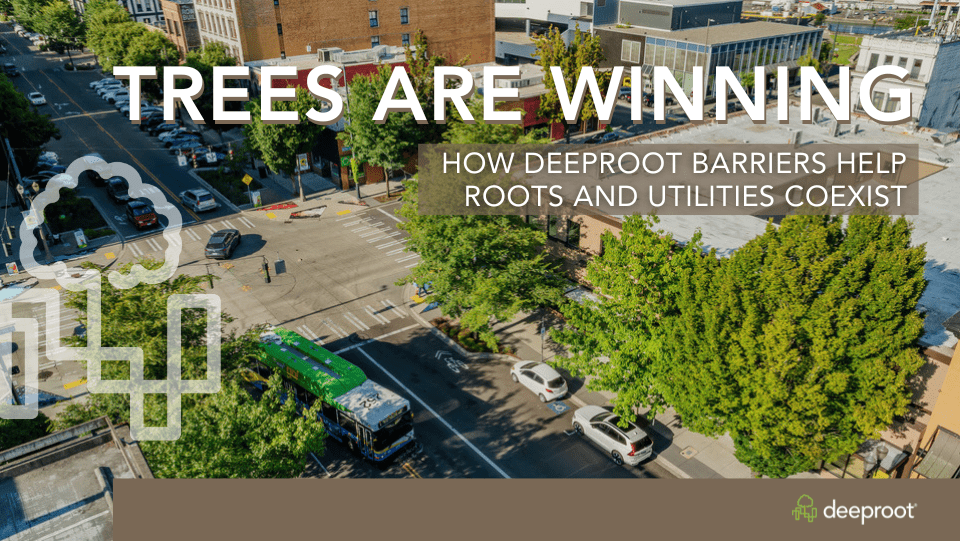
And now, as Al says, “the trees are winning.” The objective today is to find a strategy for tree roots and underground infrastructure to peacefully coexist; this is where DeepRoot Tree Root Barriers come in. Let’s explore the evolution in municipal priorities and how trees don’t need to be viewed as a nuisance in the built environment.

Why Trees Matter
Over the past decade, our understanding of urban trees has matured. What were once considered “nice-to-have” landscape elements are now recognized as critical infrastructure that supports healthier, more resilient cities. Research, field data, and lived experience have all reinforced the same conclusion: cities function better with healthy tree canopy.
The value of urban trees is better understood today than ever before — and the challenge is creating conditions for them to thrive in complex city environments. Healthy trees can:
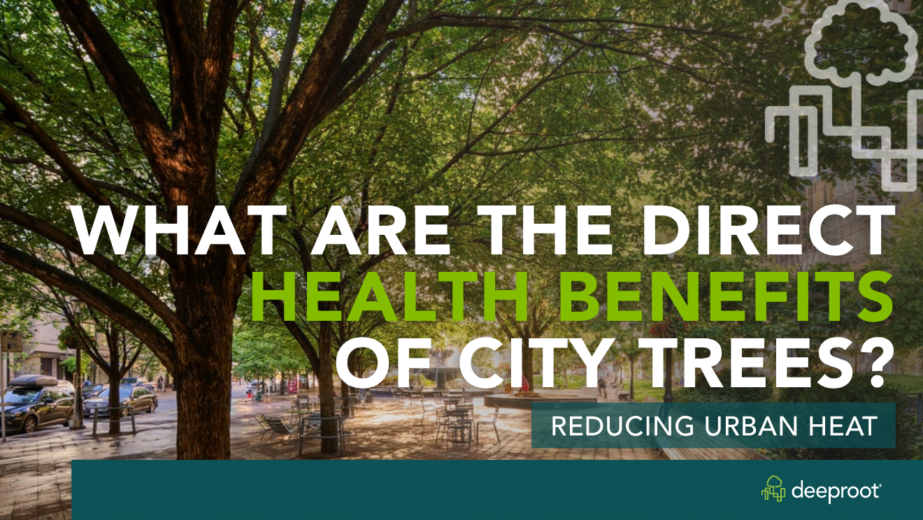
- Reduce urban heat and mitigate heat island effects
- Intercept and manage stormwater
- Improve air quality
- Support mental health and community well-being
- Increase property values and neighborhood appeal
- Contribute to climate resilience goals
Recognizing these benefits means acknowledging a simple truth: if trees matter this much, we can’t set them up to fail.
“Trees are Winning”
This is where Al’s perspective tells a bigger story about the industry itself. Over his career, he has watched the default response to tree conflicts evolve from removal to problem-solving. The change didn’t happen overnight, but it’s now unmistakable.
Today, trees are rarely the expendable line item they once were. Cities have invested too much in canopy goals, climate plans, and livability strategies to treat trees as optional. When conflicts arise, the question is no longer “Do we remove the tree?” but “How do we make this work?”
Al has seen this shift play out across projects and municipalities. The growing consensus is clear: the benefits of healthy trees outweigh the convenience of removing them. Trees aren’t being squeezed out of plans anymore — they’re being designed for. And that’s what he means when he says, “trees are winning.”
The New Thinking
Across the country, cities are increasingly backing this shift with measurable goals. Many municipalities now maintain urban tree canopy targets ranging from 20% to 40% coverage, recognizing the role trees play in cooling cities, managing stormwater, and improving public health. Washington, D.C., for example, has successfully increased its canopy from 28% to 38% over the past two decades, while Los Angeles launched its Million Trees initiative to significantly expand shade and climate resilience across the city. These programs reflect a growing recognition that trees are not simply aesthetic amenities — they are long-term infrastructure that help cities function.
At the same time, urban forestry research has revealed a sobering challenge: planting trees is only part of the equation. Studies tracking thousands of street trees in cities like New York, Philadelphia, and Oakland have found that up to a quarter or more of newly planted trees can be lost within the first decade if conditions aren’t right. The lesson is clear: achieving canopy goals requires more than planting trees — it requires designing urban environments where they can survive and grow for decades. That reality is driving a new focus on infrastructure and strategies that help trees coexist with the complex systems already occupying underground space.
Managing Coexistence
Of course, even as priorities shift, the physical reality underground hasn’t changed. Urban subsurfaces remain crowded and complex. Utilities, foundations, and drainage infrastructure all compete for limited space — and tree roots are part of that equation.
But roots aren’t inherently destructive. They grow where conditions allow. When given guidance and protected zones, they can develop in ways that support tree health without disrupting surrounding infrastructure. The challenge isn’t trees versus infrastructure; it’s designing for both.
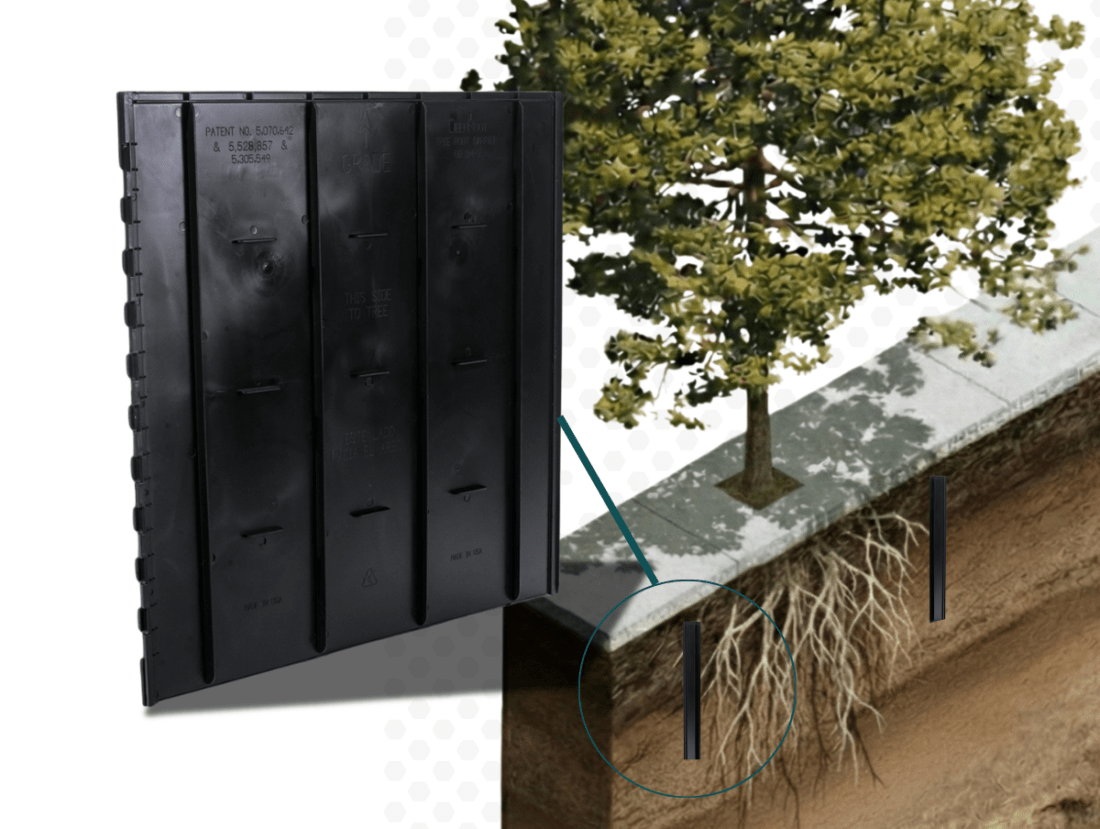
This is where solutions like Tree Root Barriers come into play. Rather than restricting trees, our barriers guide root growth and protect underground infrastructure and sidewalks. They help designers shape how roots interact with the built environment so neither has to lose. Our solutions were developed around this coexistence mindset. They help projects:
- Direct root growth away from sensitive utilities and structures
- Protect underground infrastructure from root intrusion
- Preserve viable soil space for healthy root systems
- Support long-term tree stability and growth
- Reduce costly repairs and conflicts over time
In other words, they allow trees to remain a priority without creating risk for the systems cities depend on.
Trees are the Future
The bigger story here isn’t about a single product category. It’s about how cities have evolved in their thinking. Urban trees are now recognized as essential contributors to climate resilience, public health, and quality of life. They’re no longer decorative extras; they’re part of how cities function.
If trees are here to stay — and they are — then the best urban design solutions are the ones that prioritize their success while protecting surrounding infrastructure. Coexistence isn’t a compromise, it’s smart design. The future of cities depends on systems that work together. When we design with trees in mind, we build places that are cooler, healthier, and more livable. And as the industry continues to evolve, one thing is becoming clear: the cities of tomorrow will be the ones where trees truly have room to win.

Leave Your Comment