

Introduction
Helping cities grow trees is what we do at DeepRoot — but it’s important not to think about tree count as the sole metric in achieving urban canopy goals.
Thriving tree canopies are built one tree at a time, one project at a time, through individual decisions that determine whether a tree merely gets planted or is actually given the conditions to grow. That distinction matters. A plan that adds thirty under-supported trees may look ambitious on paper, but if those trees never mature, never provide meaningful shade, and never deliver lasting value, the investment falls short of what communities really need.
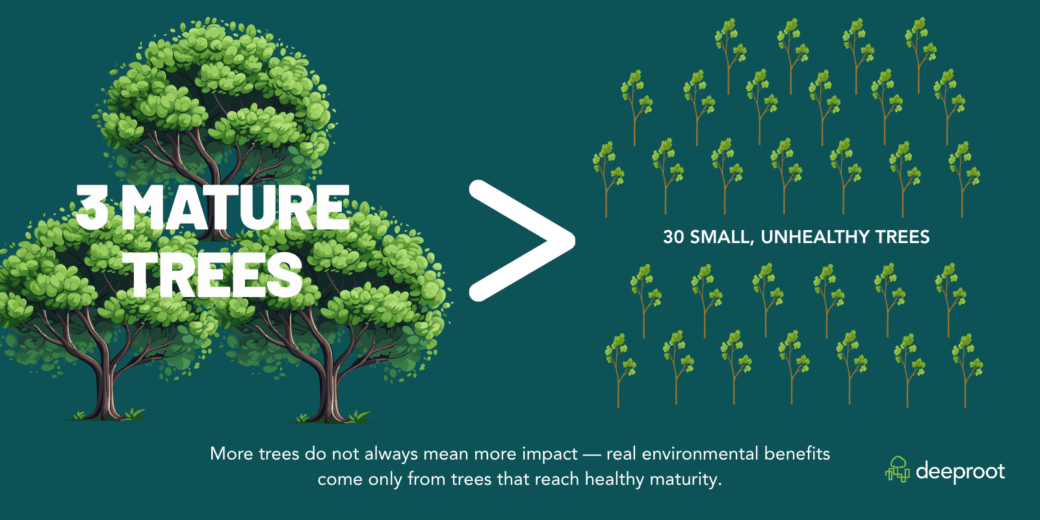
Three healthy, well-supported trees that grow large over time can contribute more value than thirty small trees that struggle from the beginning. At DeepRoot, this idea shapes how we think about project support. While Silva Cells are often seen in large, high-profile urban projects, the principle behind them is much simpler: give trees the soil volume and conditions they need to thrive in hardscape environments — whether a project includes 3 trees or 300 trees. Let’s explore why investing in healthy trees, at any quantity, should be the primary goal of any project.
The Problem With Tree Count
When people think of Silva Cell, they often think of major urban redevelopments, signature streetscapes, and dense city-center projects with large tree counts and high visibility. Those projects naturally attract attention. They produce dramatic before-and-after photos, impressive numbers, and compelling stories about greening the public realm at scale. But there is a downside to that visibility. It can create the impression that Silva Cell is only for big cities, big budgets, or big projects — and that smaller communities or modest installations fall outside the conversation.
That’s not how we see it.
A tree does not know whether it is part of a three-tree retrofit or a three-hundred-tree redevelopment. It still needs space for roots to grow. It still needs quality soil. It still needs a realistic opportunity to become a large, healthy asset instead of a short-lived installation. The same biological needs apply regardless of project size, and so does our commitment to supporting successful outcomes. If trees are planted in hardscape-heavy environments, they deserve the same conditions to thrive whether the project is large or small.
Quality Over Quantity
Too often, urban tree success is reduced to a simple counting exercise. How many trees were planted? How many fit into the plan? How many can be added this year? Those numbers can be useful, but they can also become a vanity metric when they distract from the more important question: what kind of trees are those plantings likely to become? A tree that is installed without enough soil volume, in a harsh paved environment, may satisfy a short-term project metric while doing very little to deliver long-term environmental, social, or economic value.
Healthy urban trees become more valuable as they mature. They provide more shade, more cooling, more stormwater benefit, more carbon sequestration, and more visual character over time. They help make sidewalks more comfortable, commercial areas more inviting, and neighborhoods more livable. Small, stressed, or repeatedly replaced trees do not offer the same return. When planting design focuses on quantity without providing the conditions for growth, communities can end up spending money on installation without ever realizing the benefits that motivated the planting in the first place.
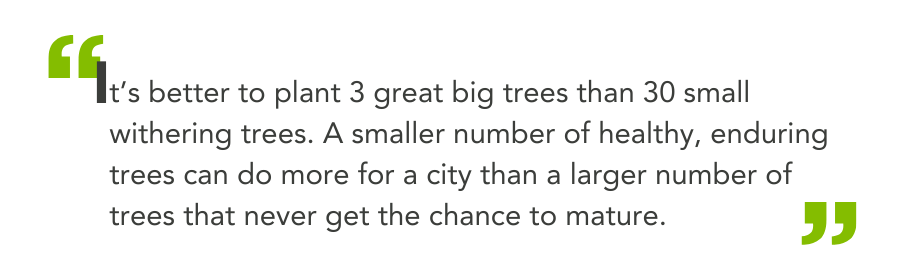
That is why quality has to come before quantity. It’s better to plant 3 great big trees than 30 small withering trees. A smaller number of healthy, enduring trees can do more for a city than a larger number of trees that never get the chance to mature. This is not an argument against planting more trees, it’s an argument for planting trees responsibly — and for recognizing that true success is not measured at the moment of planting, but years later, when those trees are still growing, still performing, and still contributing meaningfully to the places around them.
Silva Cell: Projects of Any Size
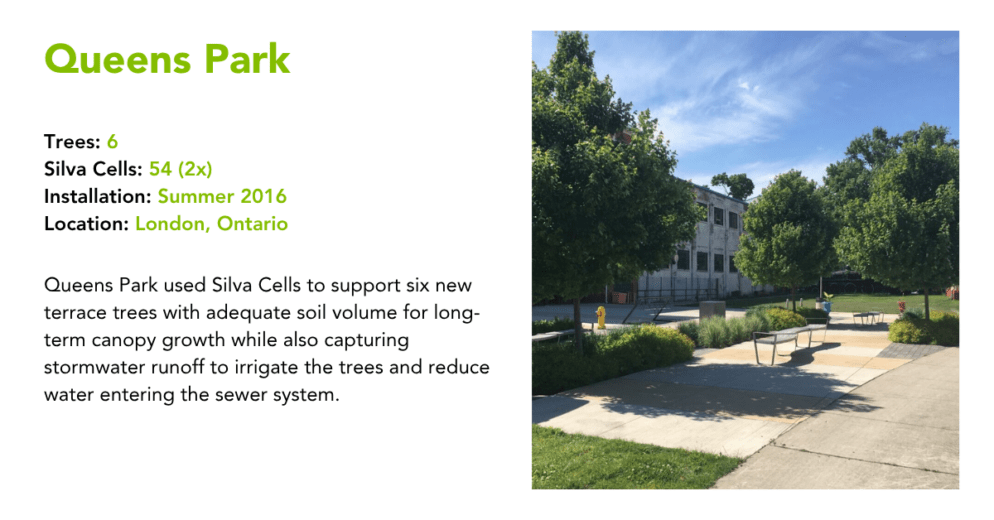
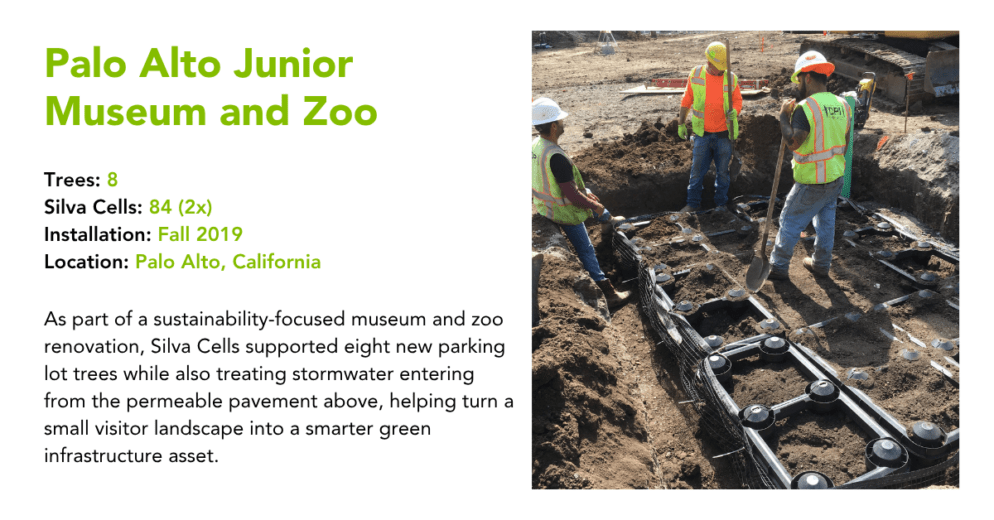
Silva Cell has a long track record of supporting trees in hardscape environments, and that track record includes projects with a small number of trees as well as major urban installations. We’re proud of that range.
DeepRoot’s support does not begin only when a project reaches a certain scale, and it does not become more meaningful because a project is more visible. If a design team is working to grow healthy trees in a constrained paved environment, that challenge matters. Whether the solution supports a handful of trees or an entire district, the underlying objective remains the same: provide the soil support needed for long-term tree growth and long-term project value.
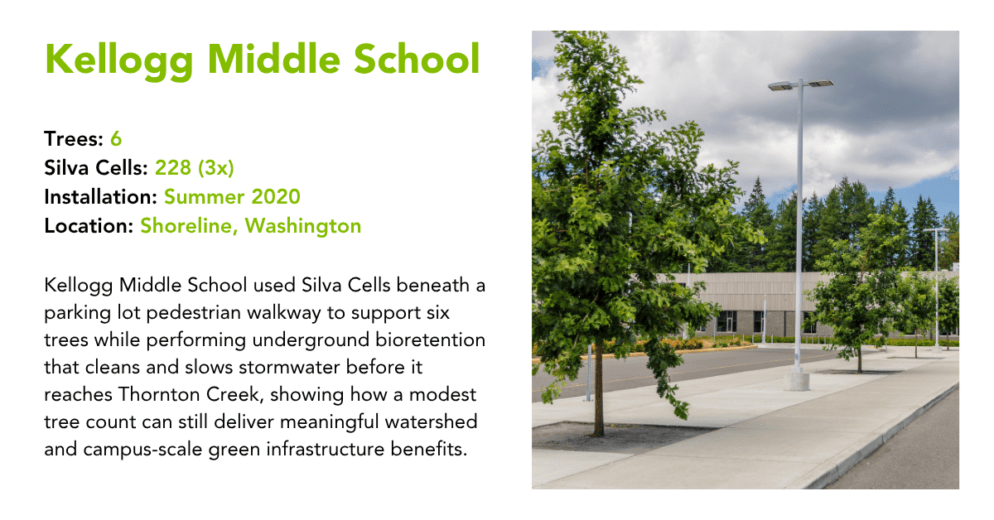
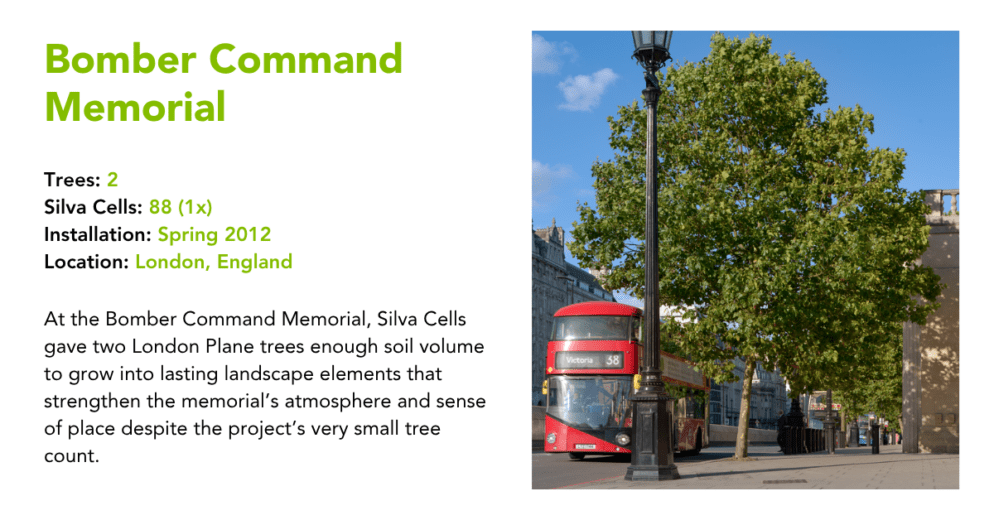
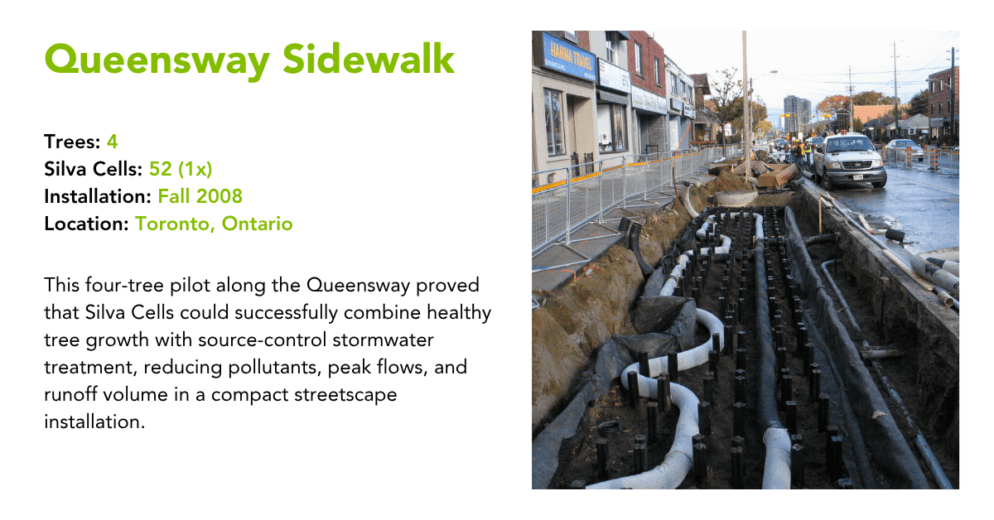
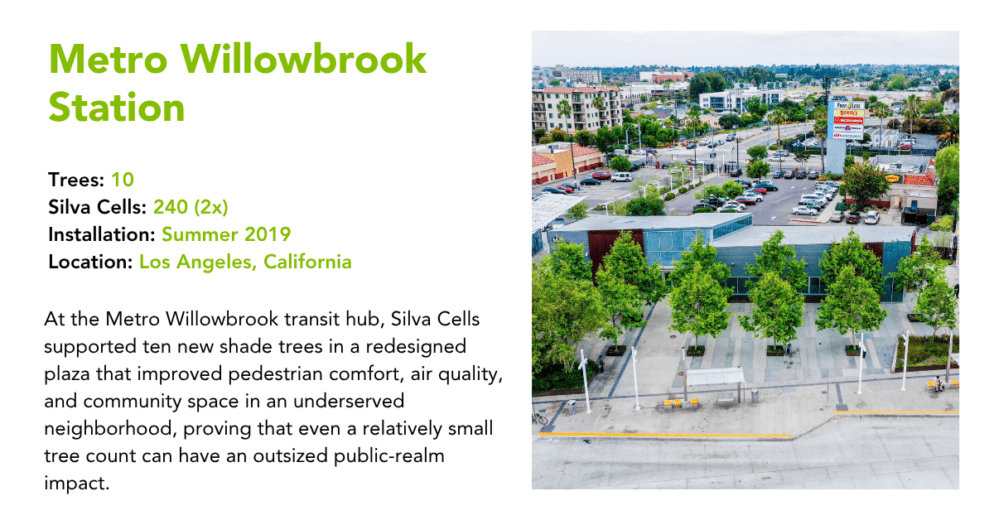
Measuring Success
The way we measure urban forestry success matters. If success is defined only by the number of trees planted, then it’s easy to celebrate projects that look good at ribbon-cutting time but underperform in the years that follow. But if success is defined by long-term tree health, meaningful canopy growth, and the real benefits trees bring to a place over time, the conversation changes. It becomes less about how many trees could be squeezed into a plan and more about whether those trees were given a real chance to thrive.
That’s a better standard. Healthy trees of any number are more valuable than a large number of under-supported trees. A project with three thriving trees can be a meaningful success. A project with three hundred thriving trees can be transformative. In both cases, the principle is the same: every tree matters, because every tree represents an opportunity to build greener, cooler, more resilient communities. And when we treat each tree as worthy of real support, we make better investments — not just in planting, but in the long-term performance of the places we care about.

Beautiful article, Thank you!
GTU
GTU