

Introduction
Soil is the foundation for healthy urban trees. It provides essential space for roots to expand, creating conditions for a mature, wide-canopy tree — but only if it’s actually there in the quantity and quality the tree needs. That’s why soil volume is one of the most important metrics for determining a city tree’s success or failure.
But specifying a number on paper isn’t enough. That volume needs to be verified in the field — and that’s where walk-through compaction becomes essential. This simple act, placing soil in wide, accessible openings and compacting it gently underfoot, ensures that the maximum amount of soil is delivered in the right condition for long-term root growth and performance.
Let’s look at why walk-through compaction matters — and what can go wrong when it’s missing.
Guaranteeing Soil Volume
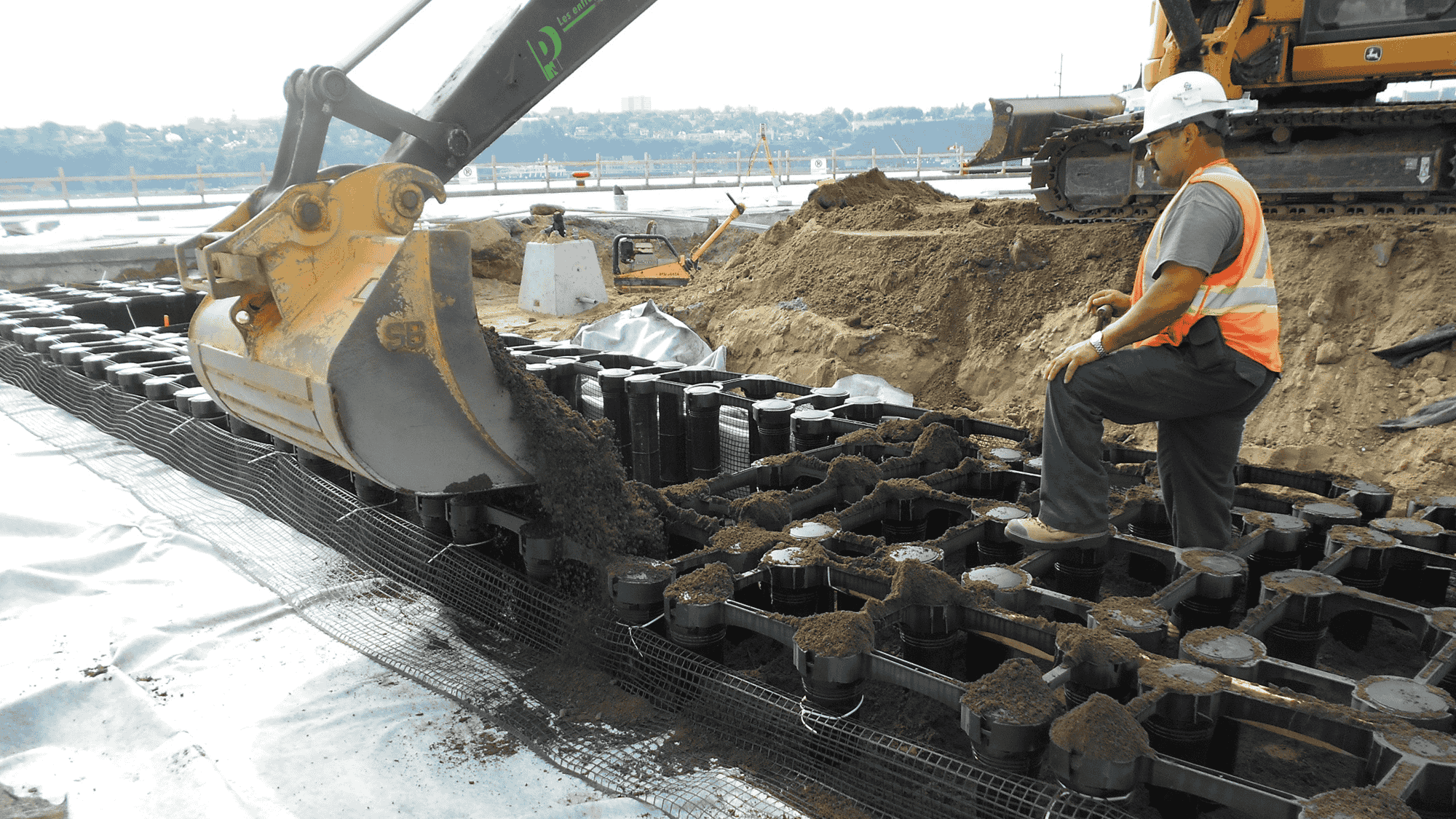
This is the most important reason walk-through compaction matters: it ensures the tree actually receives the full amount of soil specified in the design process. Without it, the difference between what’s specified and what’s installed can be surprisingly large — and nearly impossible to verify after surface treatment is placed. This is why it’s so critical to ensure accountability during soil placement, a process made easier by the wide openings found in Silva Cells.
When crews can walk through a soil cell system during placement, they can compact lightly as they go, releasing large air pockets and making space for more soil. They can also reach every part of the system — including corners and lower levels that might otherwise go untouched and unfilled. This results in a rooting zone that’s both maximized in quantity and consistent in quality.
Walk-through compaction supports soil volume by:
- Making Room for More Soil – Light foot compaction during placement squeezes out excess air, increasing the material volume in the same space.
- Providing Full Soil Volume – Open access allows soil to be placed and compacted with no unfilled pockets or inaccessible zones.
- Ensuring Acccountability – Crews, designers, and inspectors can see the soil being compacted, eliminating guesswork and ensuring accountability.
In short, walk-through compaction turns theoretical design volume into guaranteed installed volume — and that’s the difference between a thriving tree and one struggling to survive.
Preserving Soil Structure and Root Access
Quantity alone isn’t enough — the quality of the soil matters just as much. The biological and physical integrity of the soil determines how well it can support roots over the long term.
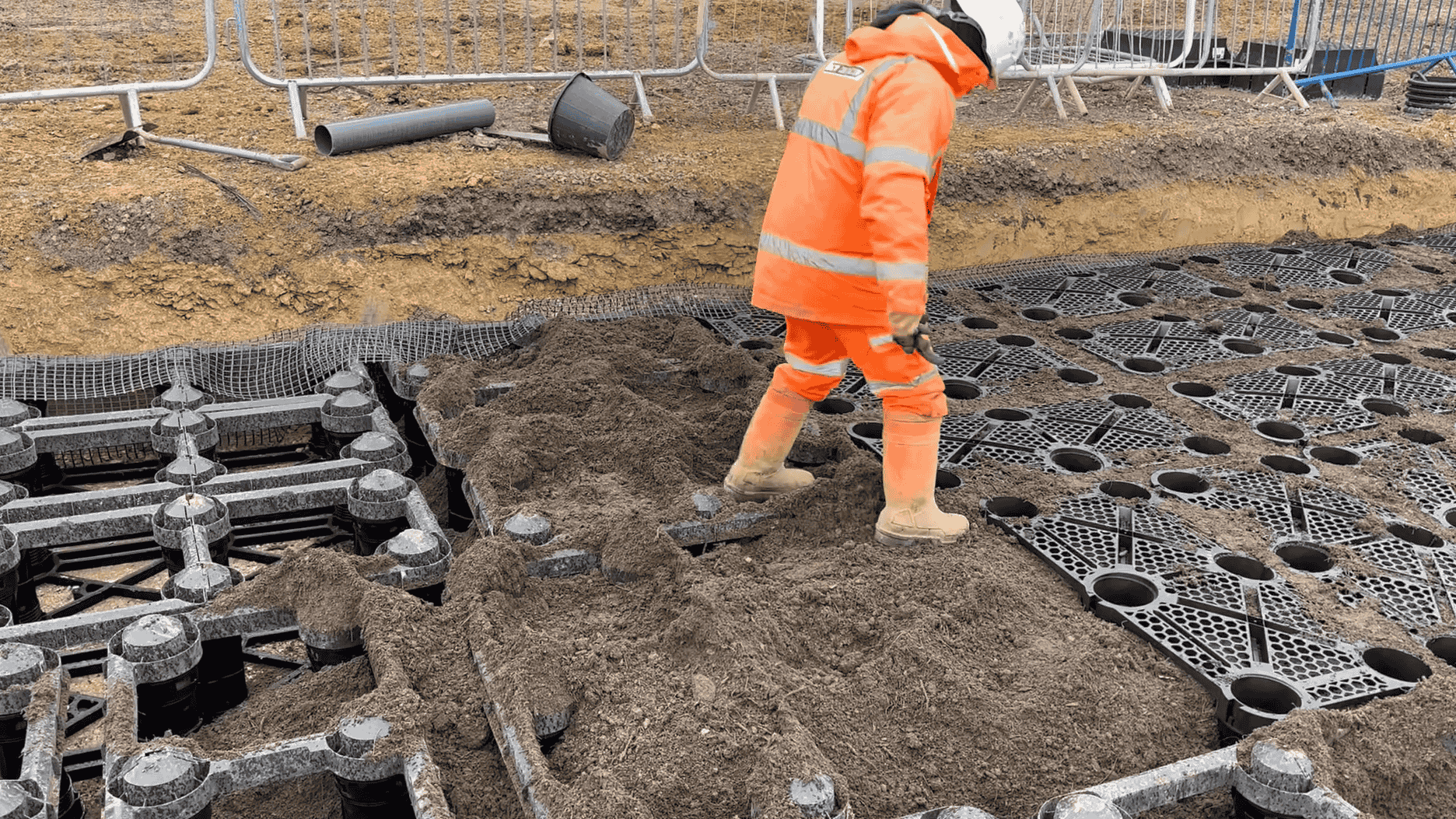
Foot compaction is a gentle process. It removes large air pockets while preserving the macro- and micropores that allow oxygen and water to move freely through the soil profile. Walking through allows for controlled, even compaction that maintains soil structure. This creates a consistent environment where roots encounter uniform density, making it easier to explore the full soil volume without obstruction.
In short: walk-through compaction creates the perfect middle ground — firm enough to eliminate instability, but open enough to keep the soil biologically active and breathable.
Reducing Long-Term Settlement and Surface Issues
One of the hidden dangers of soil that hasn’t been properly foot compacted is what happens after the project is complete. Without light pre-settlement during installation, the soil will settle naturally over time — and often unevenly.
That subsidence can cause a cascade of issues: shifting tree grates, pavement warping, or even trip hazards. In dense urban environments where soil systems are surrounded by sidewalks, plazas, or streetscapes, those problems can quickly become expensive repairs. Indeed, independent research confirms that soil subsidence is 2.5x more likely in soil cell systems that don’t allow for walk-through compaction versus Silva Cells, which do.
By walking through and compacting the soil during installation, crews ensure that the soil is “set” from the start. That stability protects not just the tree, but the surrounding infrastructure, preserving the look and function of the entire site.
What Could Be Lost Without Walk-Through Compaction
If your system doesn’t allow for walk-through compaction, you may be losing more than you realize. The risks are real and often invisible until years later:
- Soil Volume Loss – Hidden voids reduce the actual rooting space available to the tree.
- Uneven Soil Performance – Inconsistent density can cause trees in the same project to perform differently.
- Drainage Problems – Poorly compacted zones can become waterlogged or overly dry.
- Surface Instability – Post-construction settlement can lead to warped or damaged hardscape.
- Lack of Accountability – Without access, there’s no way to confirm that the soil was placed as specified.
When soil can’t be placed and compacted properly, it’s the tree — and the project’s long-term success — that pays the price.
The Silva Cell Advantage
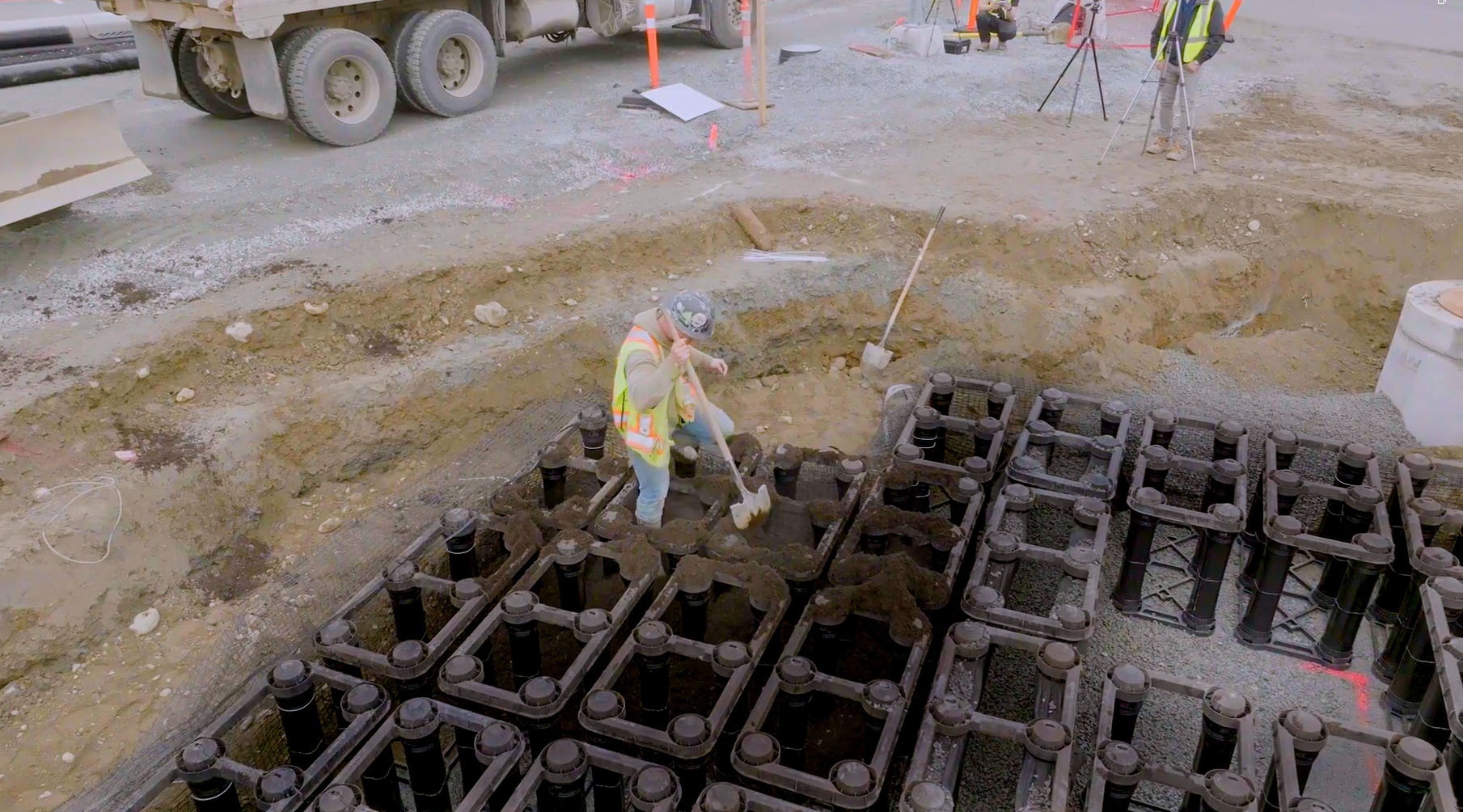
Not every soil cell system makes walk-through compaction possible — but Silva Cell was designed for it. Our open, walkable “strongback” lids give installers full physical access to the soil area, so every cubic foot of the system’s void space can be filled, compacted, and verified.
That accessibility is more than just convenience — it’s the reason Silva Cell installations deliver the full rooting volume promised in the design. With large, unobstructed openings, soil can be placed in bulk, spread evenly by hand or shovel, and compacted underfoot to achieve a consistent density throughout the entire field. There are no blind spots. No inaccessible corners. No “hoping” the soil made it where it was supposed to go.
Silva Cell’s design eliminates the compromises of closed or interlocking systems. If soil volume and quality are truly priorities for your project, you need a system that lets you see, and walk through, the soil as it’s placed.
Demand Accountability in Soil Volume
Without the ability to walk through the system during soil placement — and access every part of its void space — you risk hidden soil loss, reduced rooting volume, and long-term threats to tree health. If you care about the long-term performance of your urban trees, you need to be vigilant:
-BE PRESENT DURING SOIL PLACEMENT
-ASK HARD QUESTIONS
-HOLD YOUR SOIL CELL SYSTEM ACCOUNTABLE
The volume you specify should be the volume you get. Accept nothing less.
Conclusion
Walk-through compaction might seem like a minor detail, but it’s the step that turns design intent into real-world performance. It ensures that:
- The specified soil volume is actually delivered
- The soil’s structure remains intact and biologically healthy
- The site remains stable for decades
With systems like Silva Cell, walk-through compaction isn’t just possible — it’s part of the design. Because when it comes to building healthy urban forests, soil quantity and quality are inseparable. And both are worth protecting. Choose a system designed for accountability from the start.

Leave Your Comment