

Introduction: Supporting Tree Success with the Strongback
With Silva Cells, the strongback — our temporary installation lid used during soil placement — is not an afterthought or a mere convenience: It’s an intentional design element that plays a critical role in how soil enters the system, gets compacted, and ultimately performs for trees. This Silva Cell design feature is the system’s quiet advantage, optimizing soil in ways that connected soil cells with narrow openings simply can’t match.
The priority with Silva Cells is always the tree: we ensure open access for large quantities of efficient soil placement during installation, which is a foundational requirement for long-term tree health. To understand why this matters, it’s worth looking closely at how large openings fundamentally change soil placement, soil quality, and the ability to deliver healthy, mature trees over time.
The Strongback: What It Is and Why It Matters
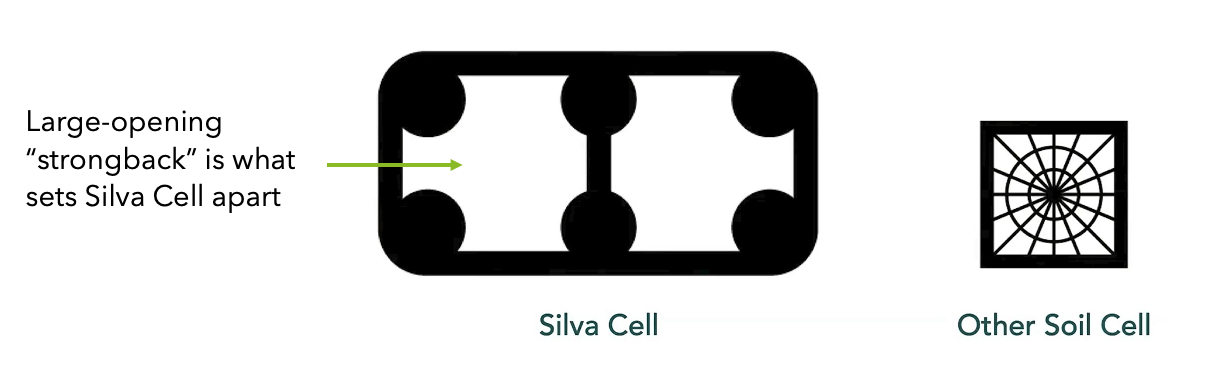
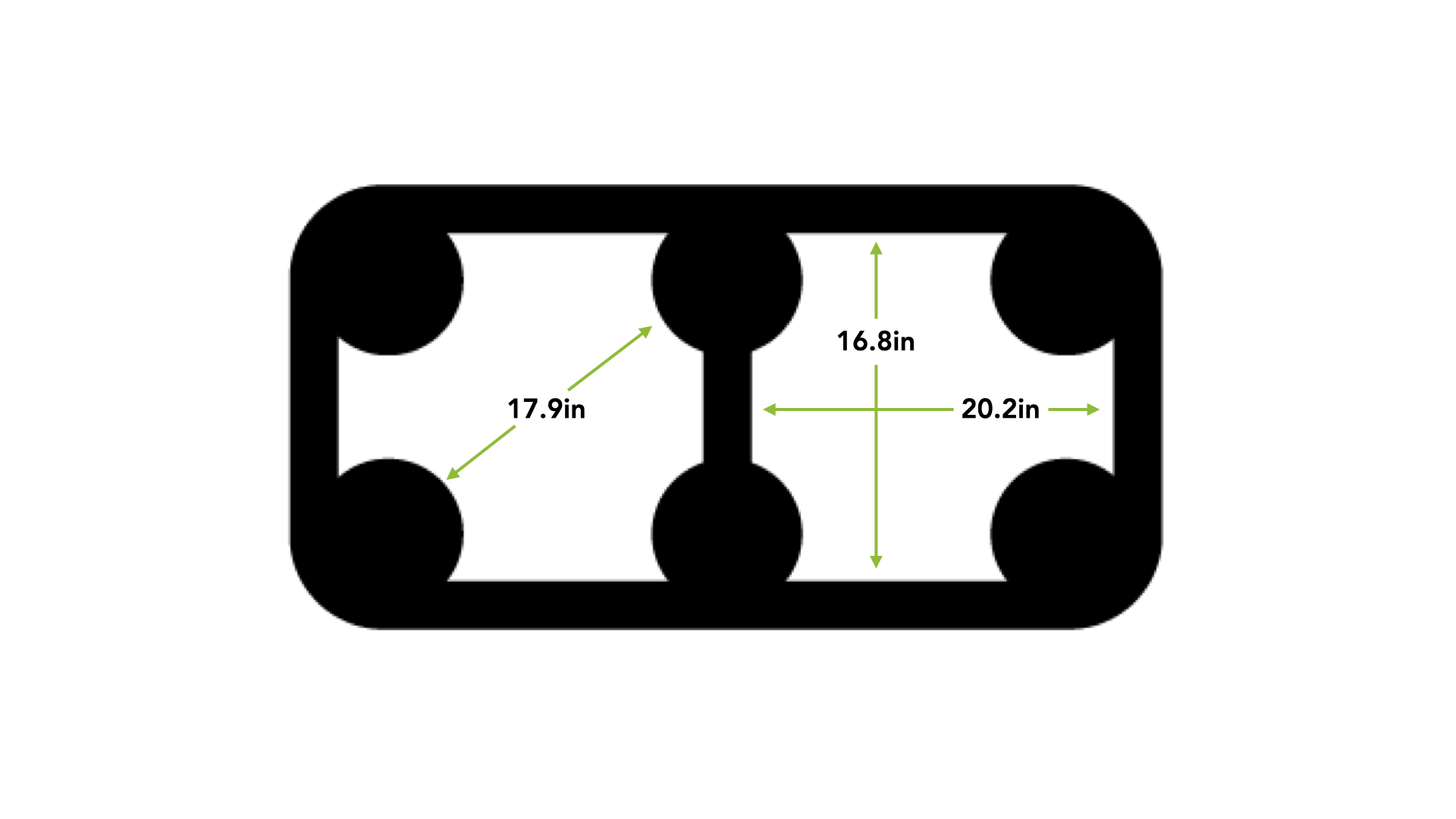
The strongback is used during the installation process, locking onto the Silva Cell posts and featuring two large openings for soil placement. A project only needs a small number of strongbacks, as they are reused on a rolling front as installation progresses. Structurally, the strongback stabilizes the posts during soil placement — but its more important role is access: the strongback features the largest soil placement openings in the industry, giving installers direct, physical access to the entire system throughout the installation process.
This access fundamentally separates Silva Cells from soil cell systems with narrow deck openings. Where other systems restrict visibility and movement during soil placement, the strongback is designed to remove those limitations entirely. That design choice affects every stage of soil installation and directly influences soil performance and tree outcomes.
This design advantage affects the entire soil-placement process, meaning:
- No sweeping necessary
- Soil placement in large, efficient lifts
- Walk-through compaction during the process
- Full soil volume guaranteed
- Ability to use any type of soil
Each of these benefits stems from one core idea: soil performs best when it can be placed, compacted, and verified properly — and that requires access.
Soil Placement: A Performance Issue, Not a Construction Detail
Soil placement is often treated as a construction detail, but in reality it’s a performance issue with long-term consequences for trees. Many soil cell systems with narrow openings make it difficult — or functionally impossible — for installers to place soil in proper lifts or to compact it as specified. This is not a question of effort or intent: It’s a limitation created by system geometry. When openings are small, crews are forced to adapt their process, often sifting soil through decks with limited ability to verify compaction or eliminate air pockets.
Silva Cells eliminate this limitation by design. The strongback maximizes access throughout the entire soil placement process by using the widest-opening installation lids in the industry. This allows soil installation to follow best practices consistently and visibly, rather than relying on assumptions about what’s happening beneath a closed deck.
Efficient, Verifiable Soil Placement
Large openings allow soil to be placed in substantial lifts without the need to sweep material through small access points. This significantly improves efficiency while also making the process verifiable. Designers and owners can be confident that soil is actually reaching the void space as intended, because it can be seen and accessed throughout installation. Faster placement does not come at the expense of quality — it supports it.
Walk-Through Compaction by Design
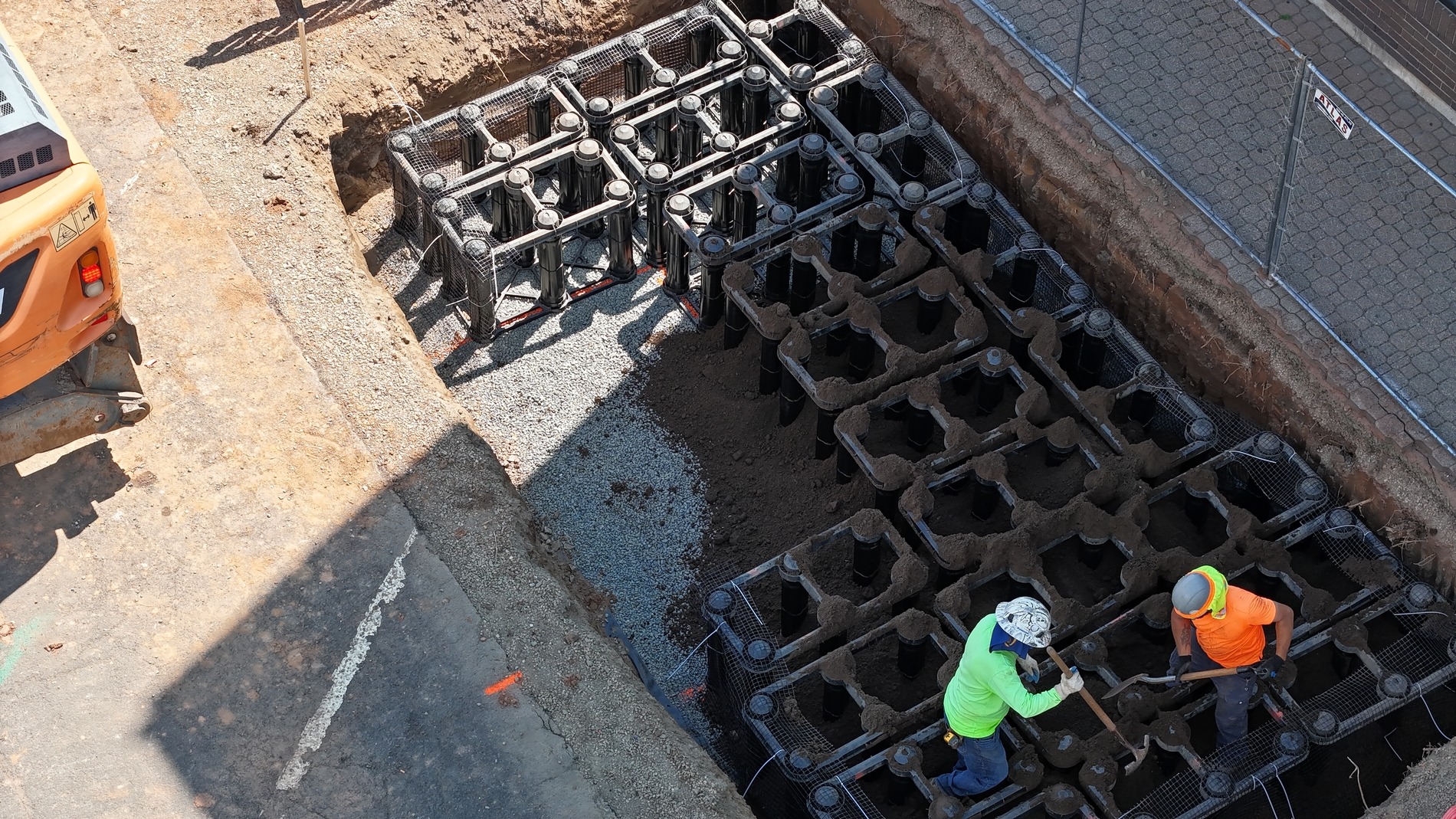
The strongback openings are intentionally sized to allow a full boot to enter the system during soil placement. This makes true walk-through compaction possible, exactly as specified in tree planting details. Walking through each lift releases trapped air, allows additional soil to be placed, and creates uniform density throughout the system. This step is critical for preventing future settlement and ensuring that soil volume remains stable over time.
Entire Void Space Is Filled
Because installers can see and physically access every part of the Silva Cell system during installation, there are no hidden areas where soil placement is uncertain. Every corner of the system is reachable, and every void can be filled with properly compacted soil. This level of access ensures that the soil volume designed on paper is the soil volume delivered underground — without guesswork.
Use Any Type of Soil: The Importance of Soil Quality
The ability to access the system during installation doesn’t just affect how much soil goes in — it determines what kind of soil can be used. Healthy trees depend on soil structure, not just soil volume. Ped-rich soils with intact aggregates support better root growth, water movement, oxygen exchange, and microbial activity. Narrow-opening soil cell systems often require finer, screened soils simply to fit through the deck, compromising soil structure before trees are ever planted.
The strongback makes this tradeoff unnecessary. Large openings allow a wide range of soil types to be placed directly into the system without excessive processing. This means designers can specify soils based on performance needs rather than installation constraints. With the strongback, Silva Cells allow:
- Use of ped-rich, unscreened, or minimally processed soils
- Preservation of natural soil structure during placement
- Improved pore space for roots, water, and oxygen
- Greater long-term resilience for urban trees
In this way, the strongback supports not just efficient installation, but biologically functional soils that sustain trees for decades. To learn more about this, read our blog on unscreened soils.
Get All the Soil You Paid For
Tree planting details typically require soil to be placed in 200–300mm lifts and compacted through walk-through methods. When this process can’t be followed, soil remains loose, air pockets persist, and void space goes unfilled. This can quietly result in a significant loss of effective soil volume — often as much as 20%. That means a project specifying 1,000 cubic feet of soil per tree may only deliver the equivalent of 800 cubic feet to the tree once settlement occurs.
This isn’t about contractor behavior or shortcuts. It’s about whether the system itself allows soil to be installed as designed. Narrow-opening soil cells make proper placement and compaction difficult to achieve consistently. The strongback removes that barrier. By enabling visible, walk-through compaction and full access to the system, Silva Cells help ensure that the soil volume you specify is the soil volume your trees actually receive.
- Why specify a target soil volume if the system can’t physically deliver it?
- Why invest in high-quality soil only to lose a portion of it to settlement and voids?
- Why accept uncertainty when soil placement can be verified during installation?
The strongback helps protect that investment — both financially and biologically.
How to Protect Your Project: Including Language in Your Design Spec
Designers put tremendous effort into specifying soil volume, soil quality, and planting details that support long-term tree health. But those specifications can only be realized if the system itself allows soil to be placed and compacted as intended. One simple way to protect that design intent is to address soil access directly in the specification.
Including a minimum soil-placement opening width — at least 16 inches — helps ensure that walk-through compaction is physically possible, that soil can be placed in proper lifts, and that the full specified volume can actually be achieved. This isn’t about prescribing a product; it’s about giving your soil specification the best chance of being executed accurately in the field.
Spec Tip: Require soil-placement openings of 16″ or wider to support walk-through compaction, full soil volume, and long-term tree performance
Long-Term Tree Health with the Strongback
Strongbacks aren’t an installation nicety; they’re a critical design feature that protects soil integrity, both in quantity and quality. By enabling proper soil placement, true walk-through compaction, and the use of biologically functional soils, the strongback helps ensure that trees receive the conditions they need to establish, grow, and thrive over the long term. This is how design intent becomes reality underground — and how urban trees are given the best possible chance to reach maturity. Other soil cell systems, constrained by narrow openings, simply don’t allow for the same level of access, verification, or soil performance. The strongback is how Silva Cells turn soil volume into lasting tree success.

Leave Your Comment