Majestic Cell Phone Towers
In March the CBC Community Blog asked people whether cell phone towers look better when disguised as trees. The results were pretty clear – over 71 percent of people said yes.
In March the CBC Community Blog asked people whether cell phone towers look better when disguised as trees. The results were pretty clear – over 71 percent of people said yes.
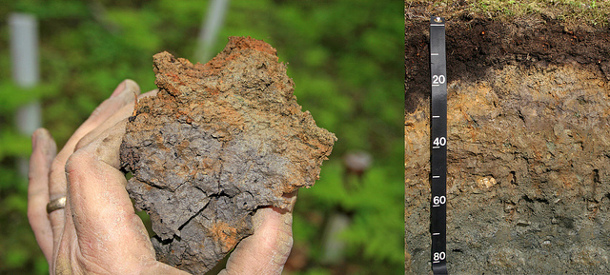
All areas of study and their industries have to cope with inaccurate but often widely accepted mythologies, and arboriculture is no exception. There are a few of these that we encounter again and again. We’ve already busted the myth that tree roots don’t grow very deep, but here’s another one: do deep soils increase the risk… More
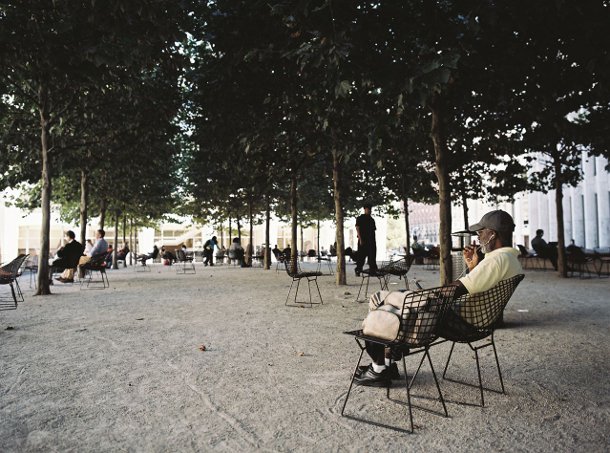
Last year, the Uptown Circle, in Normal, IL, was honored with the IL-ASLA President’s award. Now it’s been awarded an EPA “Smart Growth” award as well.
In February, the U.S. Forest Service published a report indicating that cities around the country are losing around 4 million trees per year. Of the 20 cities included in the study, 17 showed significant losses of canopy cover, and 16 showed significant increases in impervious hardscape (or paved surfaces that don’t absorb water). At the same time,… More
This post is by Bill Spiewak, an arborist in Santa Barbara, CA, and originally appeared on his blog, Treemendous. Last month in my arboriculture class, I may have implied to my students that this instructor is falling off the deep end. I asked them to stand and assume the yoga position, tree pose. My objective… More
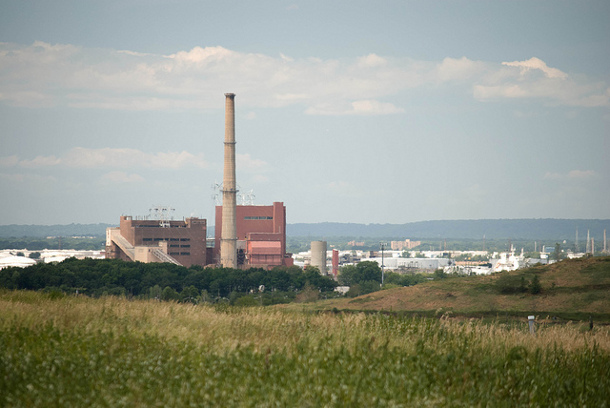
Phytoremediation is the use of green plants and their associated microorganisms to stabilize or reduce inorganic and organic contamination in soils and surfacewater or groundwater. In other words, the process of using trees and other plants as biological filters. It is also a key component of what we mean when we talk about ecosystem services… More
There are so many reasons why trees are beneficial in urban areas. This abundance of evidence can have the strange effect of sometimes making the benefits we cite feel like platitudes rather than proven, compelling facts (“trees are so great, here’s a million reasons why…” *staring off in to space*). For that reason, as much… More
Fossils are pretty amazing. These ghostly remains contain incredible detail about the ancient living things that accidentally created them. A recent article in the Wall Street Journal about the discovery of 385 million year old forest fossils got me wanting to know more about some of the most eerie, lovely specimens.
Silva Cells were recently installed at the University of South Carolina as part of a larger multi-use tailgate facility. The site, which is across the street from the school’s stadium, formerly housed the South Carolina State Farmers Market.
There’s no arguing that, at first glance, the Silva Cell just looks like a hunk of black plastic. Its humble and basic form definitely doesn’t reflect the extensive design, testing, and engineering that has gone in to it. Here’s a brief overview of the why the Silva Cell is the way it is.
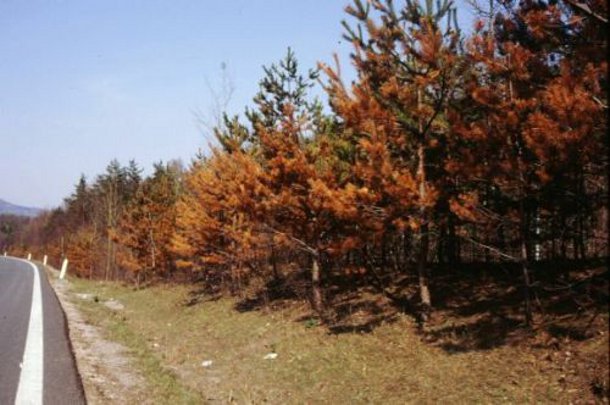
Snowfall seems to have happened very late all across the country this winter, but now that it’s here, most people are trying to find ways to get rid of it. But salt, while effective for deicing roads and streets, can have extremely detrimental effects on trees, causing things such as necrosis, burned tips, or failure… More
The specifications for most construction project are filled with seemingly endless phrases of precision such as “not less than 100 percent maximum density,” “no variation greater then ¼,” “shall be at least .005 in thickness,” “minimum strength of 3,000 psi,” etc. Why is this? Buildings, bridges, roadways, utilities, and the like are all intended to… More
 Soil. Stormwater. Sustainable Infrastructure.

Request a Quote [email protected]
Tel: 415 781 9700
Toll Free: 800 458 7668
Toll Free: 800 277 7668
Fax: 415 781 0191