Tree Tour of San Francisco’s Mission District
Last weekend I went on a biking tour of the trees in the Mission District of San Francisco hosted by Friends of the Urban Forest and the SF Bike Coalition.
Last week Graham and I stopped by a Silva Cell installation as it was going in to the ground at Mitchell Library and Community Center (3700 Middlefield Road, Palo Alto, CA).
This hydrograph (diagram showing runoff flow versus time) compares the intense spike of a stream during a storm in an urbanized watershed without adequate controls, with the “gentle rolling hill” appearance of a forested watershed’s response to the same storm. Note the loss of dry weather base flow for the stream in the urbanized watershed…. More
I get several calls a week from the weekend warriors working on various home improvements. Often these improvements relate to cutting tree roots and some type of hardscape (such as sidewalks, driveways, foundations, and retaining walls). The first thing I suggest is that the homeowner talk to an ISA Certified Arborist before doing any sort… More
Here are this year’s photos from the Bartlett Tree Lab study comparing different planting methods for urban trees. For comparison, check out last year’s set. And for a fuller chronological picture, you can see all the photos up to that point in this post.
Back in January we posted about a project in Shoreline, WA, where the Silva Cells were being used to extend a sidewalk rain garden underneath paving. This stretch of the project is finally completed! It looks amazing, and we’ve got a case study to tell you all about it.
Kaid Benfield’s recent blog post about seeing cities as environmental solutions rather than environmental problems is really, truly excellent. He argues that to save the natural landscape we need to work on keeping people in “people habitat” by creating compact urban areas that are efficient and desirable places to live, work, and play.
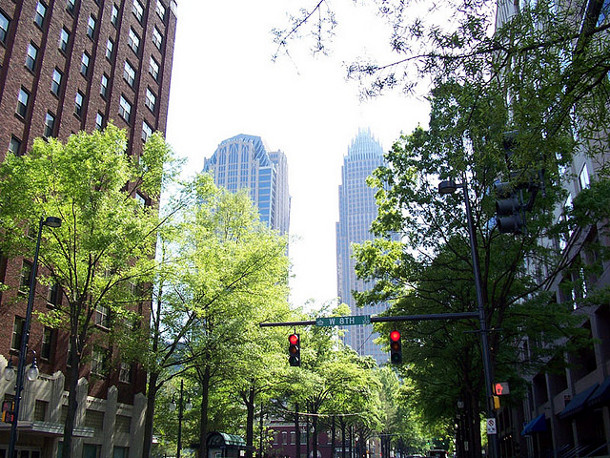
Suspended pavement trenches with adequate amounts of soil are a great solution for growing healthy, mature street trees — downtown Charlotte and the Christian Science Center in Boston are just two examples of how fantastic the results can be. These two systems are 25 and 43 years old, respectively, and the trees look incredible. Still,… More
The Christian Science Center, on Huntington Ave between Mass Ave and Belvidere Street in Boston, is the oldest suspended pavement installation that we know of in the United States. These trees were planted in 1968, making them 43 years old.
A few weeks ago I was in a meeting with the chief of staff for a San Francisco supervisor. She mentioned that there are entire areas of the city — those that are predominantly Chinese and Chinese-American — where city tree planting is very limited due to cultural beliefs in feng shui. I’d heard the… More
There is an interesting online discussion happening in the Urban Forestry group on LinkedIn right now about the future of urban forestry. I think about this question a lot, and the discussion was a good excuse to put some of my thoughts down on paper.
Getting funding for tree planting isn’t always easy. Still, it’s a piece of cake compared to getting funding for tree maintenance. Look at San Francisco, which is on the cusp of turning over the responsibility of their street trees to property owners.