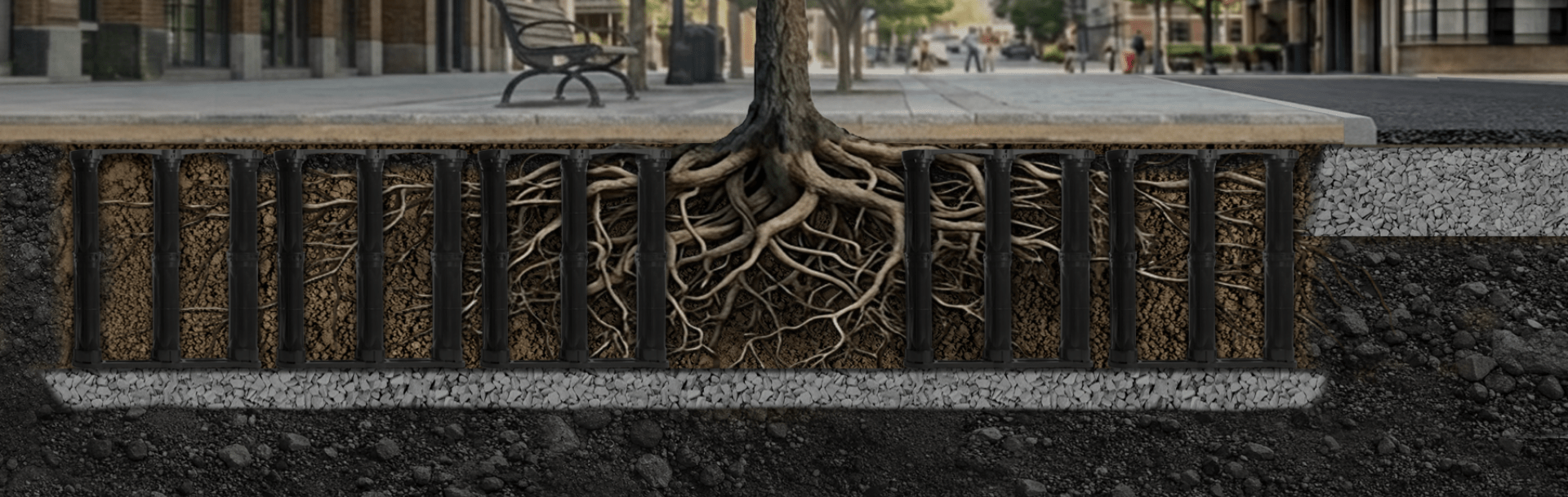
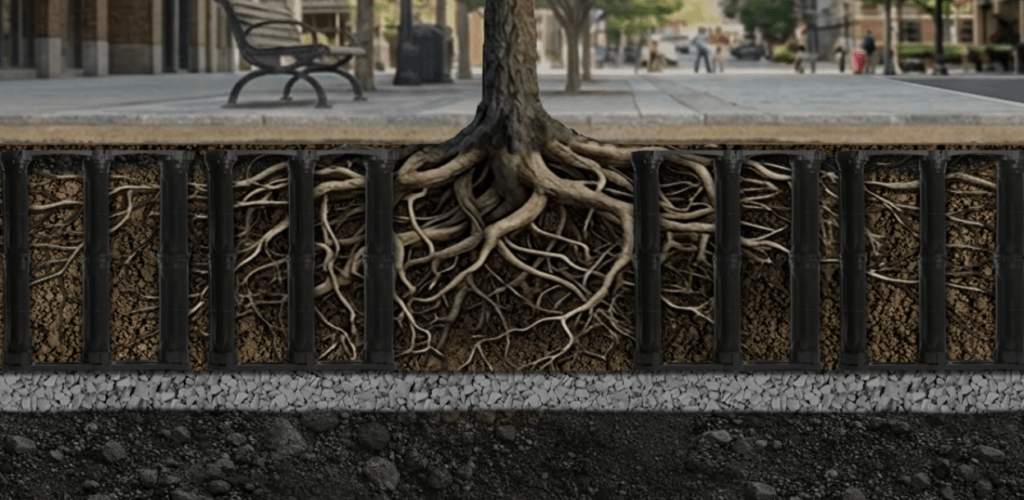
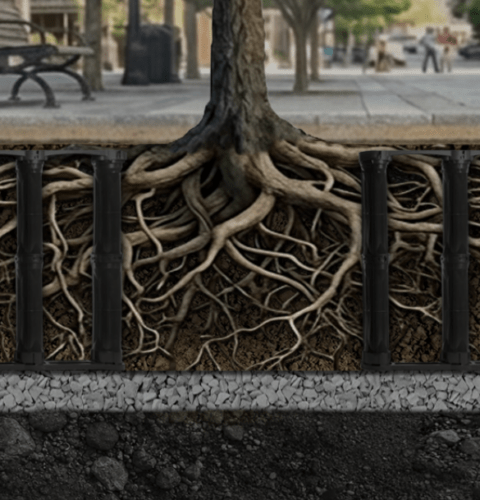
Silva Cells allow projects to achieve the same tree health with significantly less material.
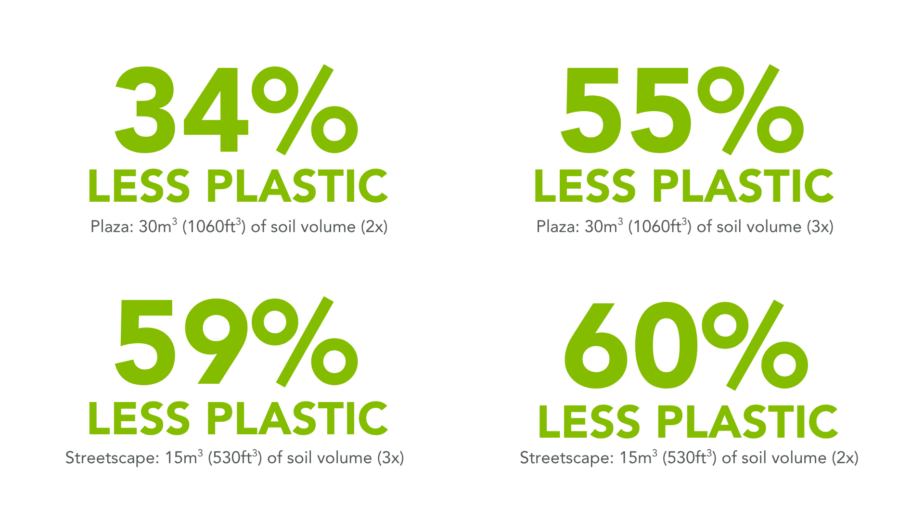
In some applications, Silva Cell uses as much as 60% less plastic than other leading soil cells to achieve exactly the same soil volume. That means the same underground growing conditions, the same opportunity for long-term tree health, and the same structural performance — with far less material in the ground. When projects can achieve the same outcome using less plastic, the choice becomes clear.
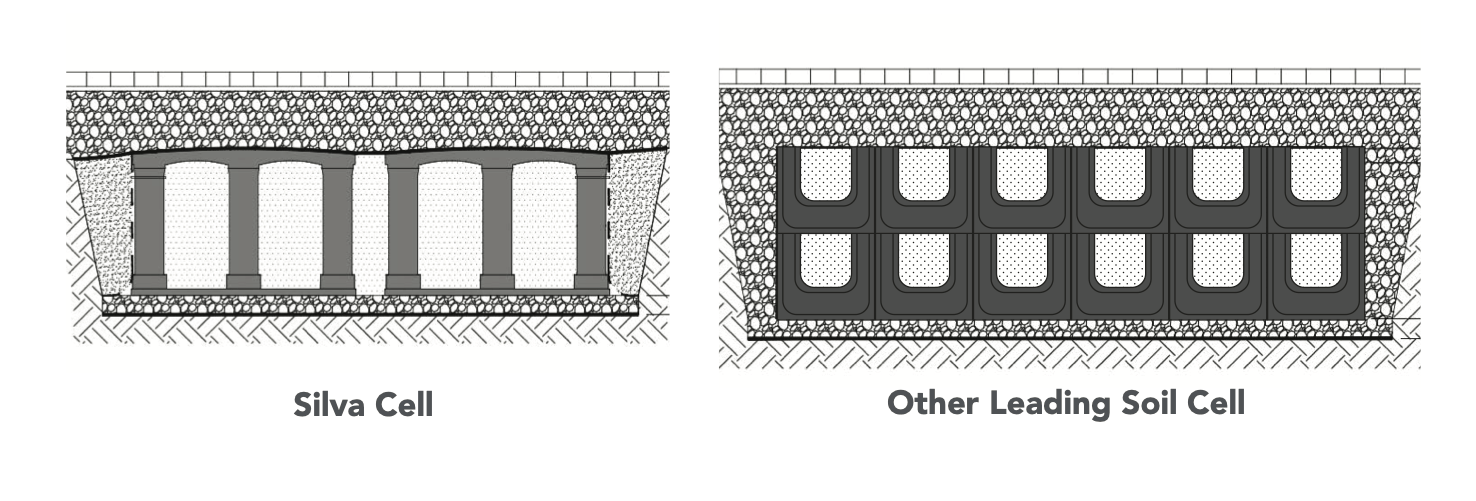
Less plastic is not an accident.
At DeepRoot, we take what goes underground seriously. Every piece of plastic we put in the ground is a decision. More material does not necessarily mean better performance. Our approach is centered around what we call plastic optimization — continually refining the system to remove unnecessary material while maintaining performance. Every component is evaluated; we ask if it’s necessary, does it contribute to performance, and can it be reduced or removed? Plastic optimization is about:
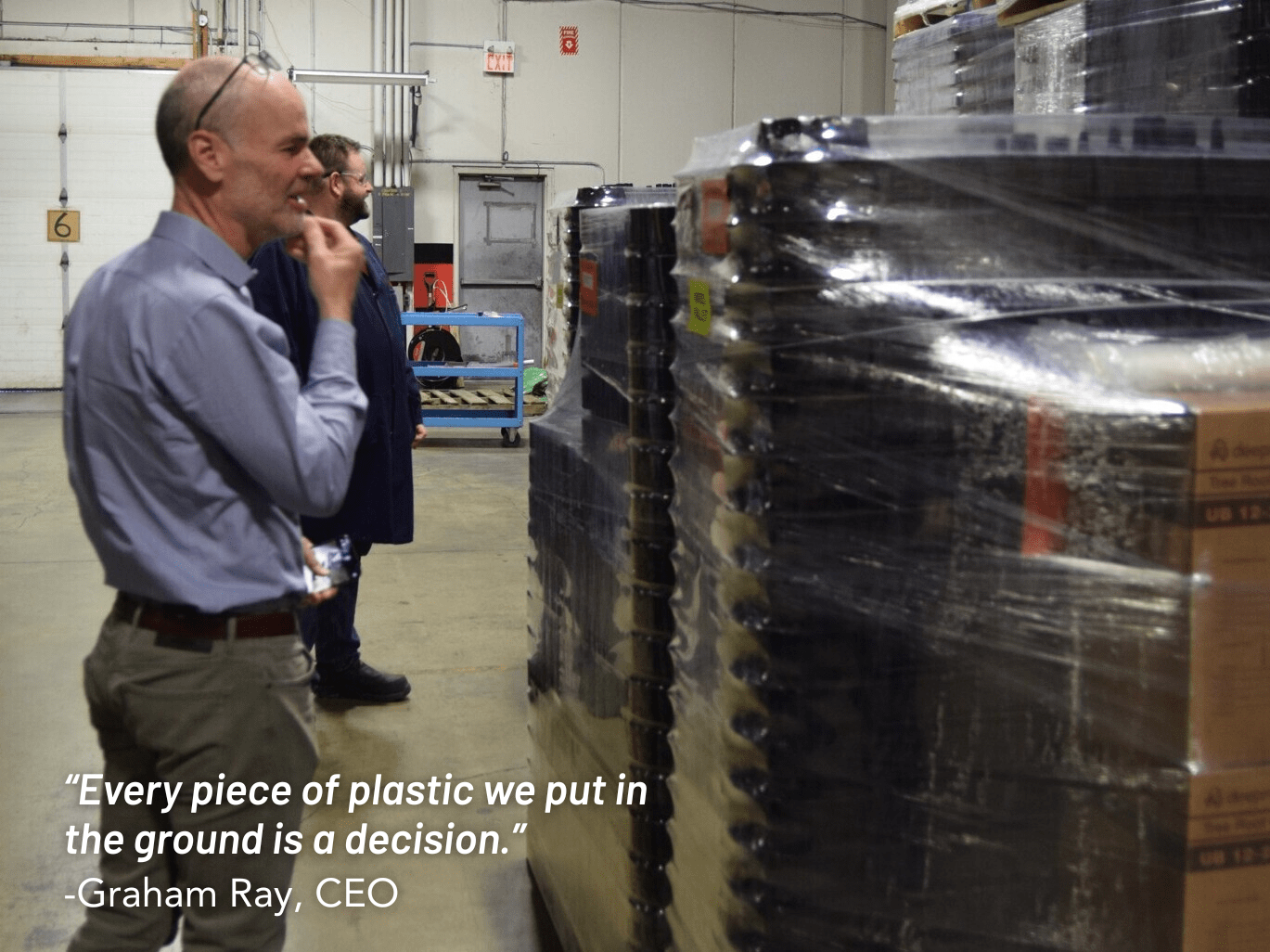
Less plastic isn’t an accident — it’s the result of thousands of small engineering decisions made over time. DeepRoot CEO Graham Ray explains in this letter why plastic optimization has become an ongoing priority and how thoughtful design can help cities achieve the same outcomes with less material.
Using less plastic does not mean sacrificing performance. Engineering precision, not excess.
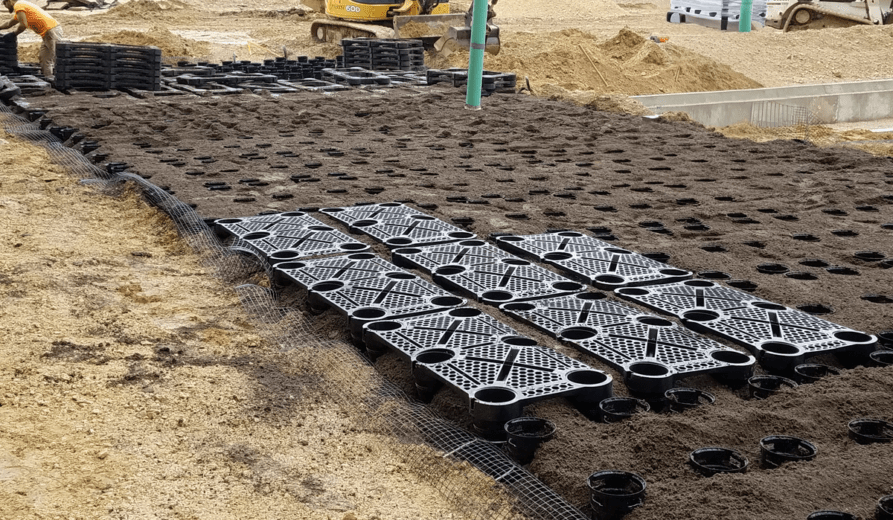
Silva Cells are engineered to meet required loading standards and have been validated through independent third-party testing. The system’s structural performance has been proven through more than 4,000 installations worldwide.
The comparison is based on systems delivering the same soil volume in equivalent streetscape and plaza applications. Using published product dimensions and material requirements, we calculated the amount of plastic required to achieve specified soil volumes across multiple common project configurations.
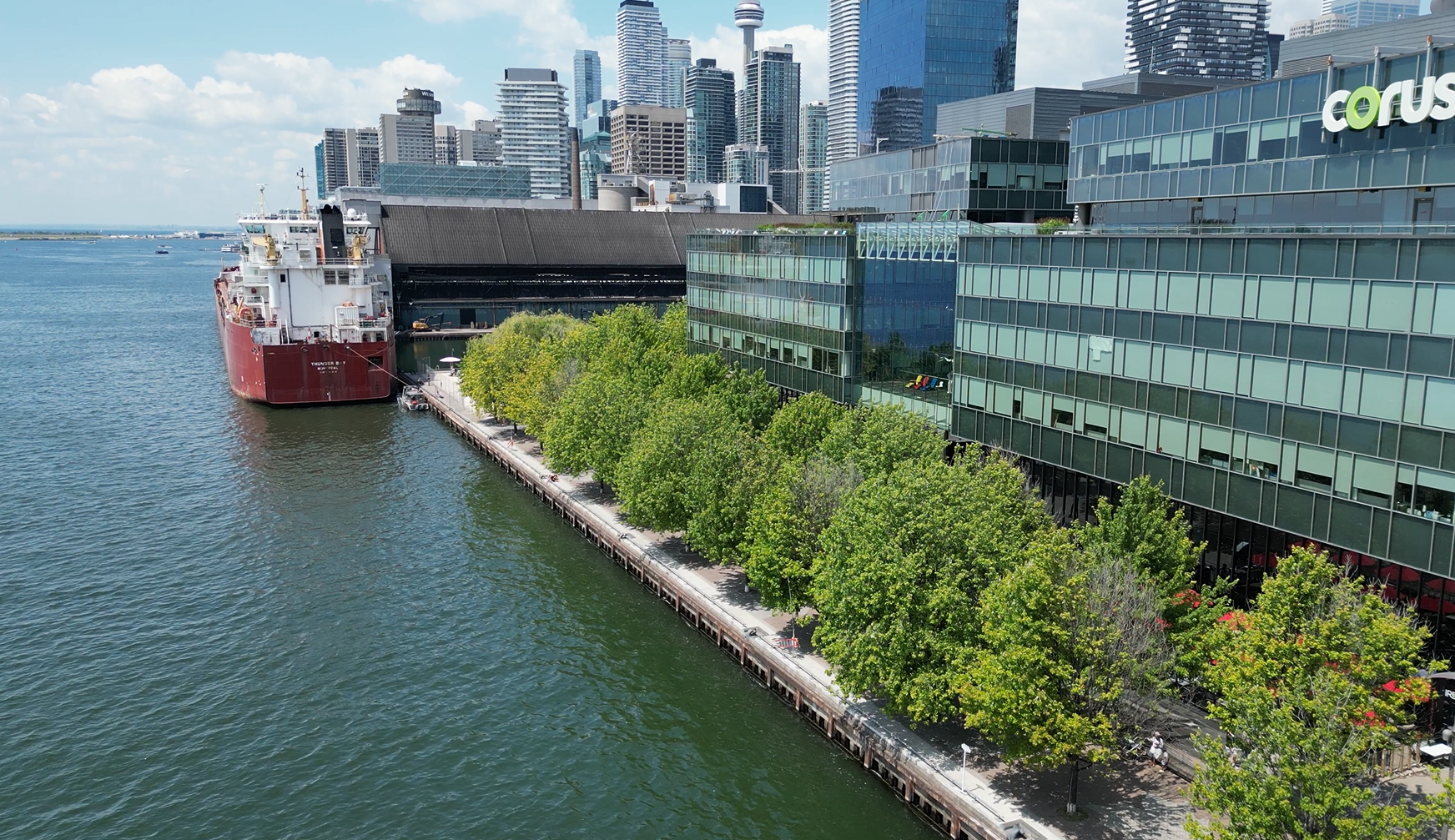
Our mission is to help build greener cities — and that starts below the surface. That responsibility extends beyond the trees we support and reaches into the materials we use and the decisions we make during design and manufacturing. When projects can achieve the same tree performance with significantly less material, the choice is clear.
 Soil. Stormwater. Sustainable Infrastructure.

Request a Quote [email protected]
Tel: 415 781 9700
Toll Free: 800 458 7668
Toll Free: 800 277 7668
Fax: 415 781 0191

 en
en en
en