
 en
en en
enAN EXCEPTIONAL VOLUME OF SOIL SUPPORTS LONG-TERM CANOPY GROWTH IN THE HEART OF DOWNTOWN.
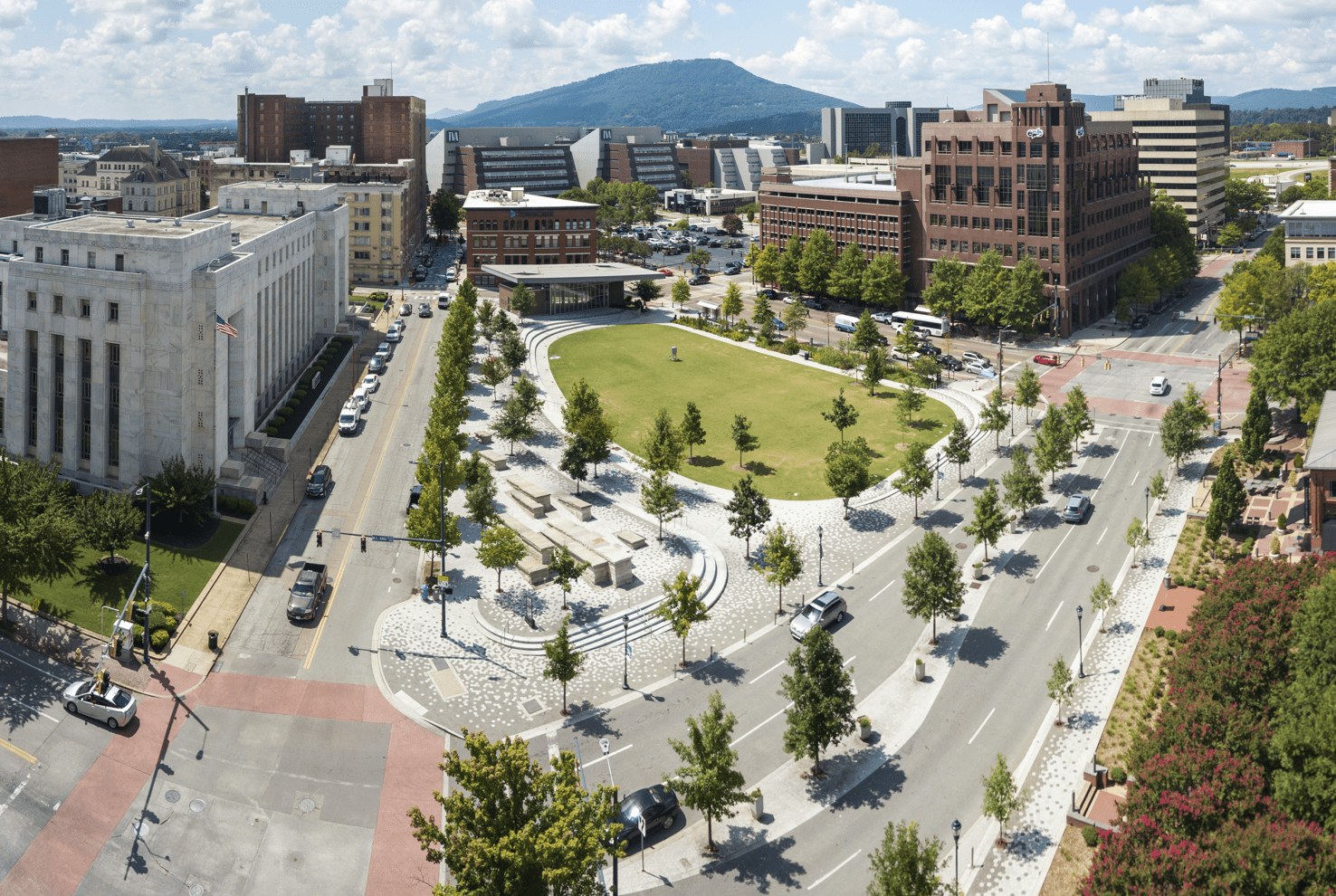
More than 44,000 cubic feet of shared soil supports 37 trees while treating stormwater beneath Chattanooga’s modern public square.
Number of Silva Cells: 1,302 (2x)
Number of Trees: 37 (19 street, 18 plaza)
Soil Volume per Tree: 1,206 cubic feet
Installation: 2017
Project Designer: Spackman Mossop Michaels
Project Contractor: Thomas Brothers Construction
Once a sunken plaza disconnected from its surroundings, Miller Park has been reinvented as an accessible civic destination in the heart of Chattanooga. Completed in 2018, the new park welcomes everyday visitors while accommodating concerts, cultural programming, and more than 200 public events each year.
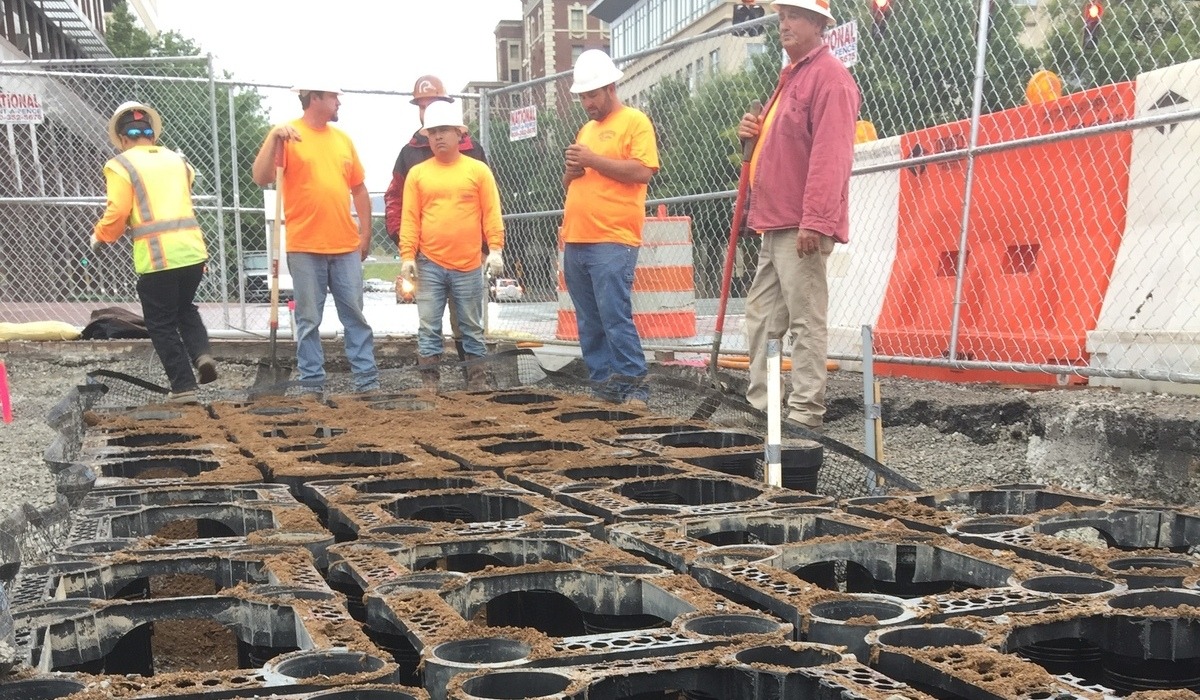
Trees were central to that transformation. Thirty-seven maples were planted in over 1,300 (2x) Silva Cells containing 44,607 cubic feet of soil — an exceptional average of 1,206 cubic feet per tree. Nearly a decade later, that underground investment is supporting a robust downtown canopy while also helping manage stormwater beneath the park and surrounding streetscape.
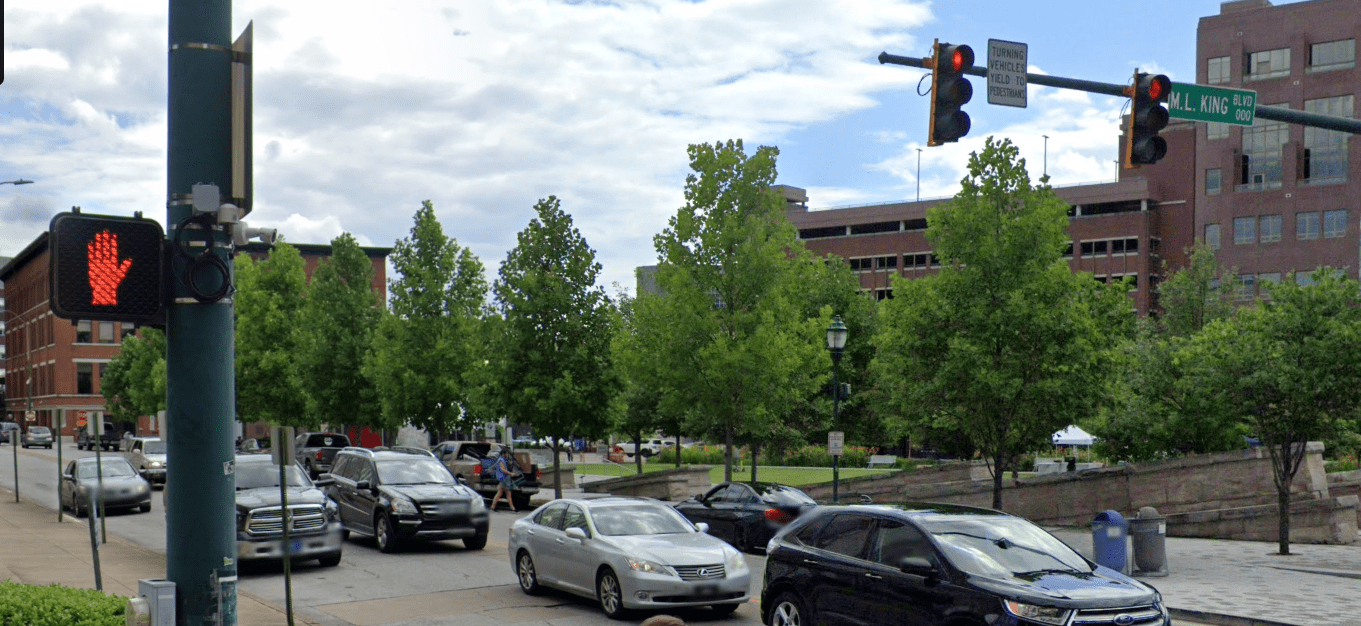
Originally developed in the 1970s, Miller Park’s sunken design created a physical separation between the park and the city around it. Despite its central location near City Hall and the Chattanooga Public Library, the space did not feel like an inviting or natural extension of downtown.
Working with the City of Chattanooga, the landscape design team at Spackman Mossop Michaels raised the park to street level and used a shared-street approach along Martin Luther King Boulevard to connect it with the adjacent Miller Plaza. Extensive community engagement helped shape a flexible public space with open lawn, seating, gathering areas, and a technologically equipped performance pavilion. The result is what Chattanooga now calls its modern public square: a welcoming destination designed to bring people together.
A successful downtown canopy begins with what’s available below the surface. At Miller Park, 1,302 (2x) Silva Cells provide 44,607 cubic feet of lightly compacted planting soil for 37 trees — 19 street trees around the park and 18 trees within the plaza.
That works out to an average of 1,206 cubic feet of soil per tree. Above this soil, the Silva Cell frames support pedestrian pavement and surrounding infrastructure. Below it, roots have room to expand without lifting or disrupting the public space overhead. The installations follow the park’s combination of linear streetscape runs, curved edges, and gathering spaces while placing substantial soil volume wherever the trees need it.
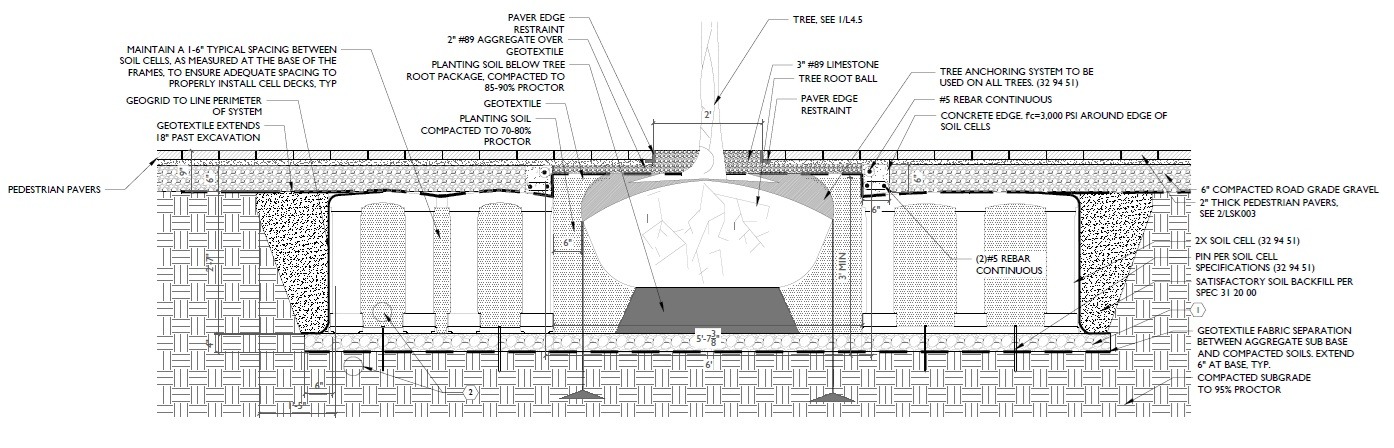
The expansive soil system also functions as green stormwater infrastructure. Stormwater routed through the Silva Cells moves through the lightly compacted planting soil, where runoff is slowed and filtered while also providing irrigation to the trees. A perforated underdrain at the bottom of the system collects excess water.
By managing runoff within the landscape, the system helps filter pollutants and reduce the amount of stormwater sent directly to Chattanooga’s combined sewer system. This added function takes place entirely below the active plaza and sidewalks, allowing Miller Park to provide stormwater benefits without sacrificing valuable space for people.
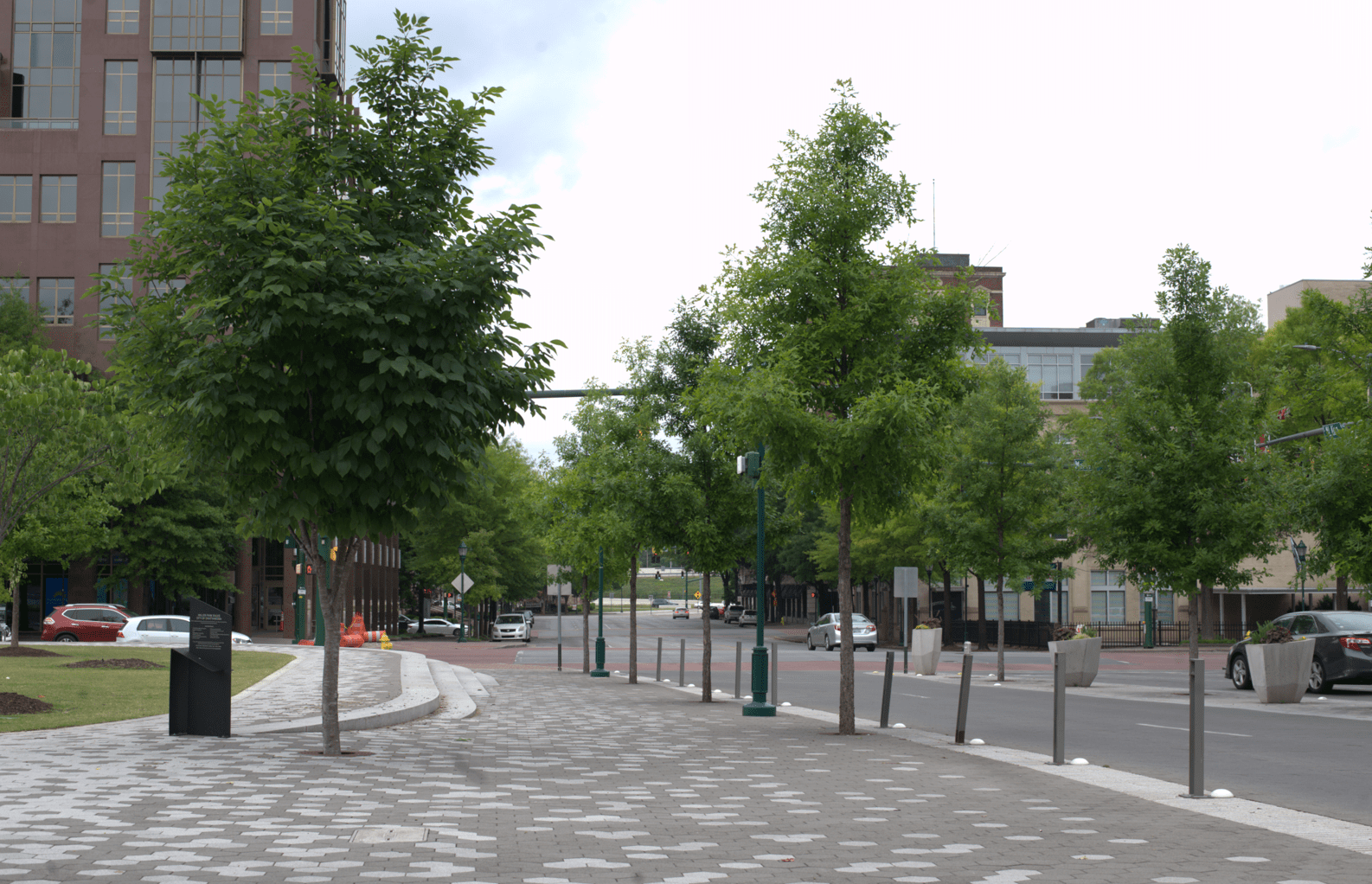
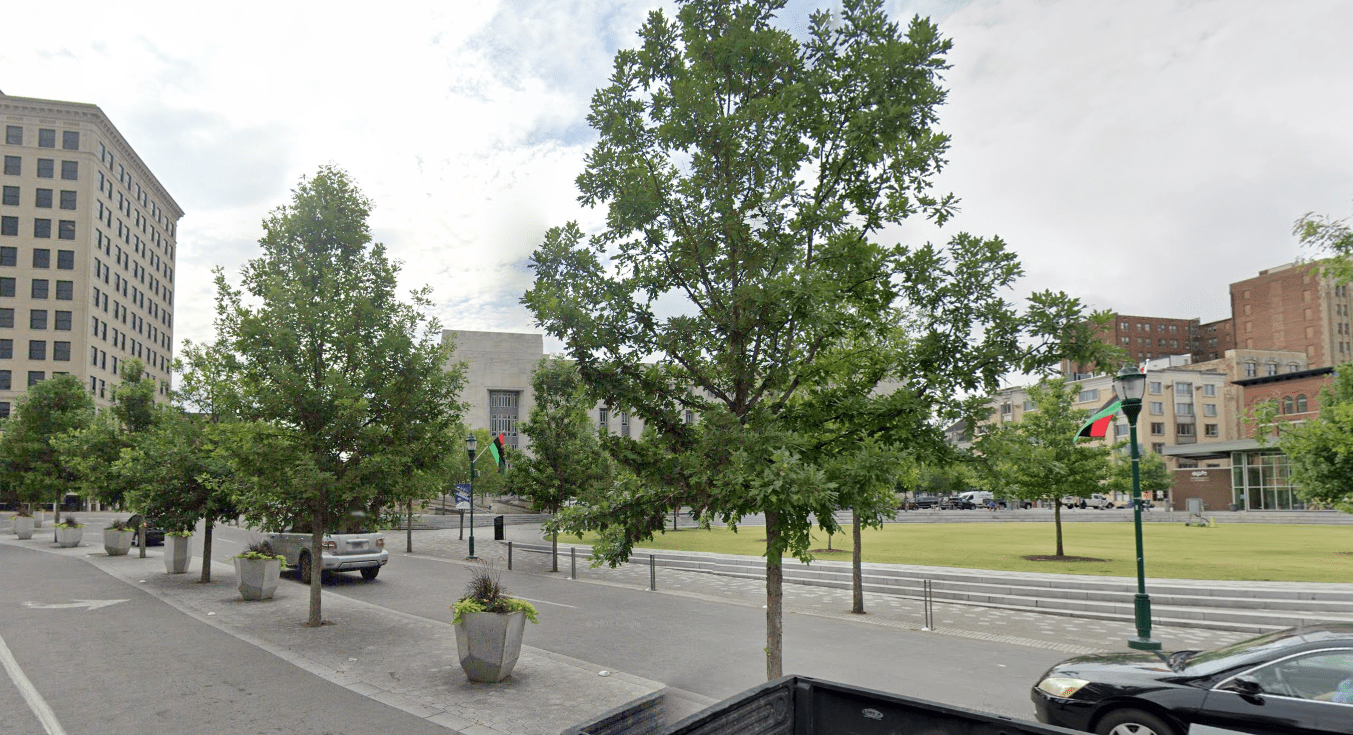
Installed in 2017, Miller Park’s trees are now approaching a decade of growth. Their expanding crowns bring shade, greenery, and comfortable human scale to a heavily used downtown space, framing the park’s walkways, seating areas, and gathering places. The growing canopy demonstrates the long-term value of investing below the surface. By giving its trees more than 1,200 cubic feet of soil apiece — and connecting many of those trees through shared rooting zones — Chattanooga created the foundation for a healthier urban forest at the center of one of its most important civic destinations.
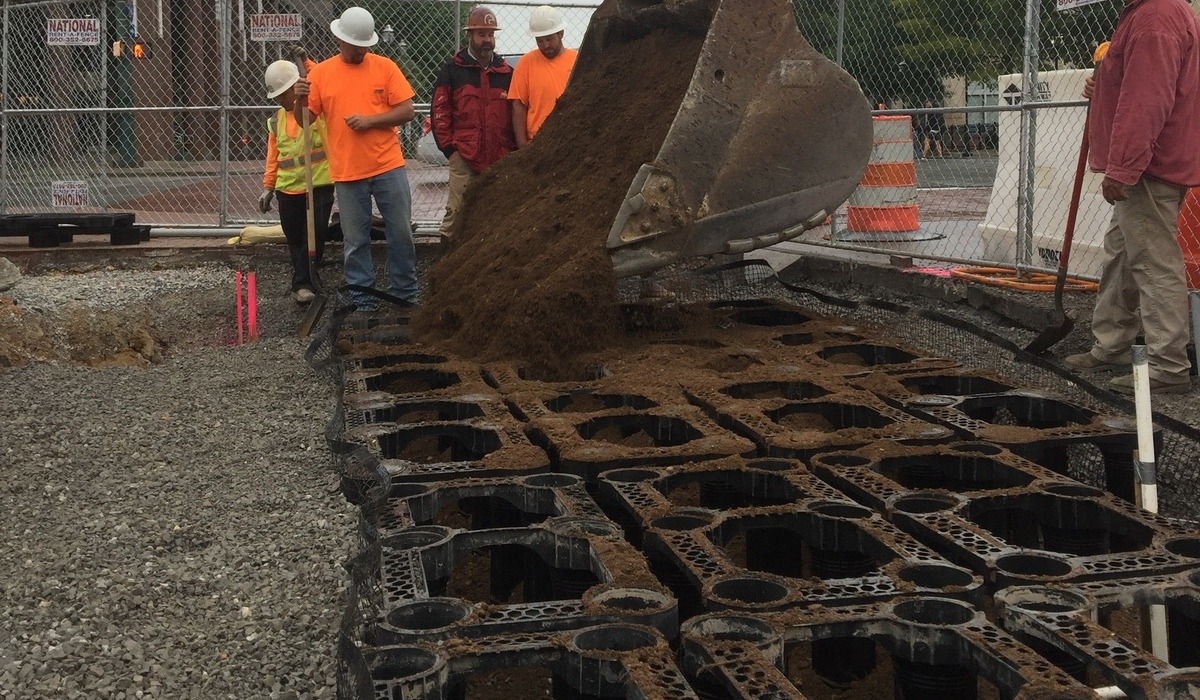

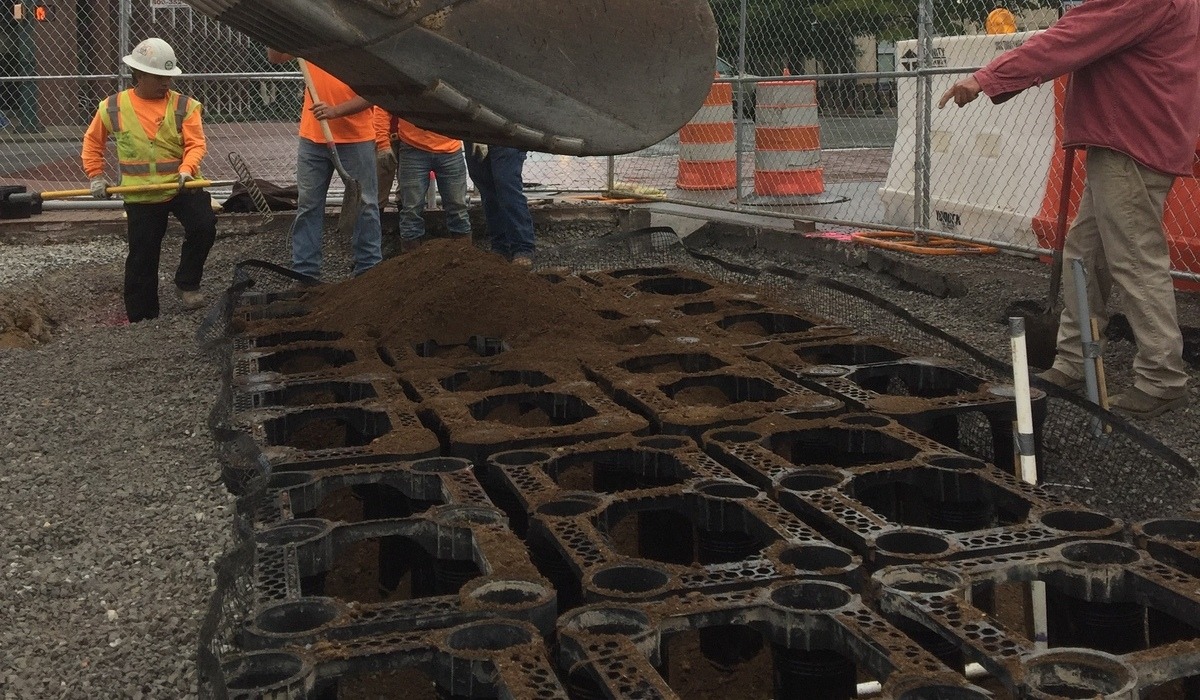
Simple Soil Placement
Silva Cells’ strongback installation lids are the widest in the industry, allowing full access during the construction process — including placing soil in large lifts like they did here at Miller Park.
 Soil. Stormwater. Sustainable Infrastructure.

Request a Quote [email protected]
Tel: 415 781 9700
Toll Free: 800 458 7668
Toll Free: 800 277 7668
Fax: 415 781 0191