
 en
en en
enTRANSFORM NEARLY ANY SPACE INTO A STORMWATER SOLUTION
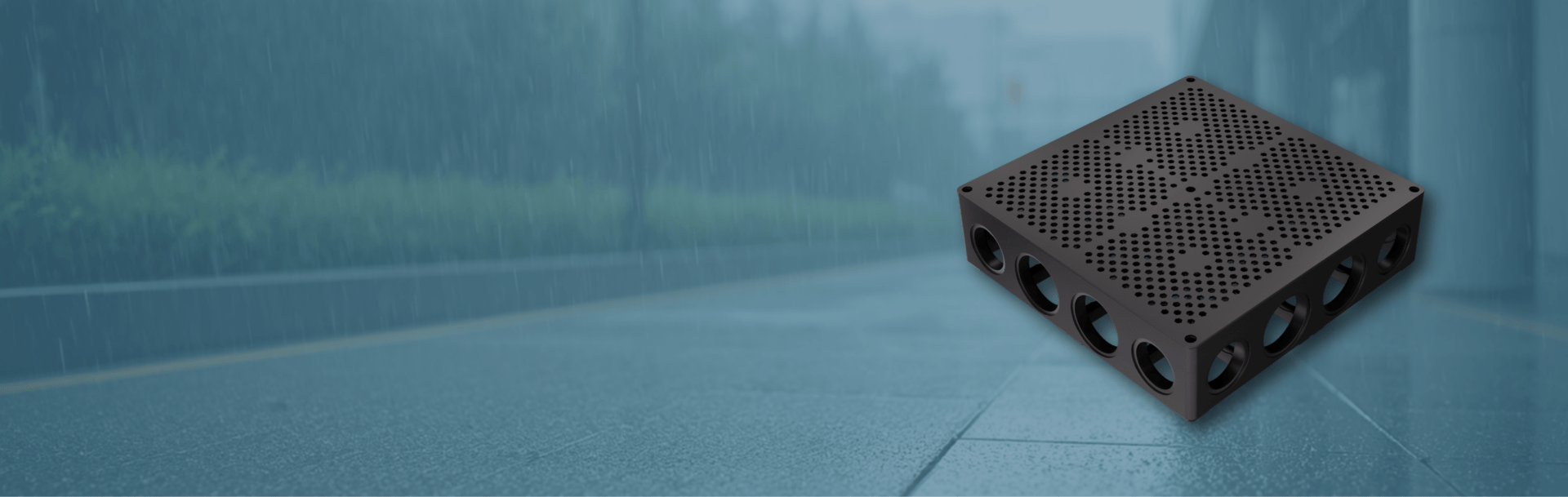
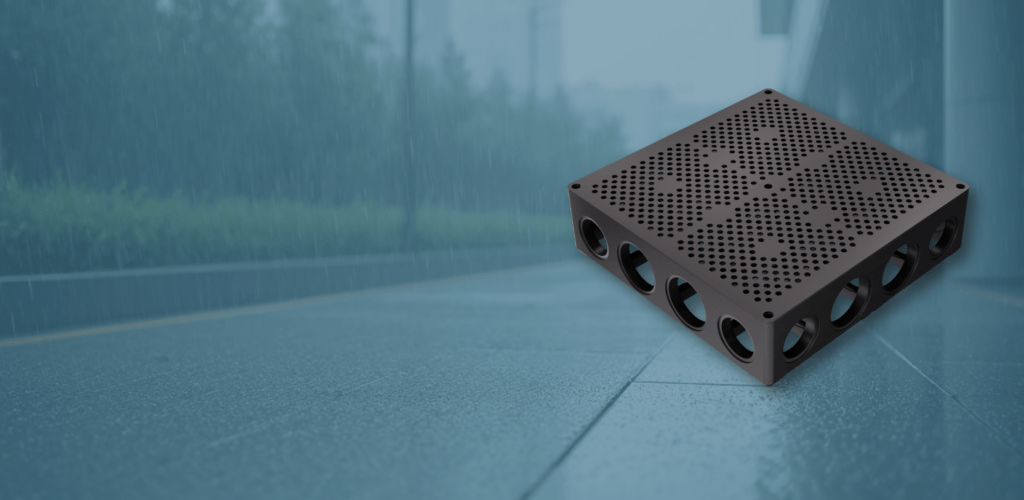
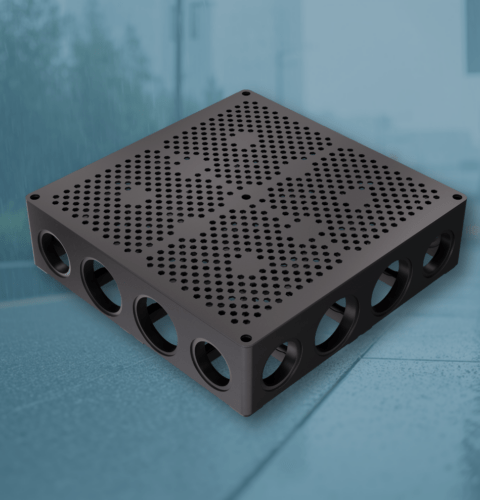
Marino Cell is not trying to replace large, deep detention systems. Instead, it’s built for projects that those systems do not properly serve: shallow excavation needs, urban infill, conflict-heavy footprints, and various surface treatments.
With decades of experience helping projects bring ecological function and flourishing green infrastructure to their urban sites, we understand better than anybody that this underground space is rarely open, simple, or forgiving. Marino Cell was designed for these realities: to deliver stormwater performance in constrained spaces where every inch matters.
The “dotted” approach to stormwater storage allows shallow, distributed pods to be placed throughout a site, rather than relying on a single, deep detention tank.
Most underground stormwater systems force a tradeoff: shallow depth or loading strength. Marino Cell changes that equation. With as little as 4” (100mm) of cover, the system can achieve H-20 vehicular loading, making it possible to place stormwater storage beneath hard-working urban surfaces without the deep excavation that larger systems often require.
That shallow, traffic-rated profile opens up design possibilities. Surface uses do not need to be sacrificed, excavation can remain more manageable, and constrained sites gain access to a type of stormwater performance that is often difficult to achieve in tight urban conditions.

Urban sites and redevelopments rarely offer the clean, uninterrupted underground space that traditional stormwater systems prefer. Marino Cell is built for these realities. In urban infill projects in particular, every inch of site area counts. Because Marino Cell does not require the same deep excavation profile as larger systems, it can also be placed much closer to property lines, helping wring more ecological function from sites that might otherwise seem too constrained.
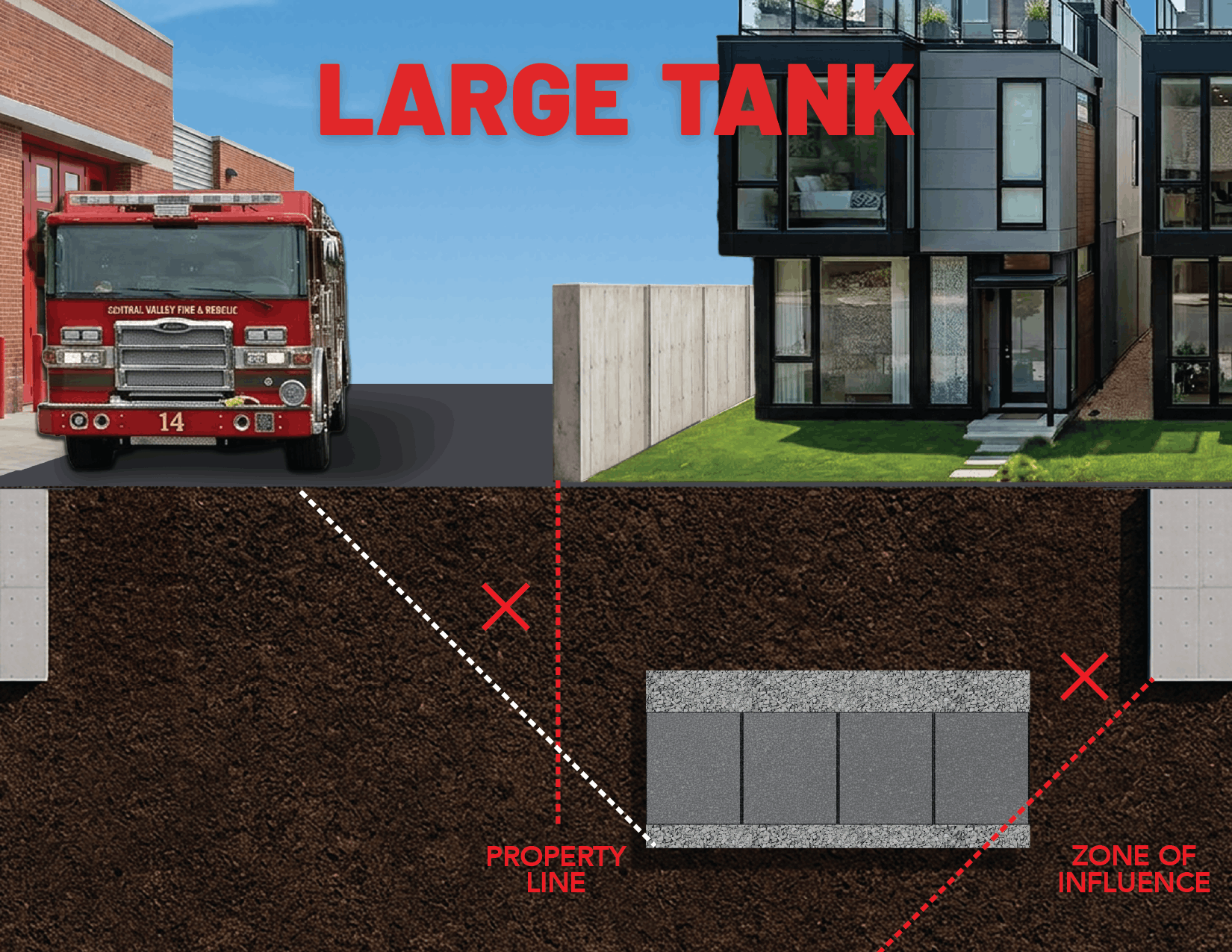
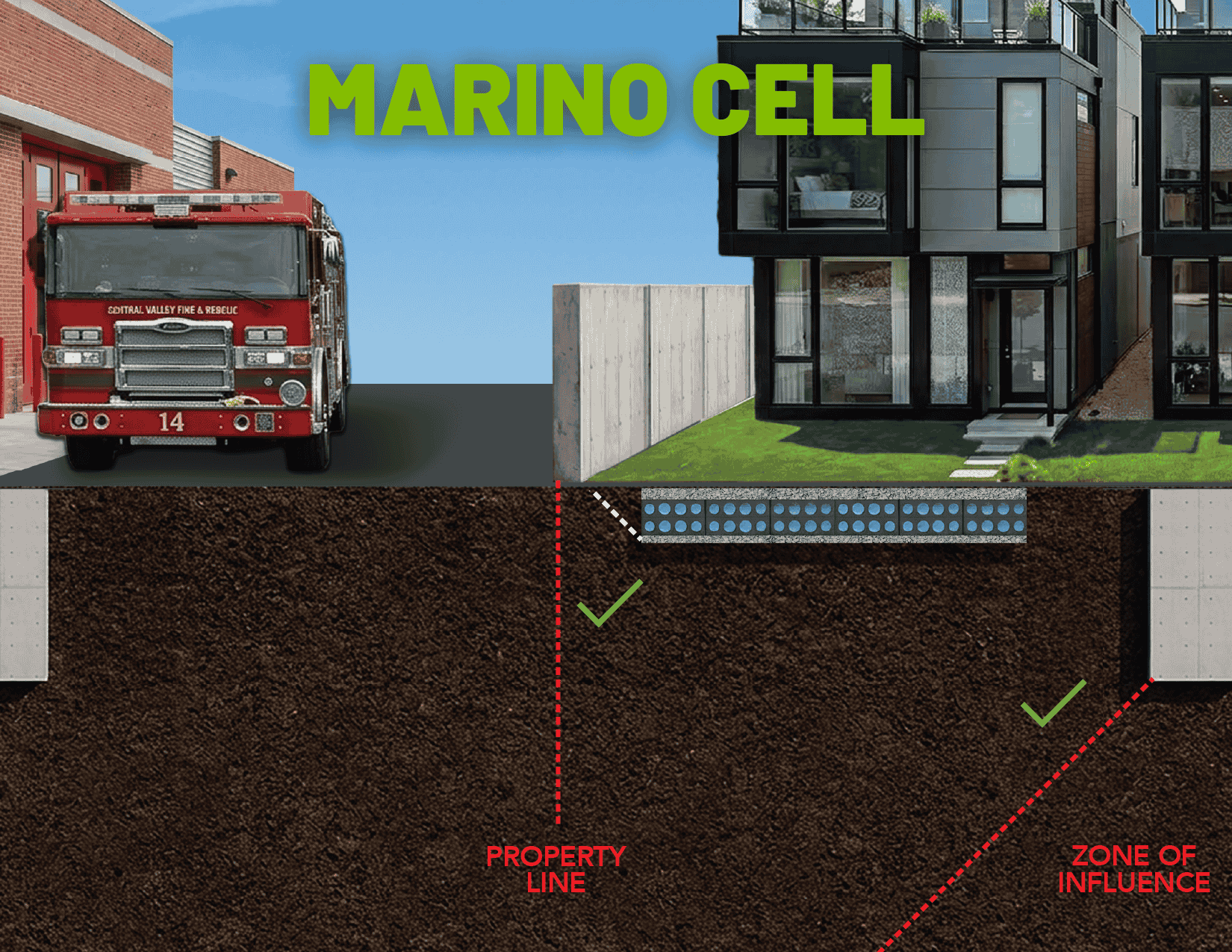
Deep detention tanks, like those on the left, cannot be placed near the property line due to excavation requirements. They may likewise interfere with the building foundation’s zone of influence. Marino Cell is instead installed near the surface, which allows for property line-adjacent placement without disturbing the zone of influence.
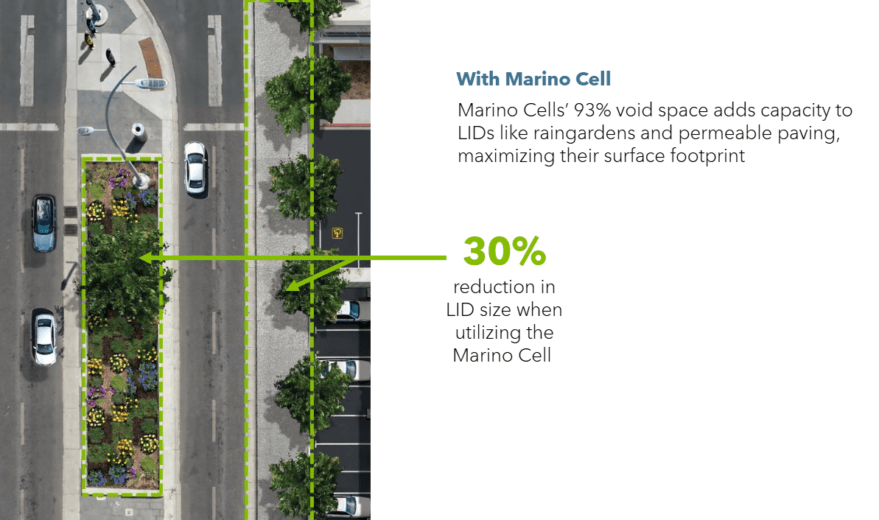
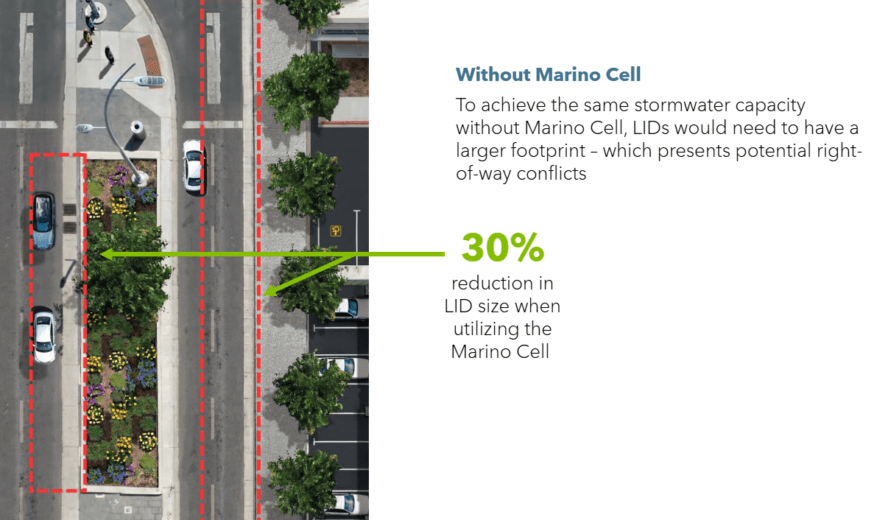
Marino Cell is a low-impact development (LID) strategy in its own right, but it can also make other LID systems more effective. When paired with permeable paving, bioretention, and other green infrastructure approaches, it adds subsurface storage capacity where stone or less efficient material might otherwise be used.
That means more performance from the same footprint. Projects can increase storage and make better use of available surface space — true ecological function and symbiosis can be achieved rather than asking one system to do all the work alone.
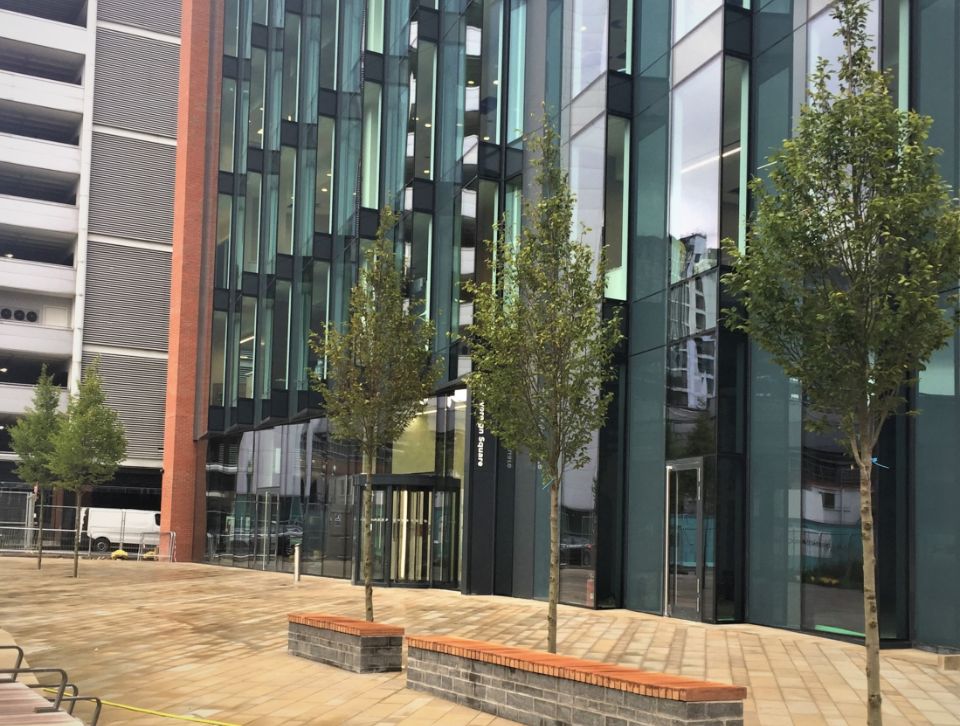
Many underground stormwater systems create tension with trees. Dead loads, root growth, and limited underground space can push trees out of the design altogether. Marino Cell offers a different path. The system is strong enough to handle dead loads, and DeepRoot brings decades of experience in managing underground space, including how to guide roots and coordinate stormwater infrastructure with healthy planting strategies.
For designers, that means trees do not have to be treated as a conflict. In the right application, Marino Cell can help support passive irrigation and allow stormwater performance and urban forestry goals to work together rather than compete. In select projects, it can even be paired with Silva Cell to create a more integrated below-grade green infrastructure approach.
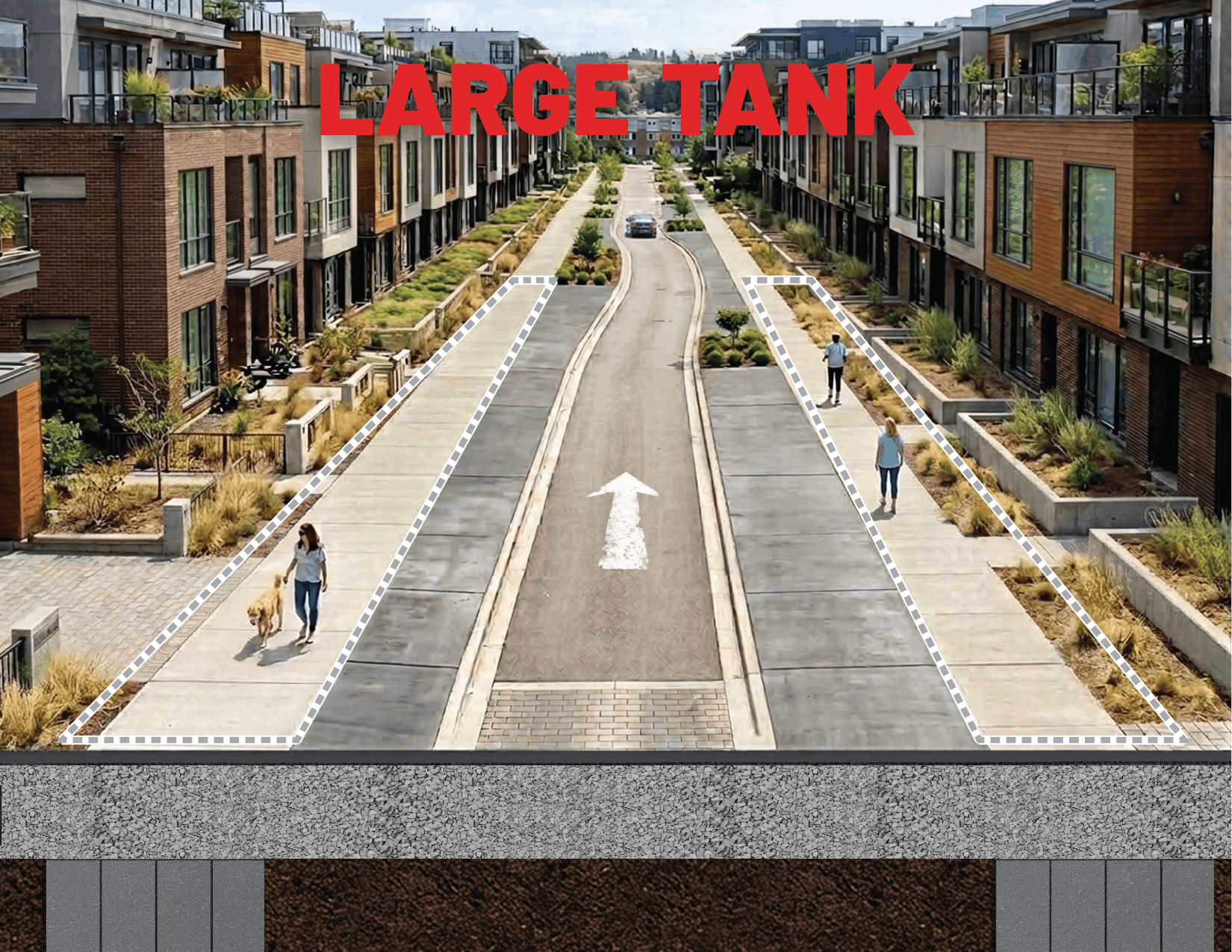
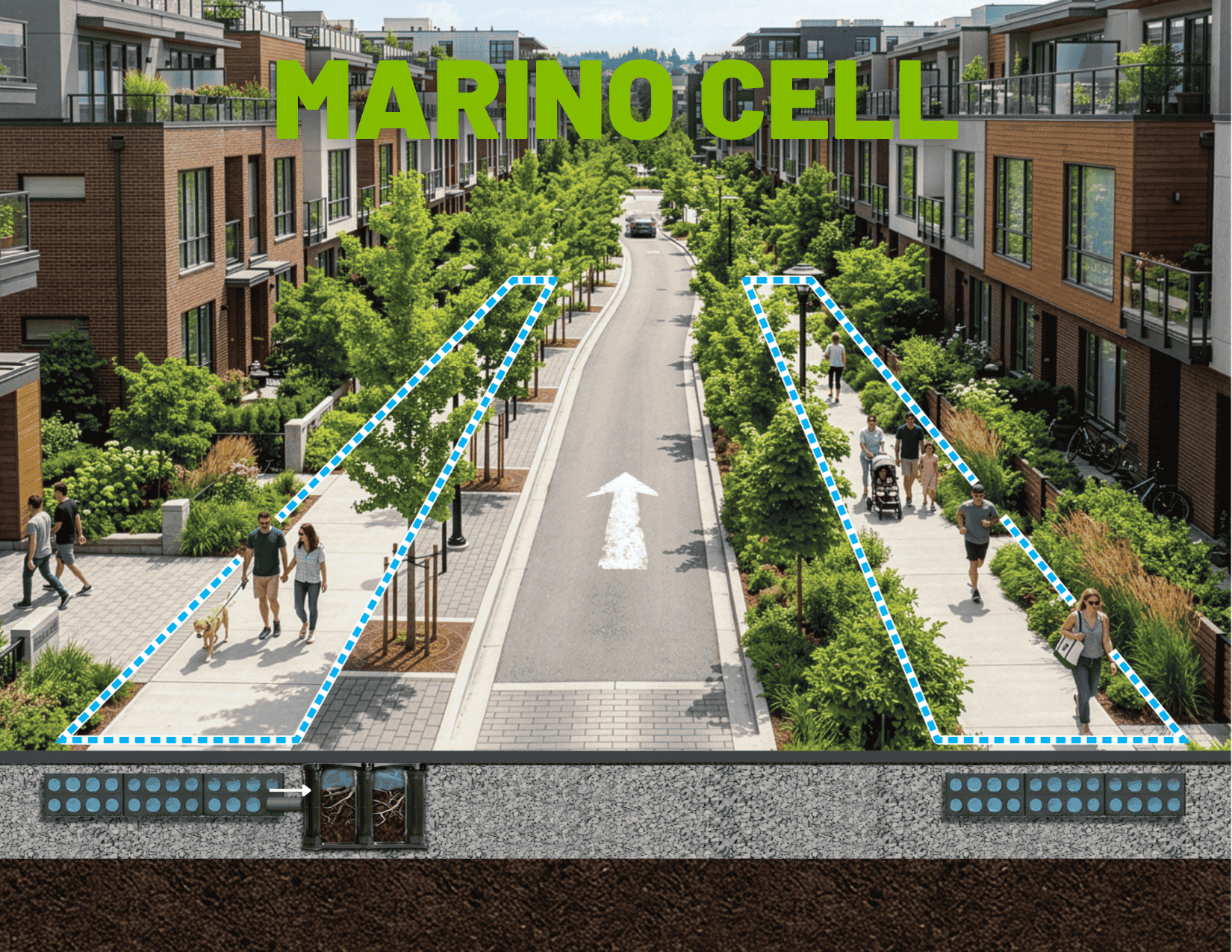
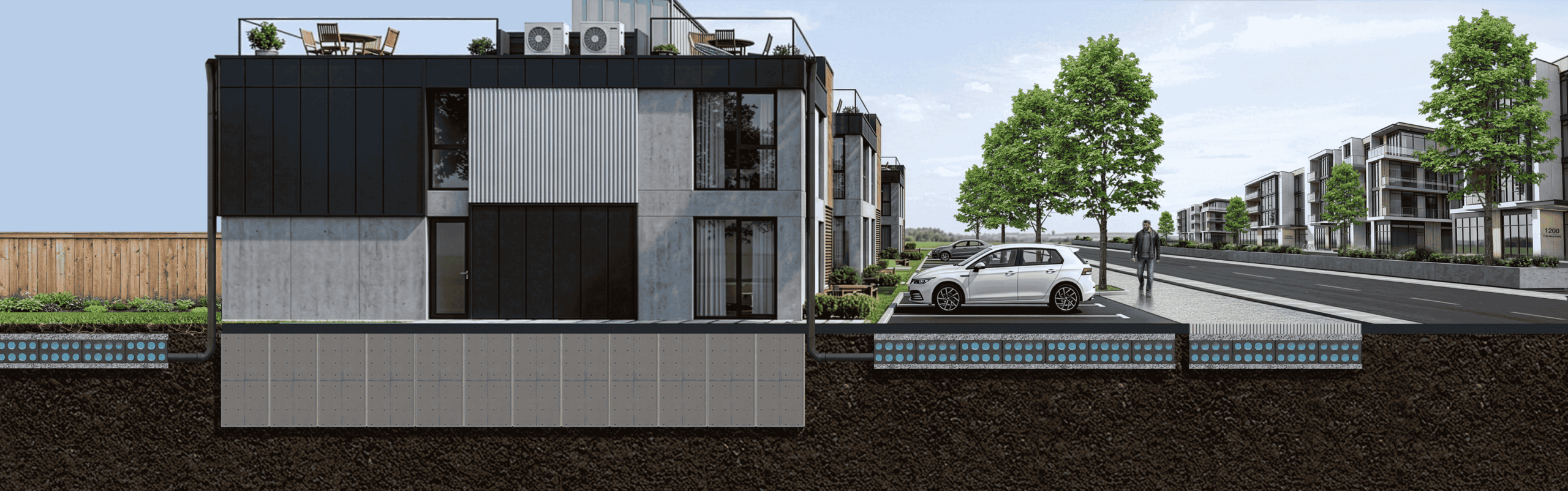
Traditional stormwater tanks do not integrate well with trees, often forcing trees to be scratched from design plans, leaving communities without green space — like the neighborhood on the left. Marino Cell and trees peacefully coexist, allowing subsurface stormwater storage and trees to be present in the same urban space — like the neighborhood on the right.
 Soil. Stormwater. Sustainable Infrastructure.

Request a Quote [email protected]
Tel: 415 781 9700
Toll Free: 800 458 7668
Toll Free: 800 277 7668
Fax: 415 781 0191