Number of Silva Cells: 618 (3x)
Number of Trees: 25
Installation: 2022
Project Designer: Perkins Eastman
Phase 2 Project Design Partner: Wolf Josey
Average Soil Volume Per Tree: 915 cubic feet
The Wharf is one of Washington DC’s most ambitious waterfront redevelopment projects: a mile-long transformation of the city’s Southwest Waterfront into a vibrant mixed-use district of parks, piers, promenades, residences, hotels, restaurants, retail, offices, music venues, and public gathering spaces. Designed to reconnect the city with the Washington Channel, the project has become a nationally recognized example of how large-scale urban redevelopment can create an active, people-centered public realm.
That success has earned The Wharf significant recognition across planning, architecture, urban design, and landscape architecture circles with over a dozen awards. Silva Cells played an important role in the project’s second phase, where 618 Silva Cells were installed in 2022 to support new hardscape and plaza trees. In several locations, this meant building substantial rooting space beneath paved public areas — and, in some cases, above an underground parking garage — creating soil volume where it otherwise couldn’t exist.
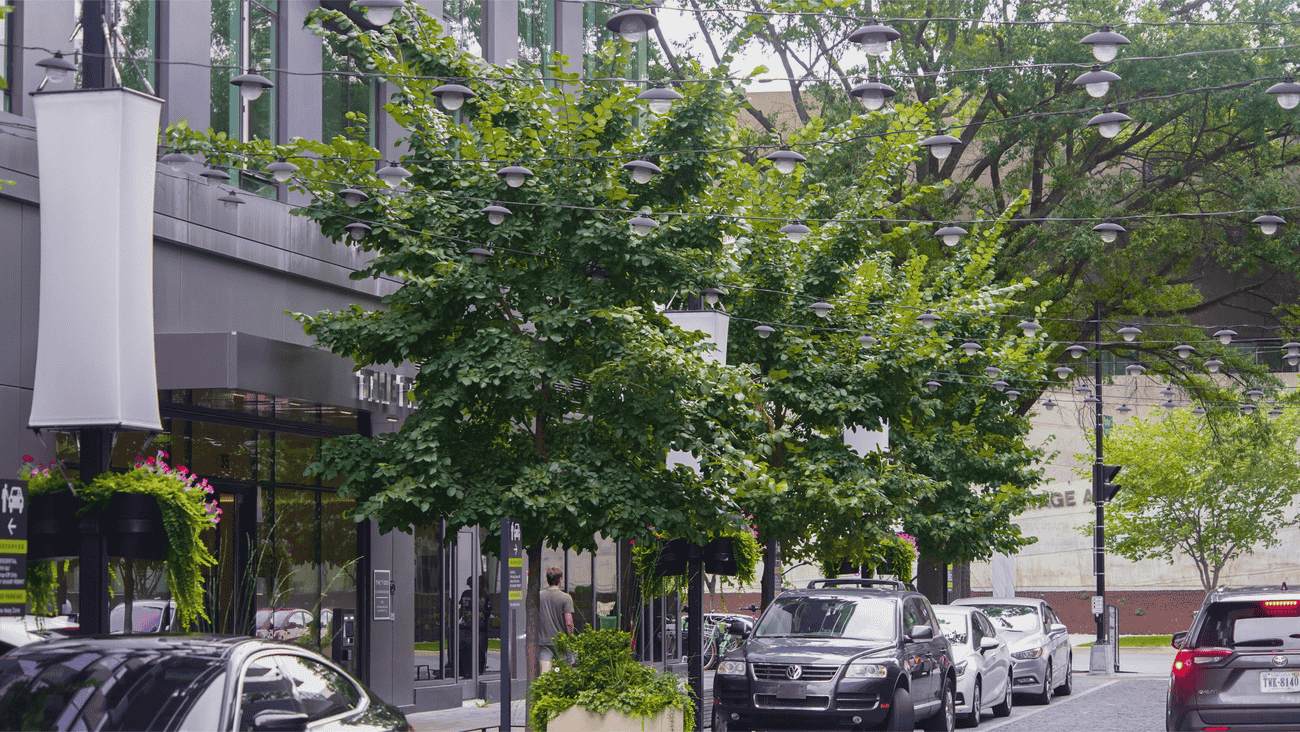
For the Phase 2 trees supported by Silva Cells, the soil volume investment is substantial: 618 (3x) Silva Cells provide more than 22,000 cubic feet of soil volume for 25 newly planted trees. That gives each tree access to more than 900 cubic feet of quality soil — an unusually generous amount for trees growing in dense, hardscape-heavy urban conditions.
Many of these rooting zones are also shared, allowing multiple trees to access larger connected volumes of uncompacted soil rather than being confined to isolated tree pits. This makes the soil strategy even more valuable: roots have more room to expand, trees have a stronger foundation for long-term growth, and the project’s investment in canopy is more likely to deliver lasting returns through shade, comfort, cooling, and public-realm value.
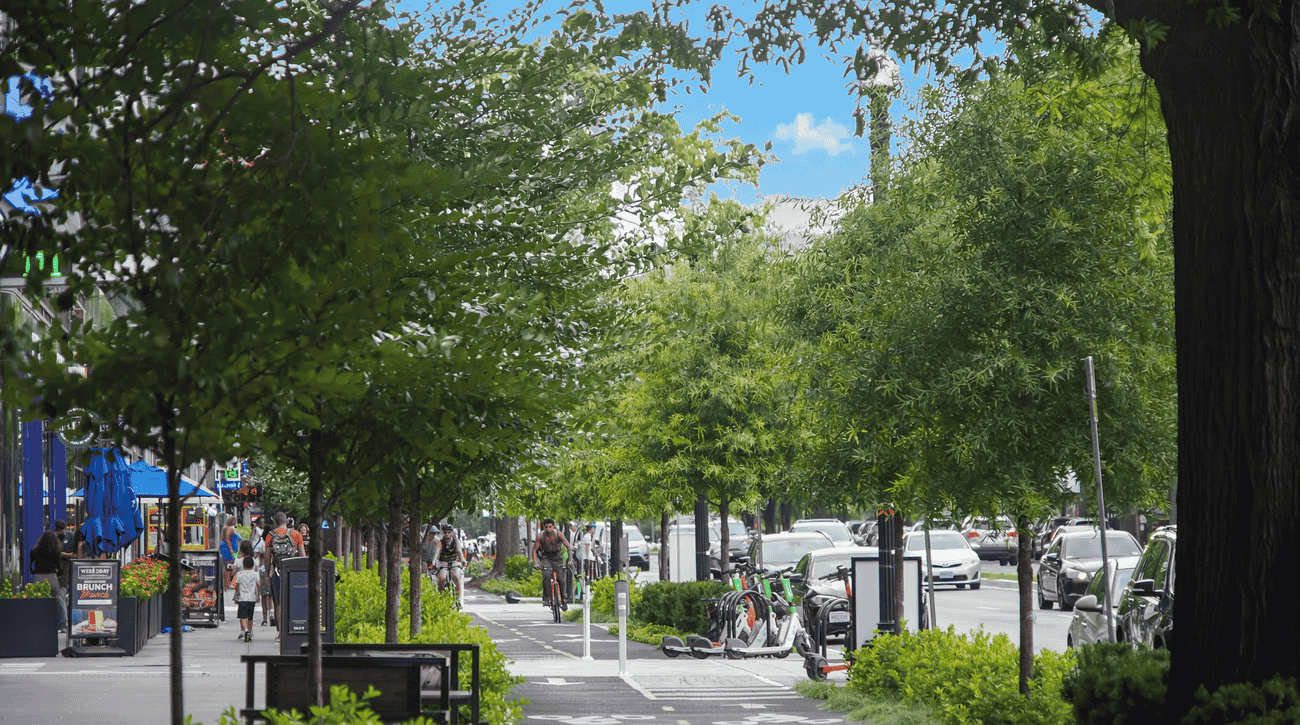
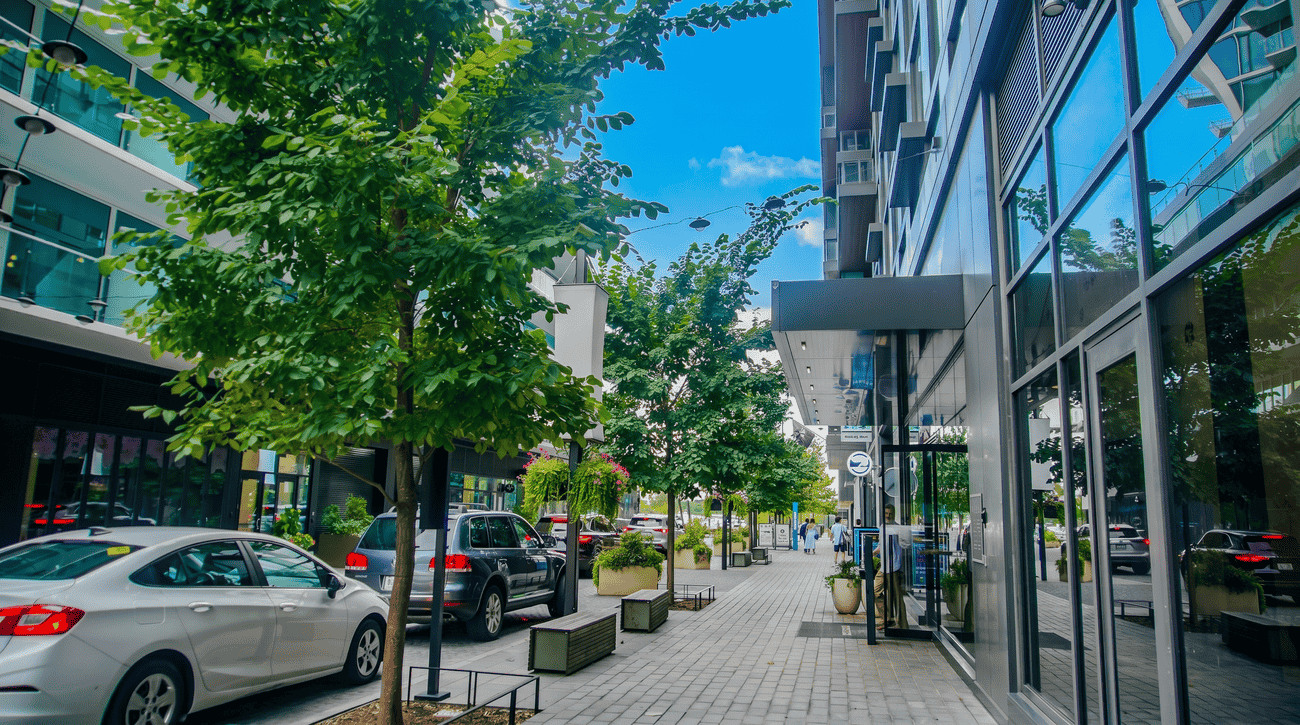
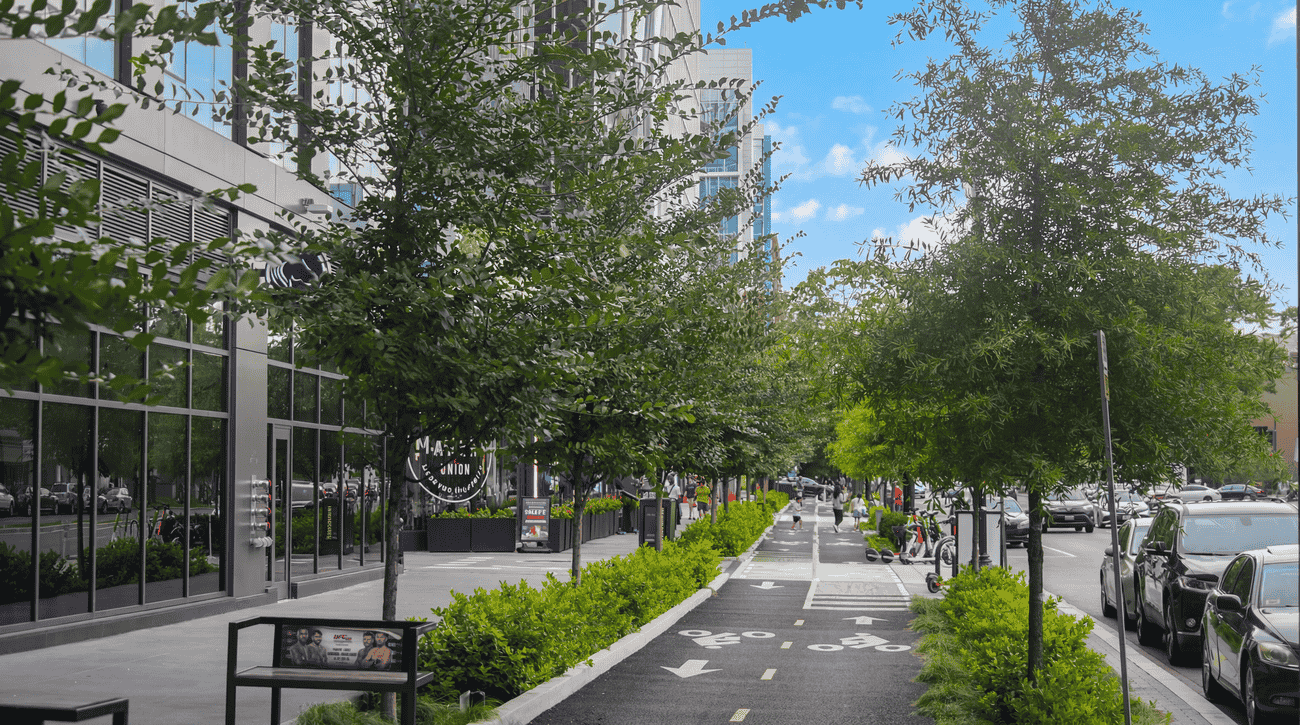
The results are already visible. Project photos from summer 2024 show trees that were only about two years old but already establishing well and contributing meaningful green character to the streetscape. This kind of early success did not happen by accident: it reflects a deliberate design investment in soil volume, and a recognition that trees need strong below-ground conditions if they are expected to deliver long-term value above ground. At The Wharf, that investment is already beginning to pay off — and it offers a model for other forward-thinking designers and development teams who want their urban trees to become lasting public-realm assets.
The Wharf district now features a number of multi-use areas that serve as low-traffic loading and parking zones while also prioritizing pedestrian movement and shady, welcoming space.
Along Riley Street and Parker Row, Silva Cells support trees in plaza and mixed-use street environments that prioritize pedestrian movement, gathering, retail activity, and the approach to the waterfront. These areas are also “on structure”: located above underground parking, making the soil-volume achievement even more significant. By using Silva Cells, the project team was able to create substantial rooting space in a challenging urban condition where conventional tree planting would have been severely limited.
Along Maine Avenue, Silva Cells were installed beneath the bike lane — a particularly strong example of how tree infrastructure can be integrated into a multifunctional streetscape. The bike lane remains fully usable at the surface, while the Silva Cells below create connected rooting zones for trees on either side. Rather than forcing a tradeoff between bike/pedestrian transit and tree growth, the system allows these priorities to coexist.
Together, these applications show why Silva Cell is well suited for complex urban redevelopment: it creates meaningful soil volume beneath hardscape, helping designers place trees where they are most valuable, even in constrained, heavily used, and highly engineered public spaces.
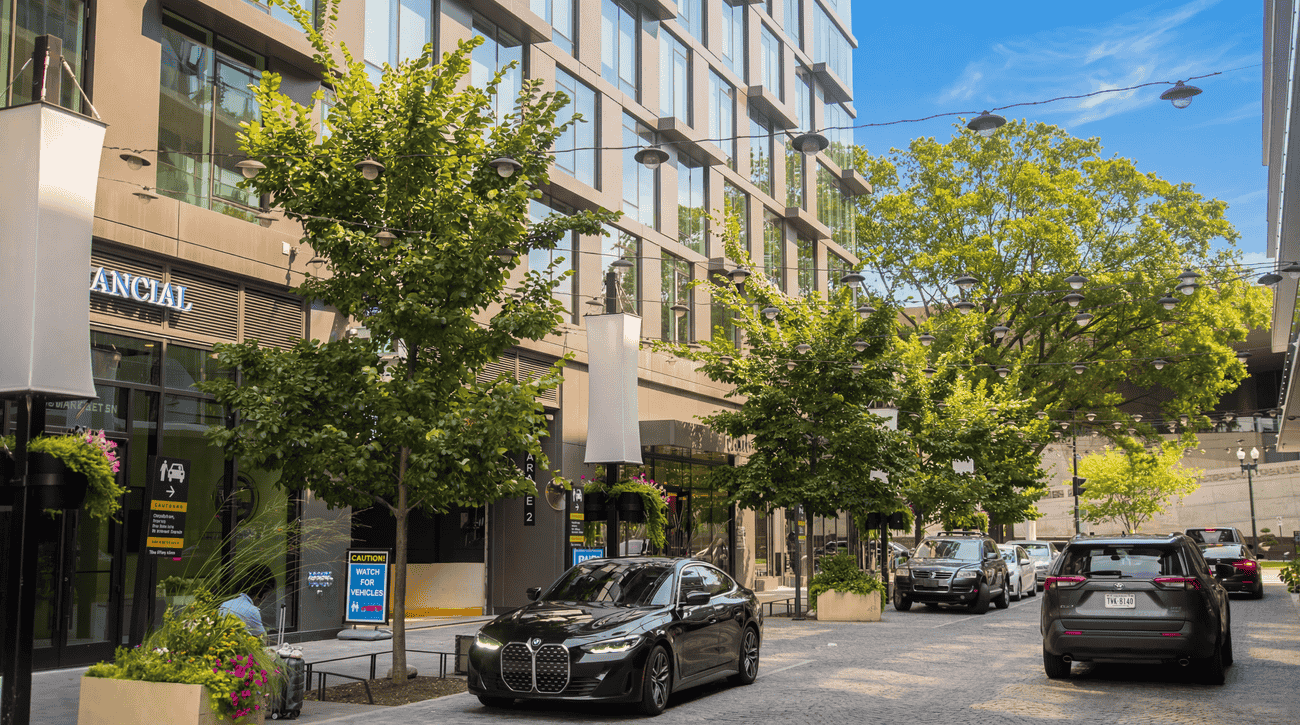
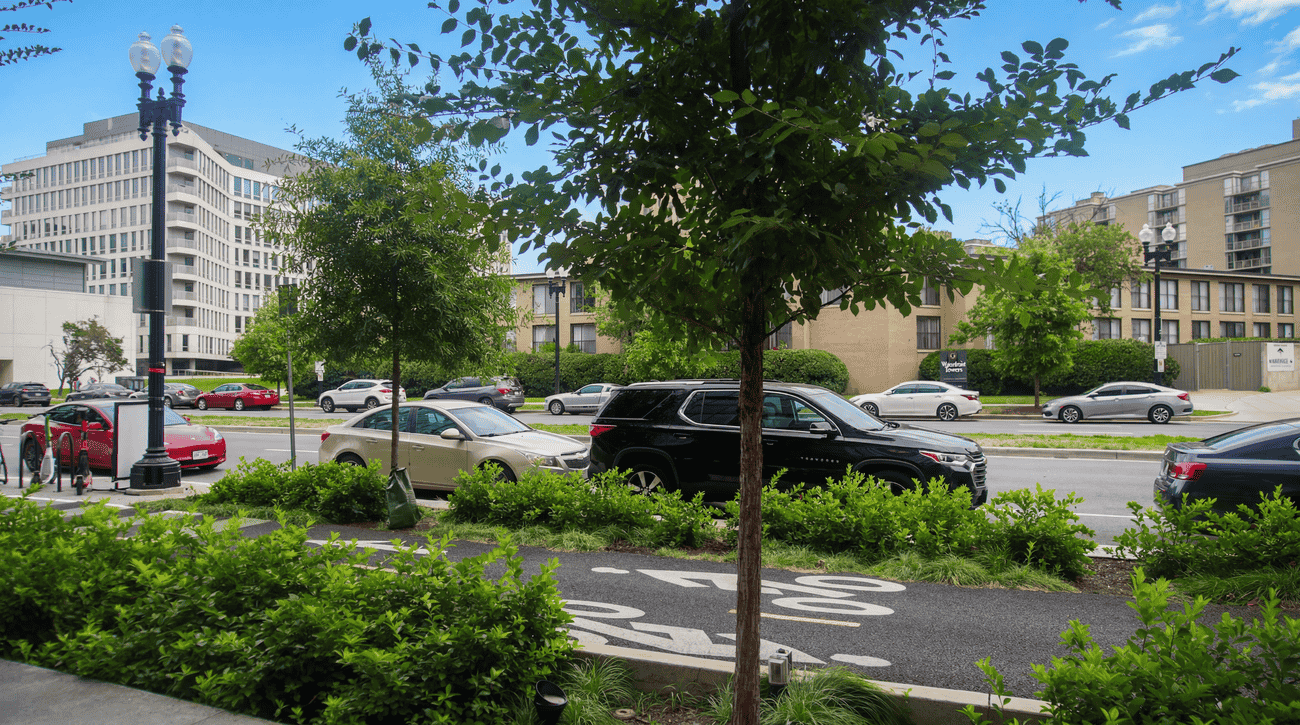
The Wharf was designed as more than a collection of buildings along the water — it was envisioned as a complete public realm, reconnecting Washington DC to the Southwest Waterfront through streets, plazas, parks, and open spaces that invite people toward the water. Green space and ecological function were central to that vision, with parks, planted areas, stormwater management, green roofs, waterfront habitat, and shaded pedestrian spaces helping make the district more comfortable, resilient, and environmentally responsive. In a dense urban waterfront setting, this kind of landscape performance depends not only on what is visible above ground, but also on the hidden infrastructure that allows trees and planted spaces to succeed over time.
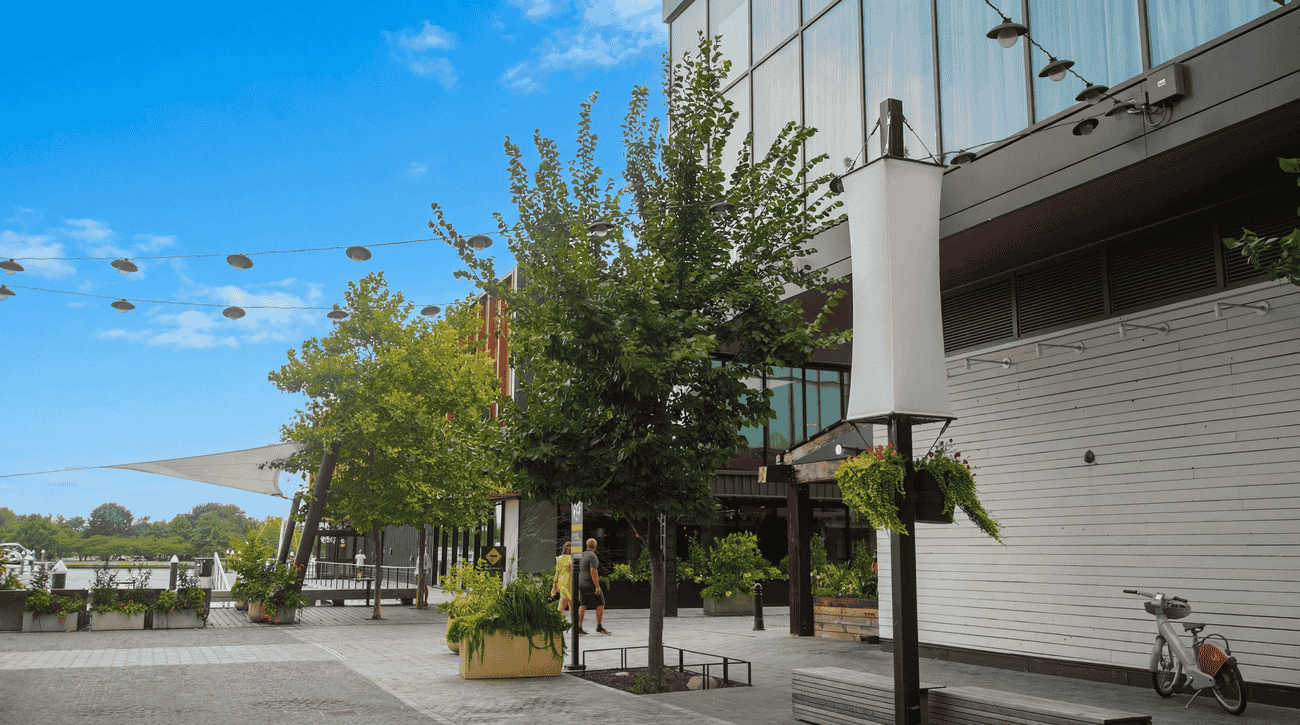

Waterfront districts are some of the most valuable (and demanding) public spaces in cities. They must handle heavy pedestrian activity, transportation needs, major development pressure, stormwater challenges, exposure, heat, wind, and the long-term resilience demands of a changing climate. At The Wharf, green space is part of how the district responds to those challenges: trees, planted areas, parks, and ecological systems help make the waterfront more comfortable, more inviting, and more resilient.
The Wharf shows how urban waterfronts can be remade as places where development, public access, mobility, ecology, and landscape all work together. Silva Cell thrives in this kind of environment by helping create tough, hidden green infrastructure: the below-ground support that allows trees to grow in the hardscape-heavy conditions where their benefits are needed most.
 Soil. Stormwater. Sustainable Infrastructure.

Request a Quote [email protected]
Tel: 415 781 9700
Toll Free: 800 458 7668
Toll Free: 800 277 7668
Fax: 415 781 0191
