By engineering continuous soil beneath curved waterfront allees, Silva Cells strengthen NYC’s next generation of tall, wind-firm, climate-resilient trees
—Andrew Lavallee | FASLA, RLA, Partner, Siteworks, LLC
Number of Silva Cells: 874 (3x)
Number of Trees: 35
Soil Volume Per Tree (Shared): 1,000 ft3
Project Designer: SiteWorks
Installation: Summer 2025
Contractor: Kelco Construction
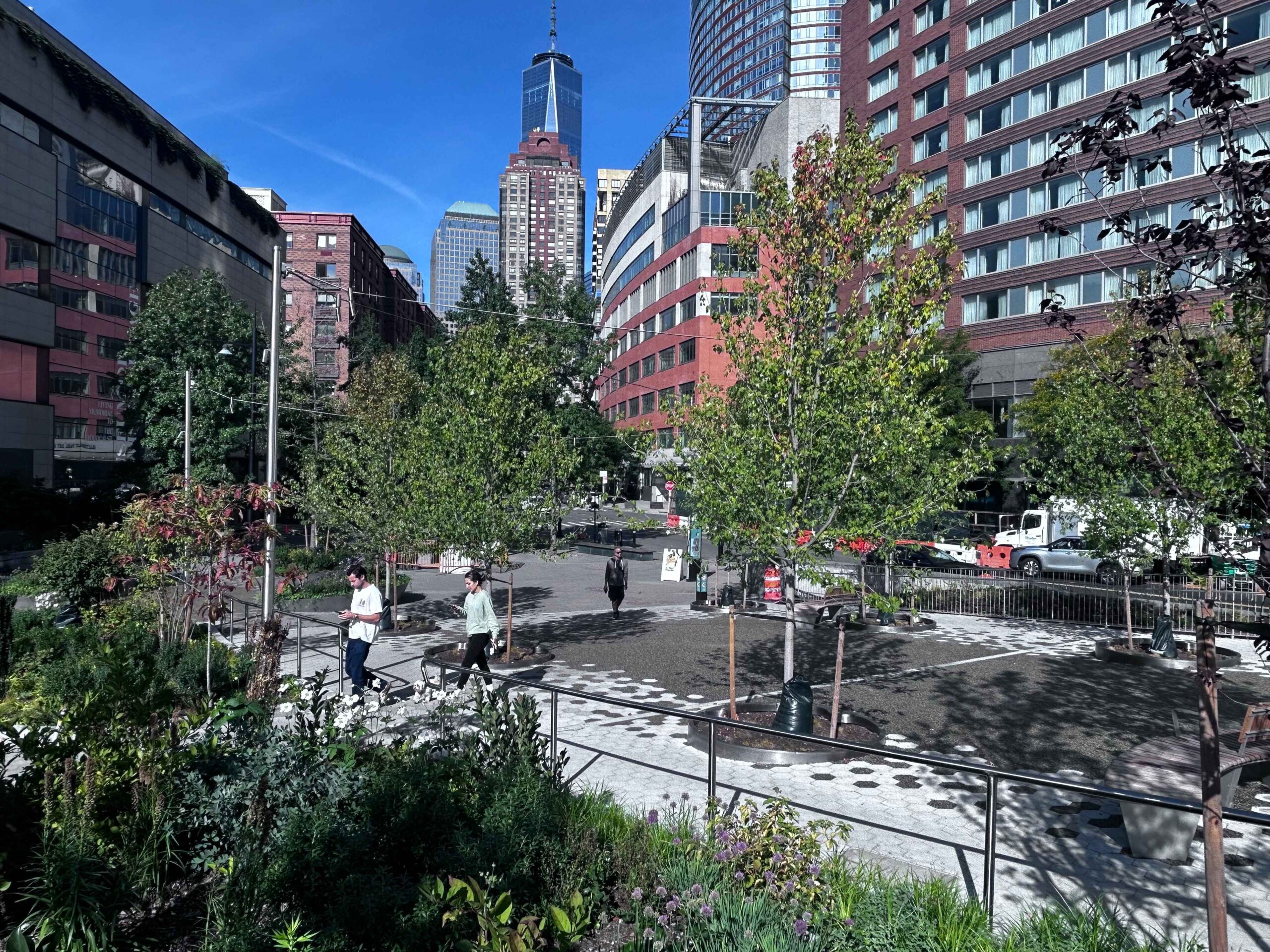
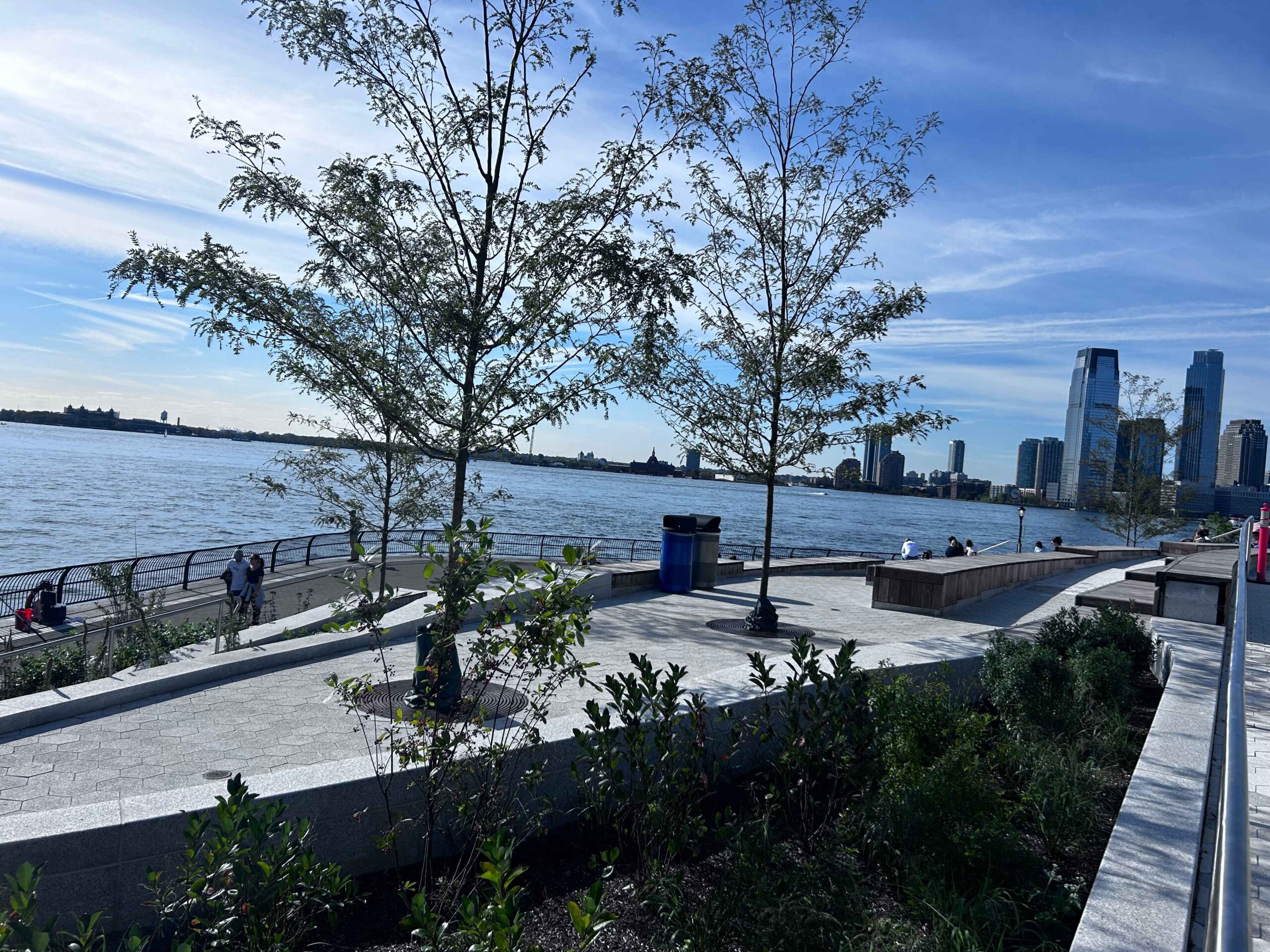
The South Battery Park City Resiliency (SBPCR) project is a forward-looking redesign of one of New York City’s most beloved waterfront edges. The core mission is long-term coastal durability — protecting public space, strengthening the green features, and ensuring the southern tip of Lower Manhattan remains welcoming and functional as climate pressures increase. Unlike traditional shoreline projects of the past, today’s resilience work must blend structural protection with thriving landscapes that serve both people and nature.
Silva Cells were selected because the project demanded trees with deep anchorage, collective strength, and room to mature into a wind-firm canopy without losing surface amenity space. The system supports the vision of a resilient urban waterfront where trees grow tall, rooted in stable, continuous soil — quietly reinforced from below by infrastructure that never competes with pedestrians above.
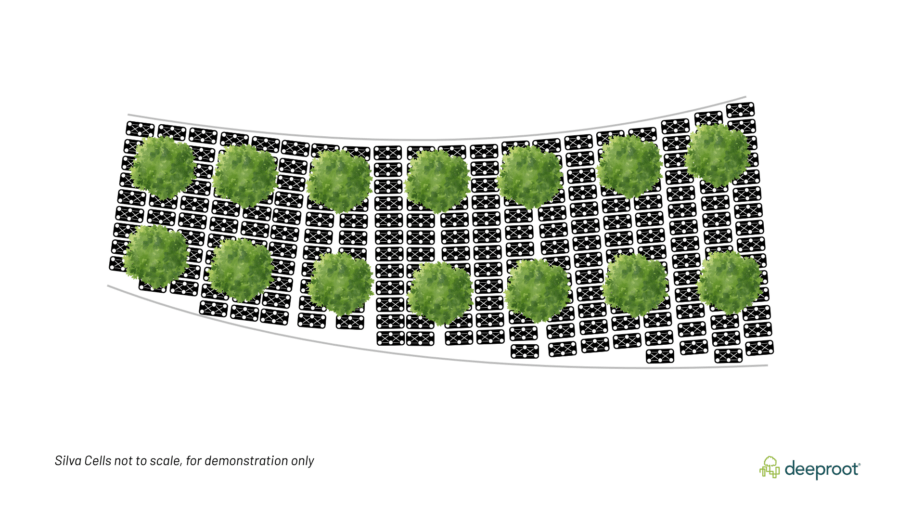
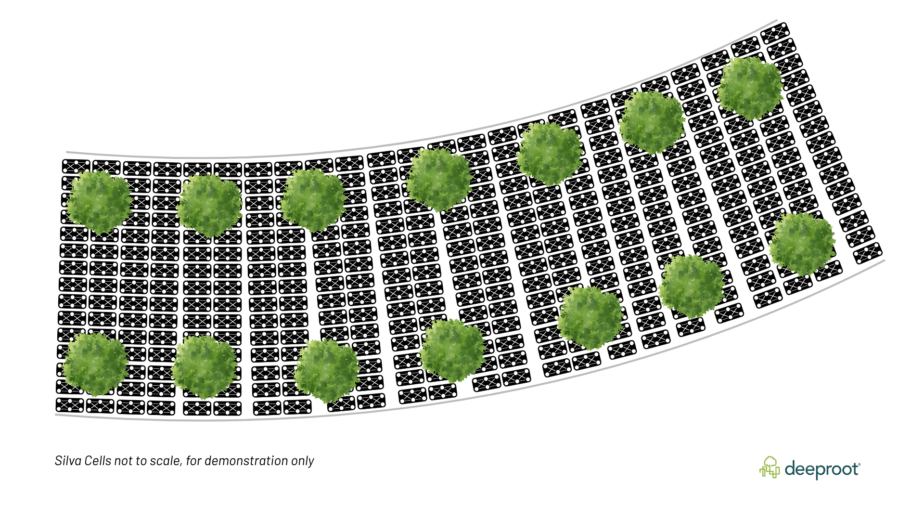
Silva Cells along the two allees of trees were able to match the curvature of the design while also maintaining a continuous soil volume space for the roots to share and grow.
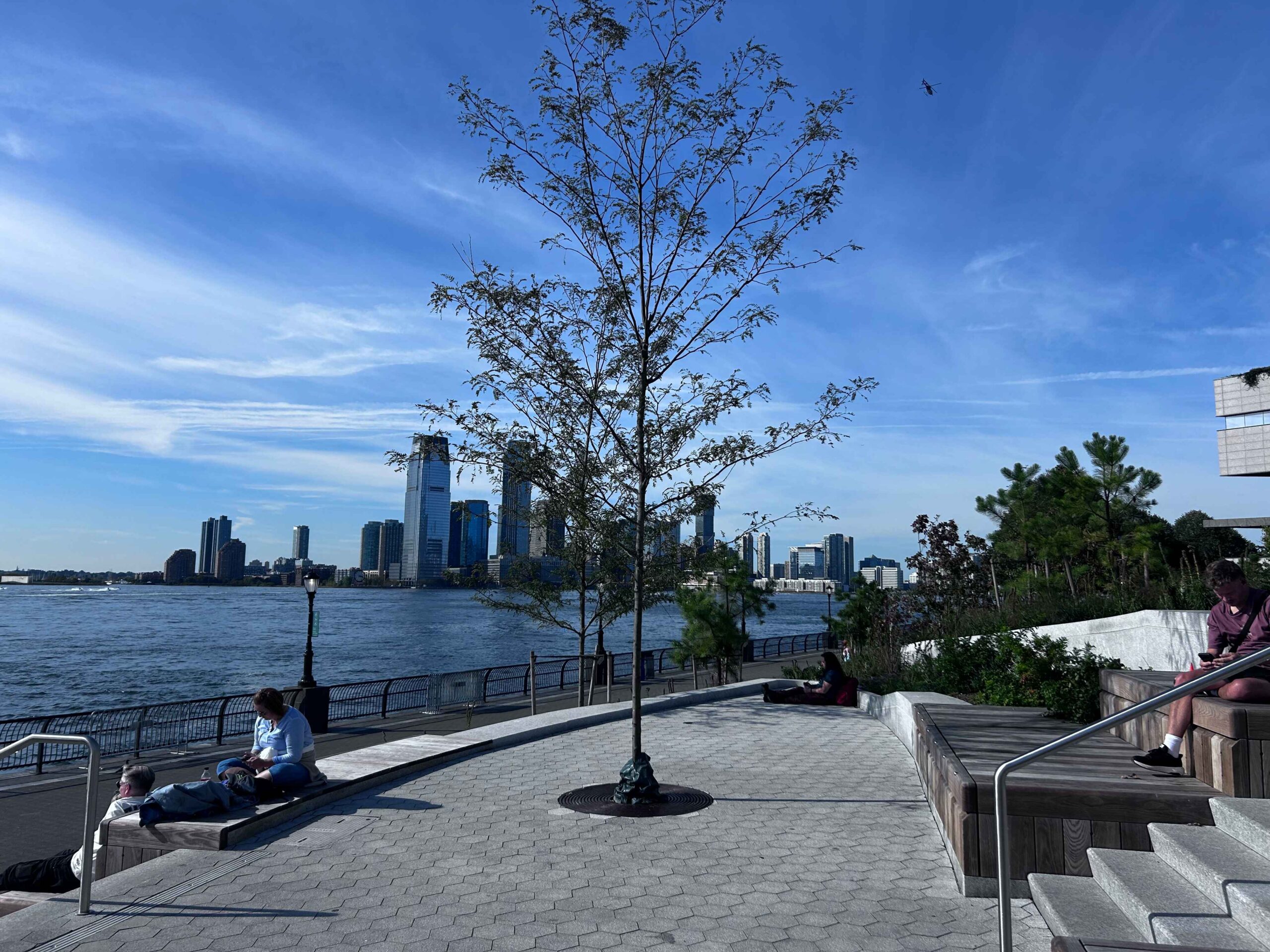
“One goal of the Waterfront Edge Design Guidelines (WEDG) is to promote innovative ways to integrate access, resilience, and ecology into waterfront sites. South Battery Park City Resiliency (SBPCR) exemplifies this through the creative use of Silva Cells, enhancing tree health, strengthening site resilience, and stabilizing pedestrian access – an approach we hope to see replicated on waterfronts nationwide.”
Silva Cells were installed in the summer of 2025: 894 total 3x cells, forming the soil foundation for more than 30 trees across two curved allees, as well as the space adjacent to the new pedestrian/gathering steps.
The first allee contains 16 trees arranged in a double row (8 per side), and the second contains 14 trees (7 per side). Both are built over shared rooting corridors, meaning each tree draws from a unified, continuous soil environment rather than isolated pits. This reflects DeepRoot’s long track record designing for tree stability under coastal exposure, including previous NYC waterfront work along the East Midtown Greenway, where the system supported similar canopy resilience goals.
A defining advantage in this project was layout flexibility. Because Silva Cells are standalone and independently spaced, they can follow curves and organic site geometry that connected or interlocking systems cannot easily replicate. This allowed soil infrastructure to match landscape intent, ensuring roots grow uninterrupted, trees stand straighter, and the allee geometry enhances — rather than limits — the planting vision.
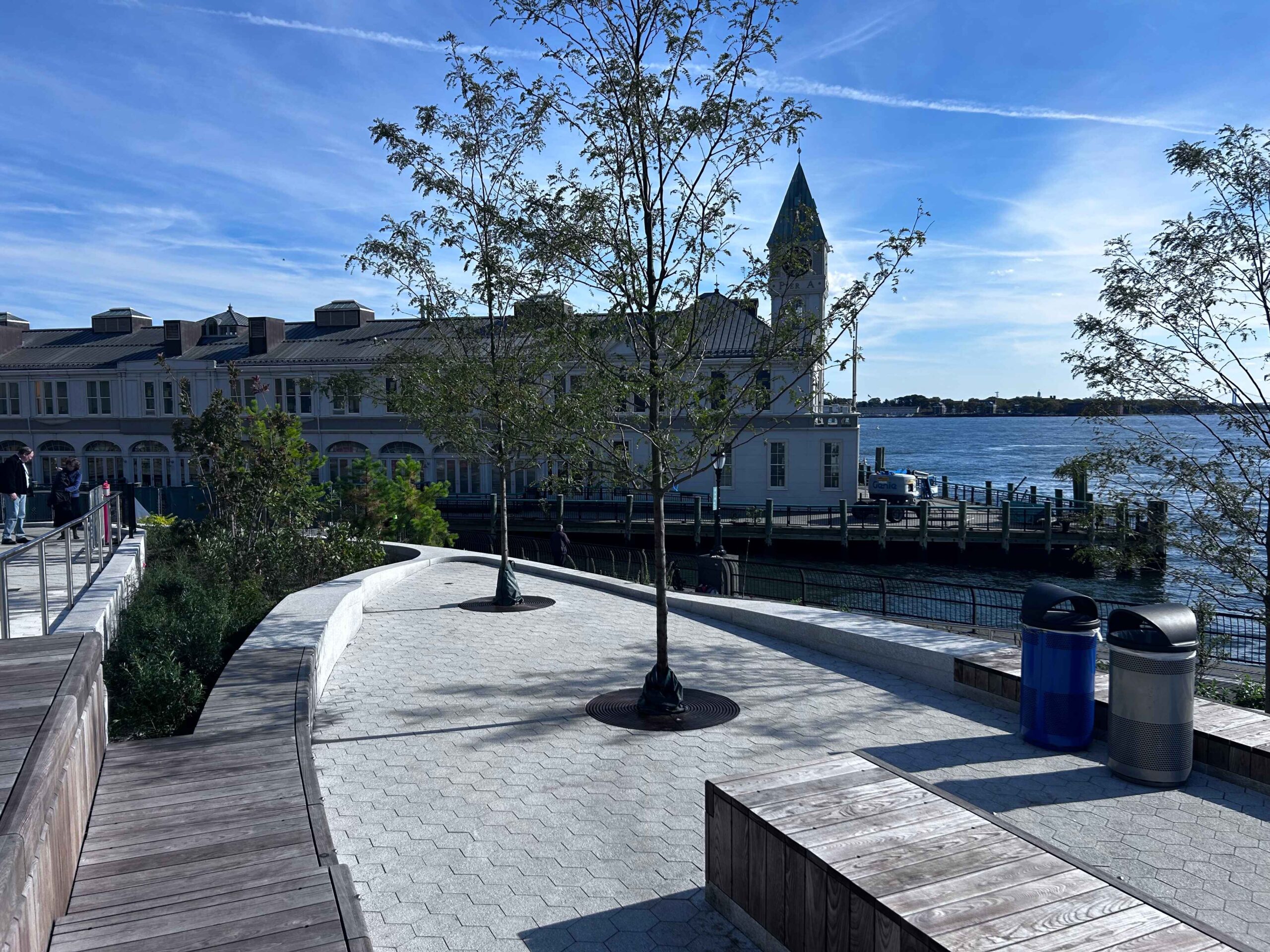
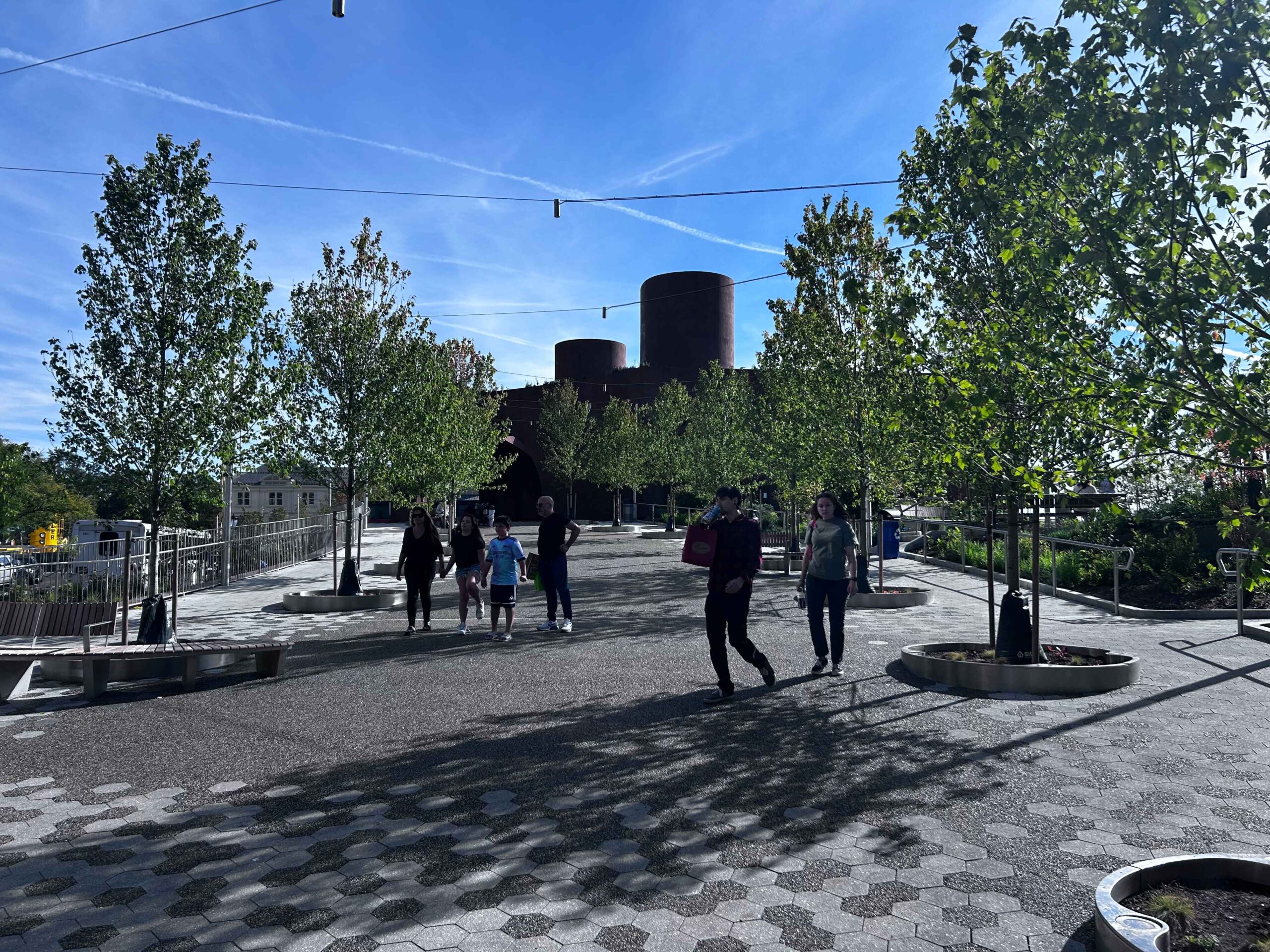
In urban coastal environments, soil volume isn’t just about growth — it’s about stability, longevity, and resistance to wind-throw and salt. In the SBPCR allees, trees access roughly 1,000 cubic feet of soil each, shared across two continuous soil banks. This kind of specification recognizes a key truth: trees exposed to marine wind corridors grow firmer when their roots grow wider, deeper, and are collectively reinforced.
Credit is due to New York City for recognizing the role soil plays in coastal tree resilience. By prioritizing uncompromised soil volume in a highly trafficked hardscape environment, the city ensured the planting strategy aligned with the long-term performance goals of the park. With shared rooting corridors and light soil compaction, the project creates optimal conditions for trees that will mature taller, sturdier, and more wind-firm — delivering shade, structure, and natural stability to one of the country’s most climate-exposed urban waterfronts.
DeepRoot has delivered this outcome before on major coastal public realm projects, including Sugar Beach along the Toronto Waterfront. These trees, with more than 1,000 cubic feet of soil each, are now massive in size — mature, upright, wind-firm, and thriving in shared soil. The continuous rooting environment enabled by Silva Cells produced a decade of canopy transformation, resulting in trees that now define the microclimate and visual identity of the waterfront. The success there offers a clear precedent for what South Battery Park’s allees can expect in the years ahead. Likewise, the Alaskan Way project along the Seattle waterfront is another great example of Silva Cell success in this type of application.
Stabilizing tree roots in waterfront soils is especially important. While for many years the design community has focused on root and adjacent pavement infrastructure conflicts, engineers know that tree roots play a crucial role in stabilizing water’s edge soils by providing a network of underground connections that bind soil particles together. This network not only helps to prevent soil from washing away during heavy rainfall but also improves soil structure by creating macropores that enhance water infiltration and reduce surface runoff. The fibrous root systems can cover large areas and hold topsoil firmly in position, even on steep slopes.
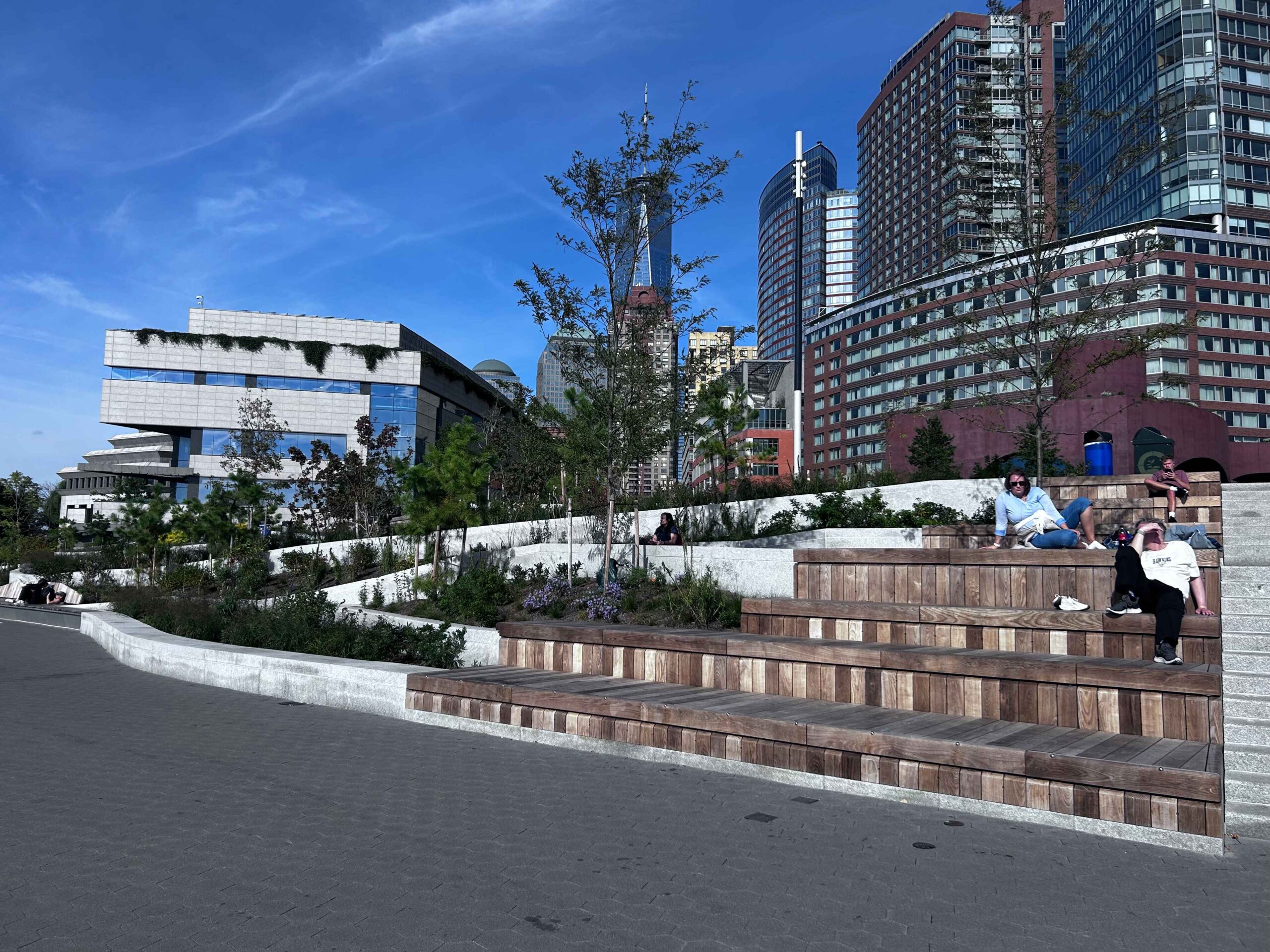
As part of the multi-billion-dollar Lower Manhattan Coastal Resiliency initiative, SBPCR transforms Wagner Park into hybrid climate infrastructure that protects against coastal threats while restoring ecological and civic value. Key resilience mechanics include:
Vegetation planning reinforces the structural goals, using salt-tolerant, erosion-resistant tree species selected to support insects and birds, while enduring wind and spray from New York Harbor. In this layered resilience system, Silva Cells act as a below-ground stabilizing strategy, ensuring roots remain anchored, trees resist wind-throw, and soil remains supported during both everyday coastal stress and future storm conditions.
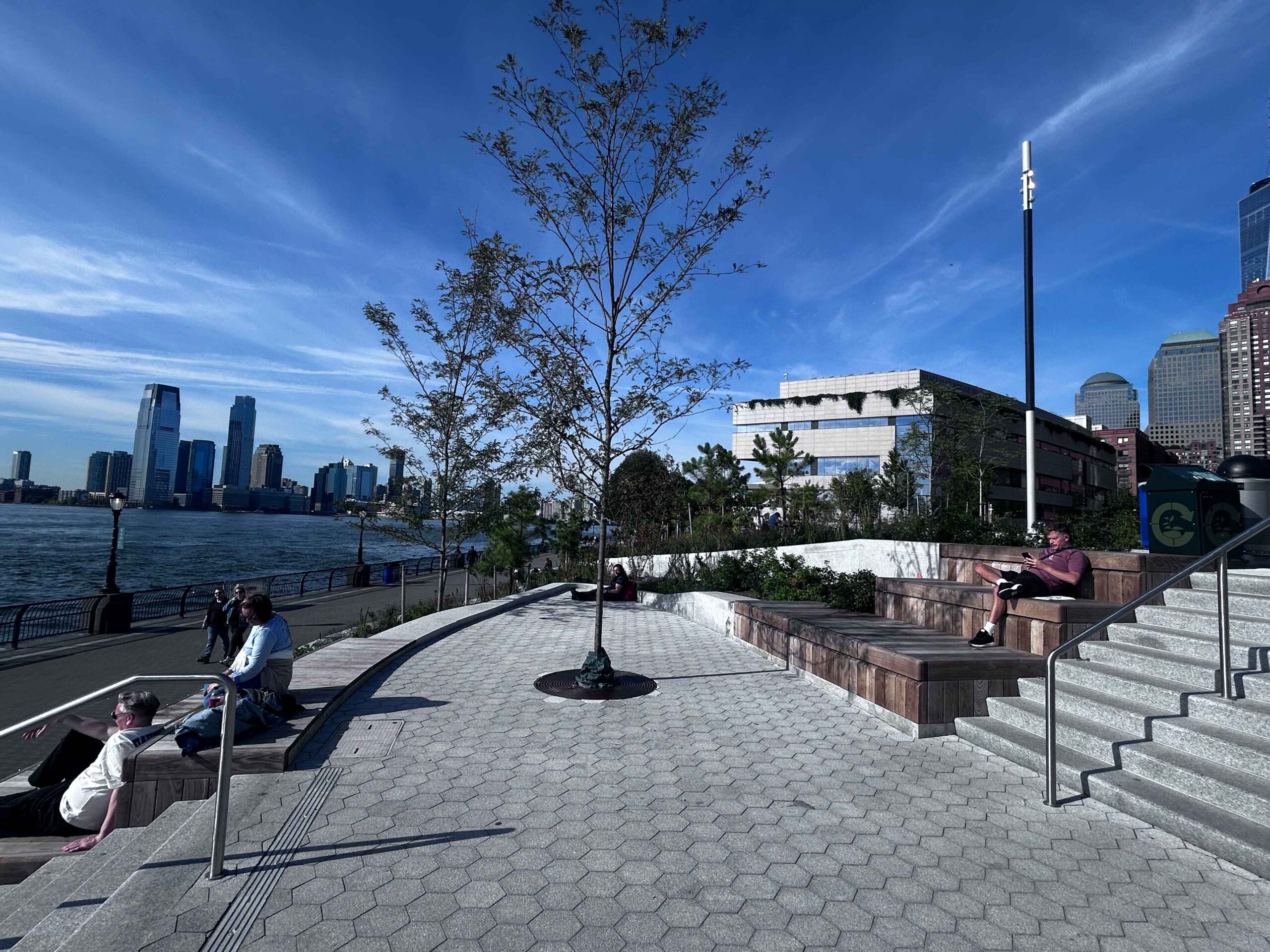
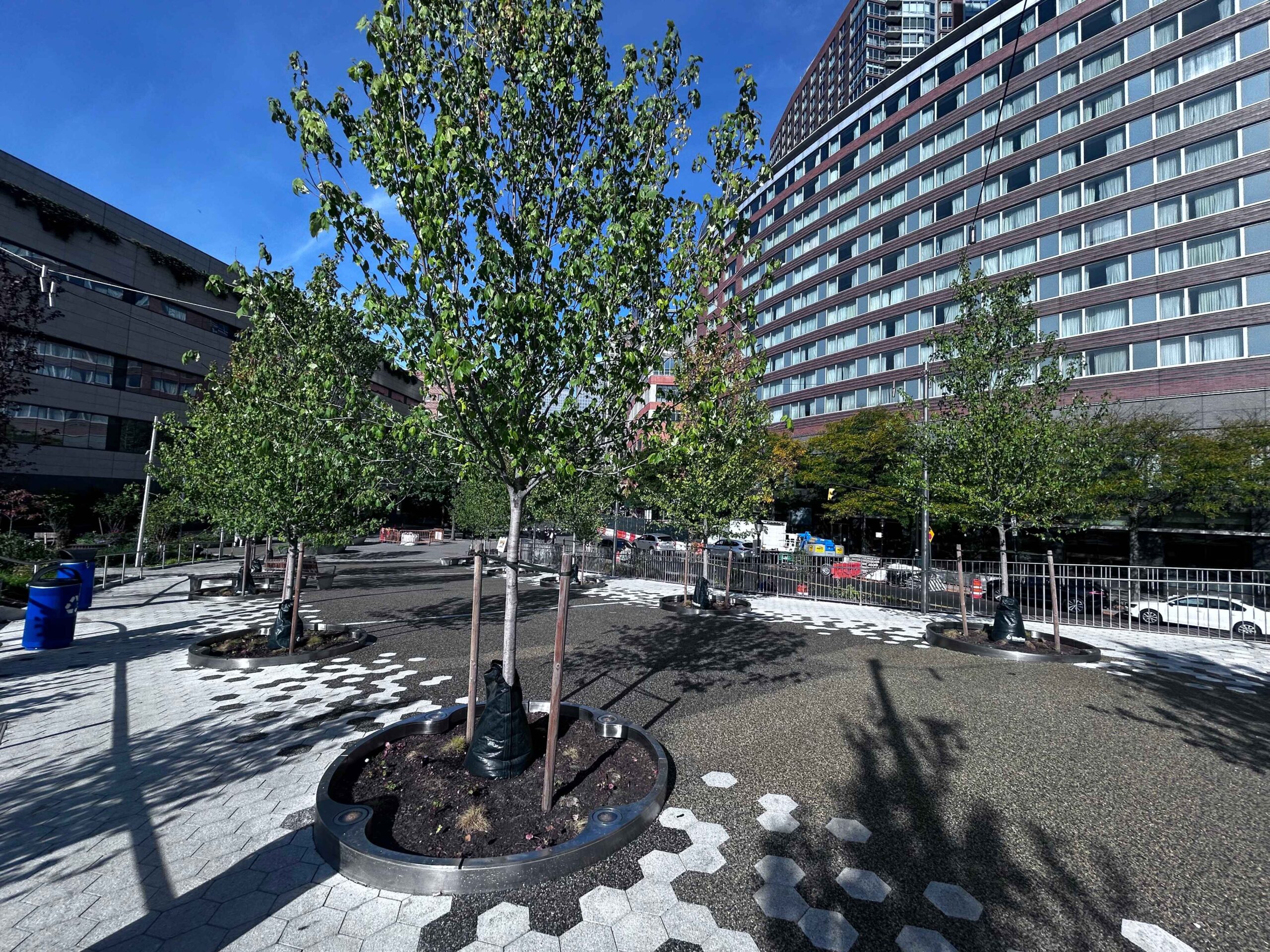
Coastal resilience projects must do more than defend — they must serve. Wagner Park is rebuilt as a multi-level civic landscape that includes accessible pedestrian ramps, generous paths, gardens, a central elevated lawn, public terraces, and a new two-story pavilion capped with 2,200 sq ft of green roof habitat plantings. These spaces are intentionally engineered to feel like a park first — resilience always, fortress never.
Silva Cells help the public realm remain both green and grounded by supporting large trees beneath curved, elevated hardscape geometry without reducing pedestrian space above. This ensures that sustainability goals — public comfort, long-term canopy, ecological productivity, and inclusive access—are delivered without tradeoffs between tree growth and usable civic space.
 Soil. Stormwater. Sustainable Infrastructure.

Request a Quote [email protected]
Tel: 415 781 9700
Toll Free: 800 458 7668
Toll Free: 800 277 7668
Fax: 415 781 0191
