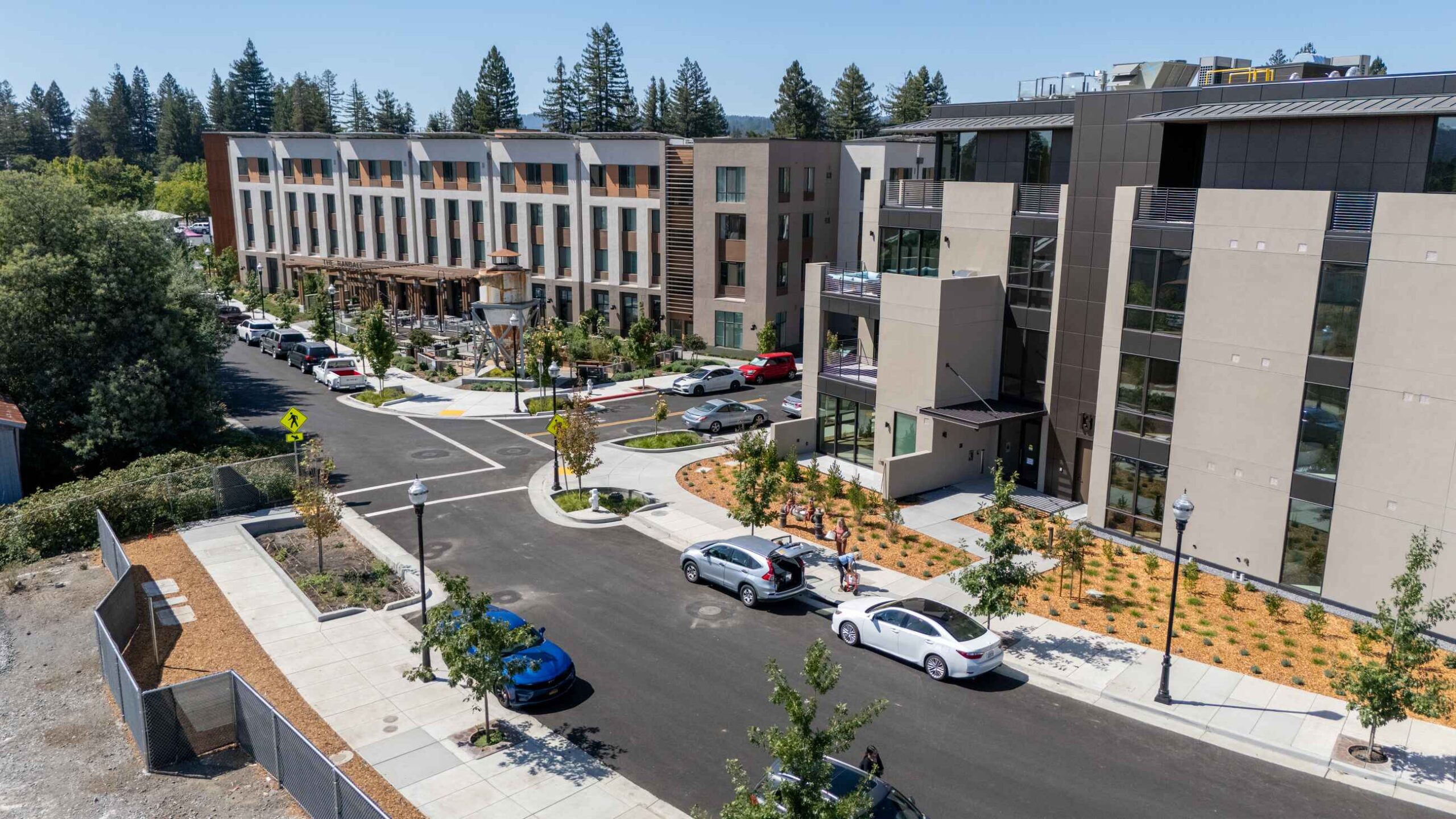
At this 10-acre redevelopment of a historic lumber mill site, Silva Cells support street tree growth while capturing and filtering runoff beneath the new streetscape
Number of Silva Cells: 768 (3x)
Number of Trees: 44
Installation: Summer 2021
Average Soil Volume Per Tree: 750 ft3
Project Engineer: Sherwood Design Engineers
Project Designer: VITA Planning
Project Contractor: Ghilotti Bros Inc.
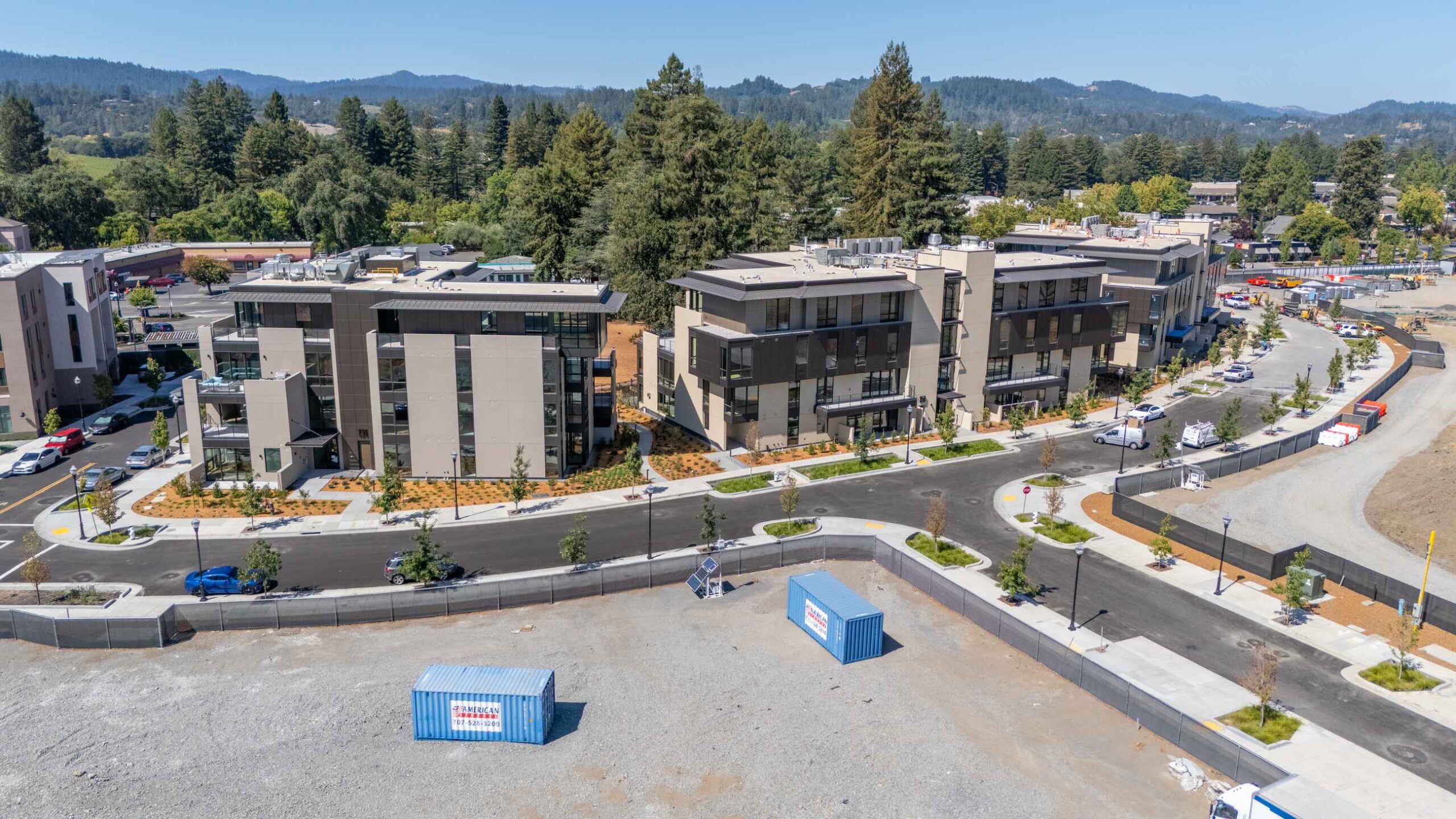
The Mill District redevelopment transformed a former lumber mill site in the heart of Healdsburg into a vibrant 10-acre mixed-use neighborhood with residential, retail, and hospitality space. Designed with sustainability as a guiding principle, the project integrates pedestrian-friendly streets, preserved natural features, and embraced low-impact development strategies to manage stormwater on site.
To support these goals, Silva Cells were installed along the streetscape, providing both soil volume for healthy street trees and underground bioretention to manage stormwater runoff. A total of 768 (3x) Silva Cells were installed to support 44 trees while also delivering powerful stormwater storage and filtration within the paved public realm.
This aerial sequence captures the evolution of the Mill District site — from an industrial lumber mill to a vibrant 10-acre neighborhood designed with sustainability and green infrastructure in mind.
Redevelopment projects in Healdsburg must address stormwater quality and runoff management through low impact development (LID) strategies that reduce pollutants and control the flow of runoff leaving a site. At Mill District, Silva Cells provided an efficient underground bioretention system that helped meet these objectives while preserving valuable surface space for pedestrian circulation and outdoor amenities.
The Silva Cell system contains a total of 31,718 cubic feet of total soil volume space, with 20 percent reserved as stormwater ponding area. This creates 6,343 cubic feet of stormwater storage — approximately 47,000 gallons — within the soil profile beneath the streetscape. By temporarily holding runoff within the system, the Silva Cells slow peak flows during storm events and allow water to filter through soil media, improving water quality before discharge.
Runoff from adjacent hardscapes is captured in nearby catch basins and routed into the Silva Cell system through a 6-inch perforated distribution pipe positioned above the soil. The pipe evenly distributes water throughout the system, allowing it to infiltrate through the soil media where pollutants are filtered and biological processes further improve water quality. At the base of the system, a 4-inch drainage pipe conveys treated water to the municipal storm sewer once the soil profile has been saturated. This layered approach — capture, distribution, filtration, and controlled release — helps reduce both runoff volume and pollutant loads while supporting the site’s overall LID strategy.
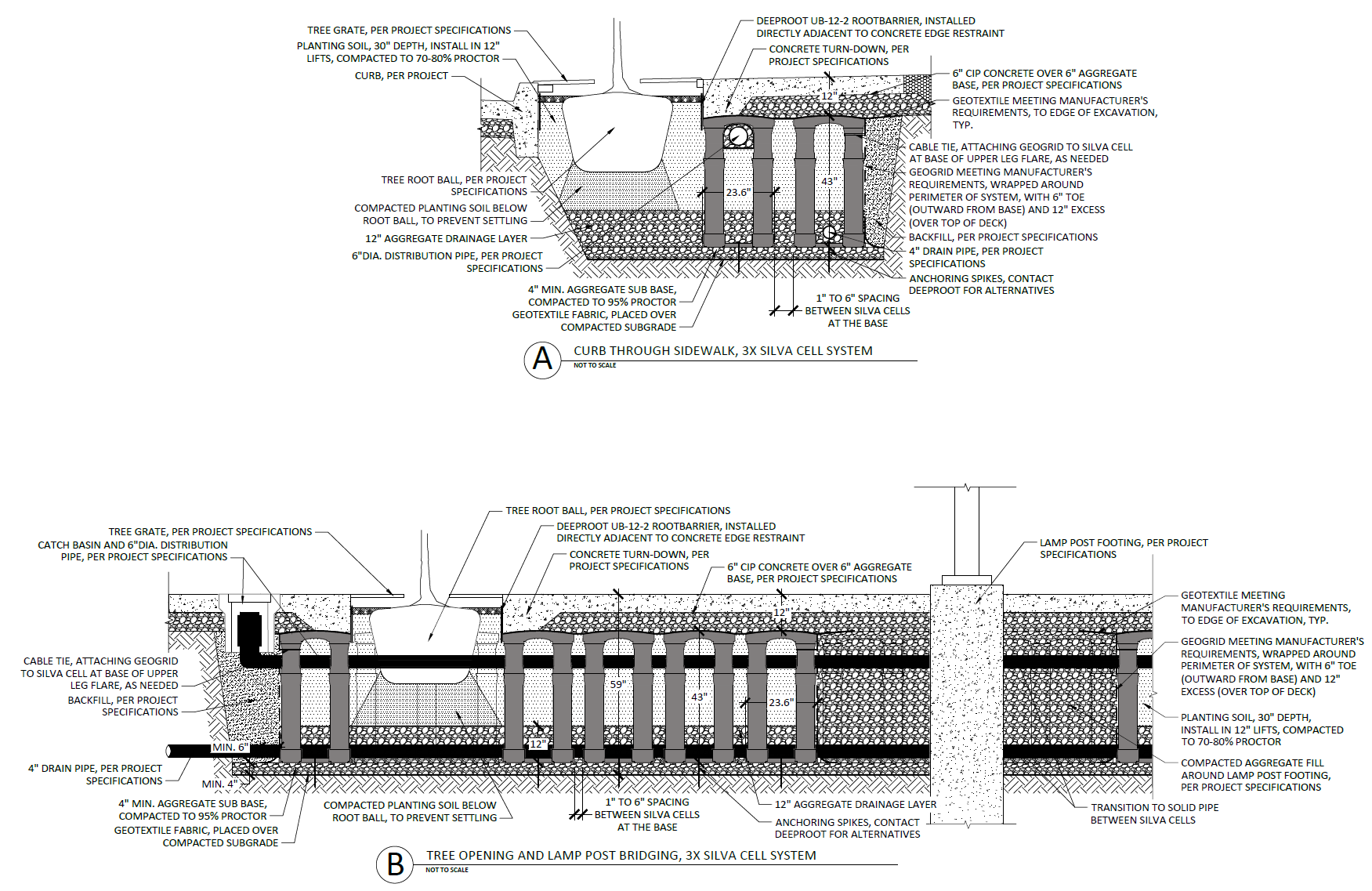
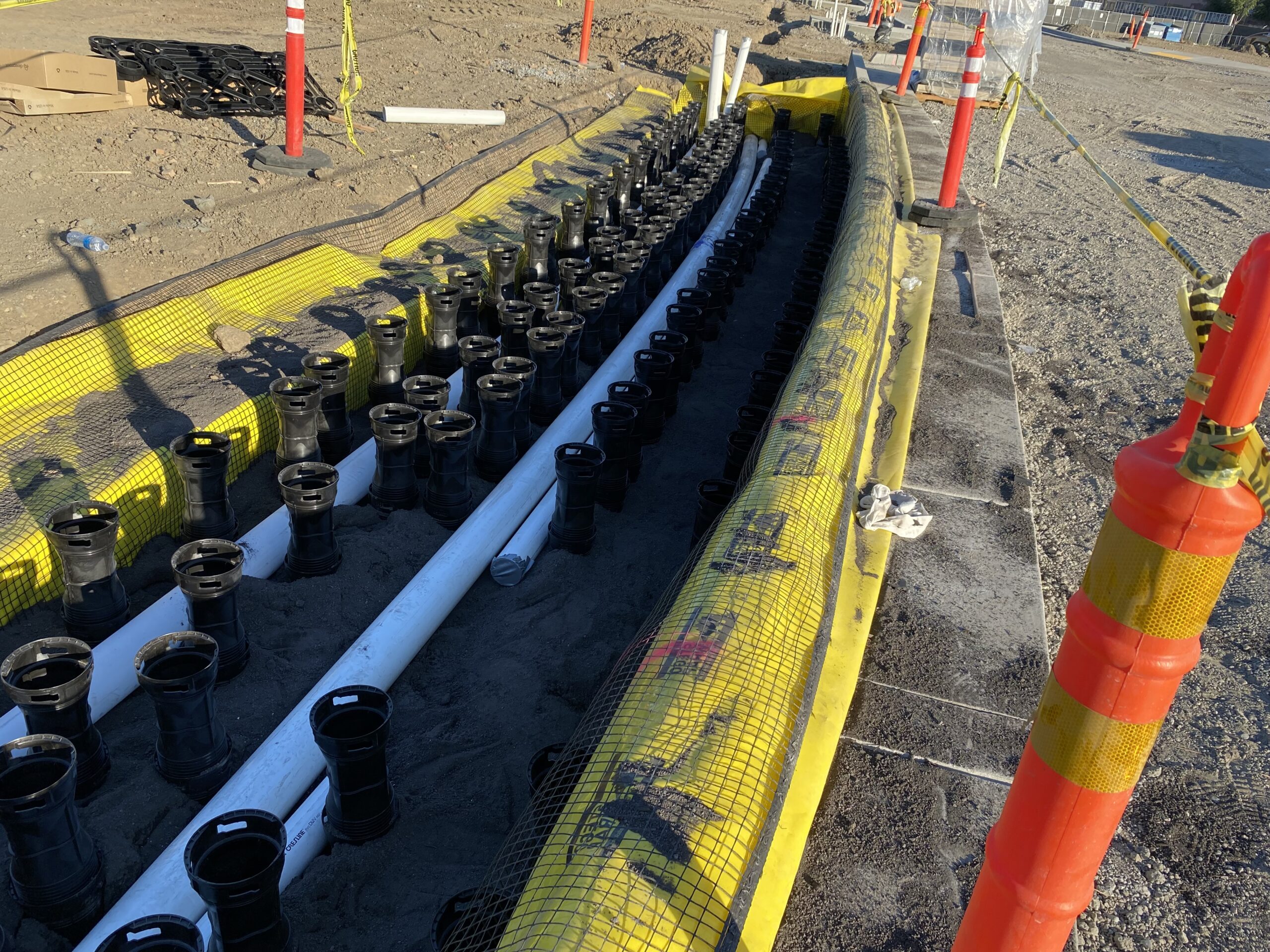
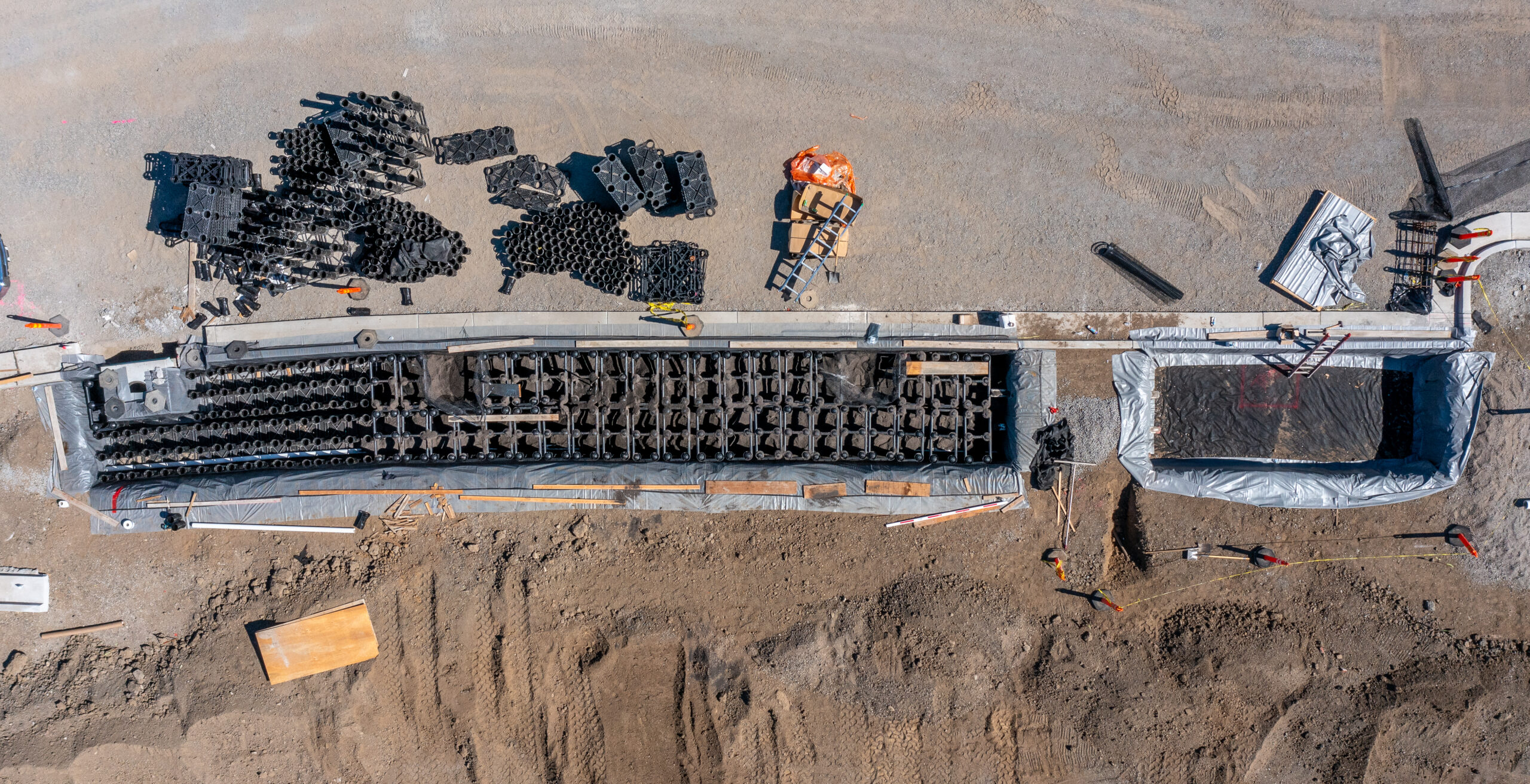
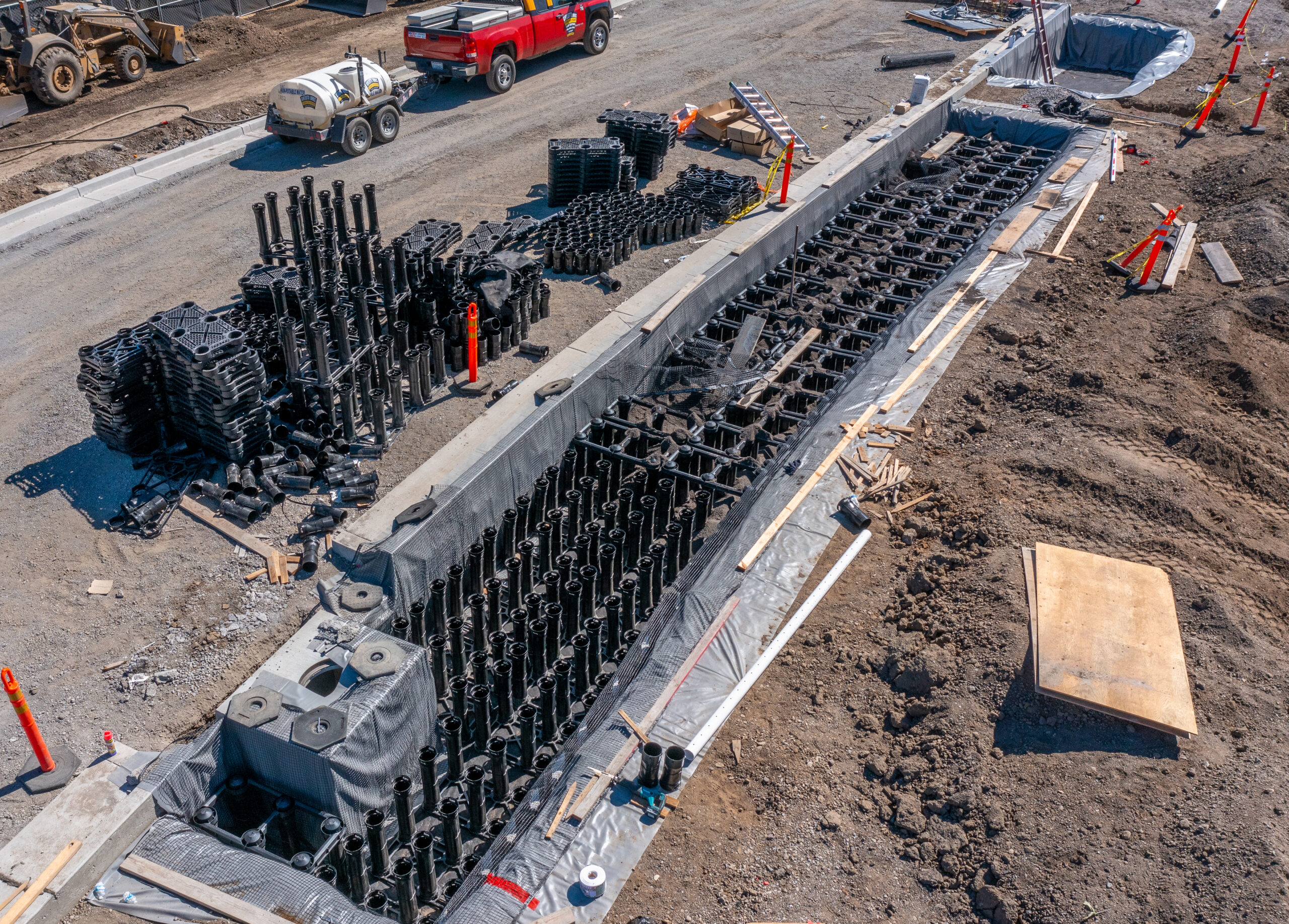
In addition to stormwater management, the Silva Cell system provides generous rooting space for the project’s new street trees. The installation delivers an average of approximately 750 cubic feet of soil per tree, giving roots the room they need to expand and support long-term canopy growth.
These new street trees will help shape the pedestrian character of Mill District, complementing the site’s preserved heritage redwood trees, which anchors the development to the region’s natural ecology. Together, the mature redwoods and the newly planted street trees will create a layered urban forest that strengthens the site’s identity while providing shade, stormwater benefits, and long-term environmental value.
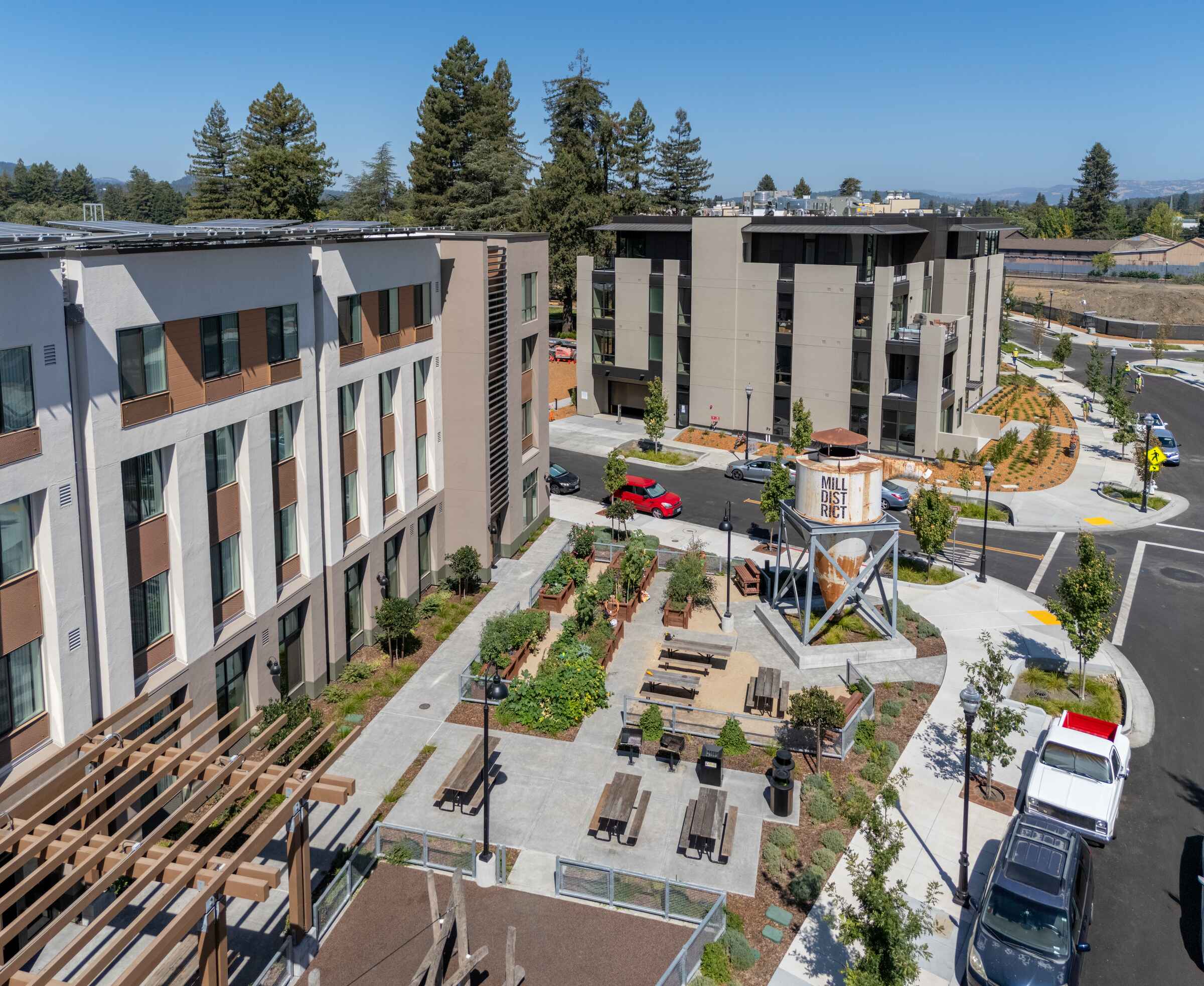
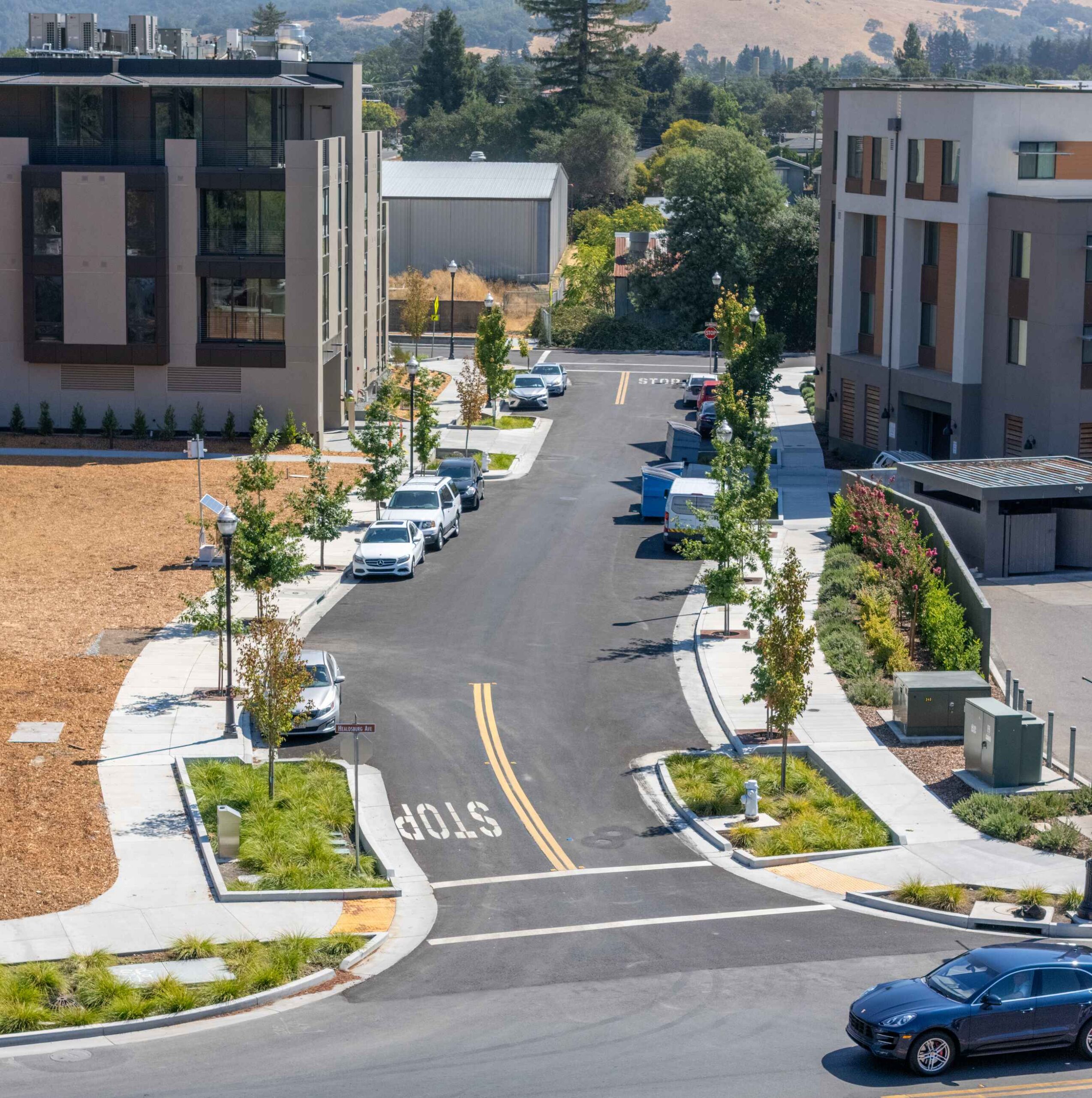
Projects that prioritize sustainability often face a practical challenge: how to provide meaningful stormwater management and healthy tree growth within dense urban environments where surface space is limited. Traditional solutions such as large raingardens or open planting areas can require significant land area that may not be available in mixed-use developments.
Silva Cells solve this challenge by placing bioretention soil volume underground, allowing the surface above to remain fully functional as sidewalks, plazas, or streetscapes. At Mill District, this approach enabled the design team to integrate substantial soil volume and stormwater treatment capacity directly beneath paved areas — supporting both healthy trees and low impact stormwater management without sacrificing a single square foot of surface space.
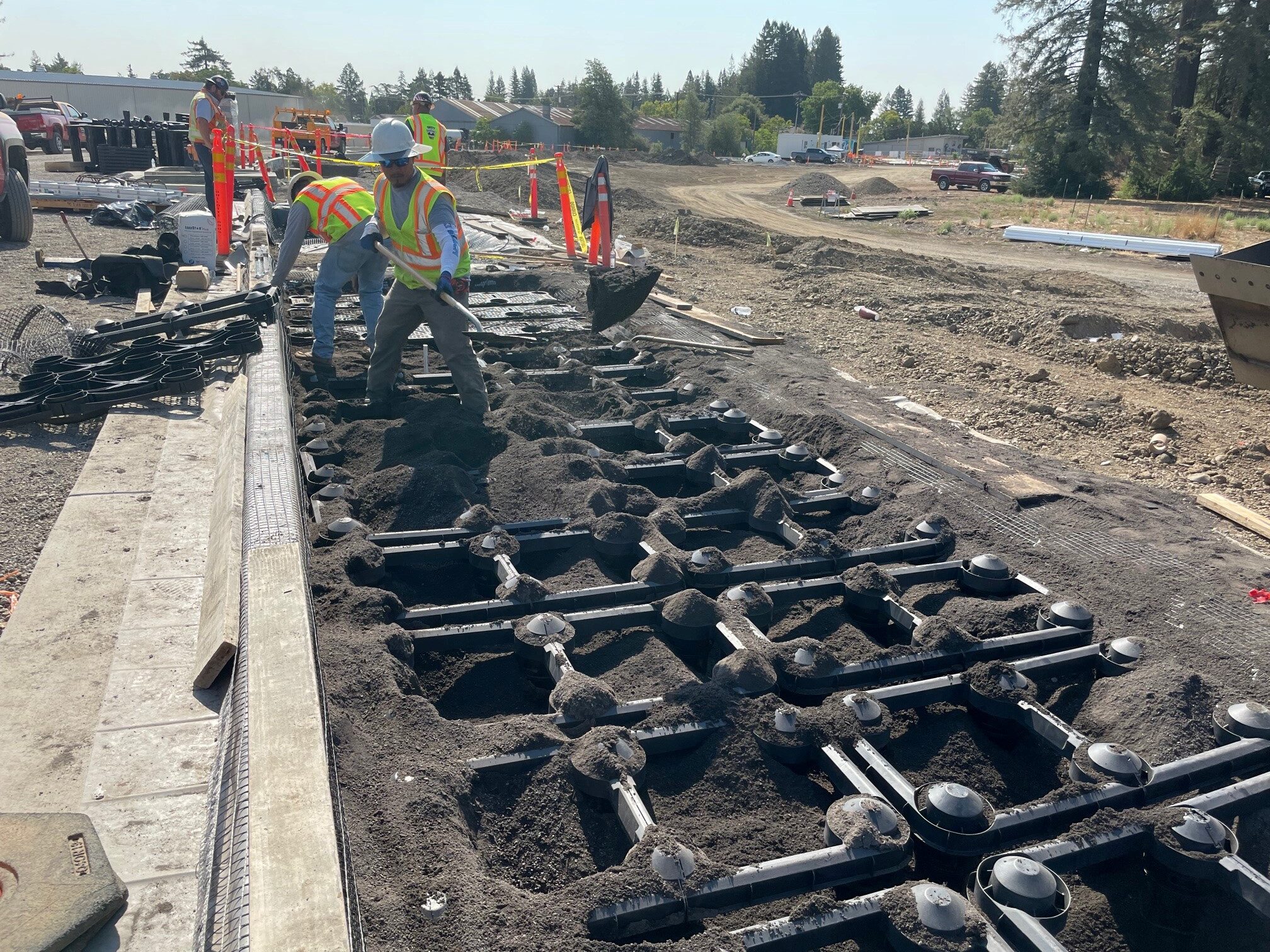
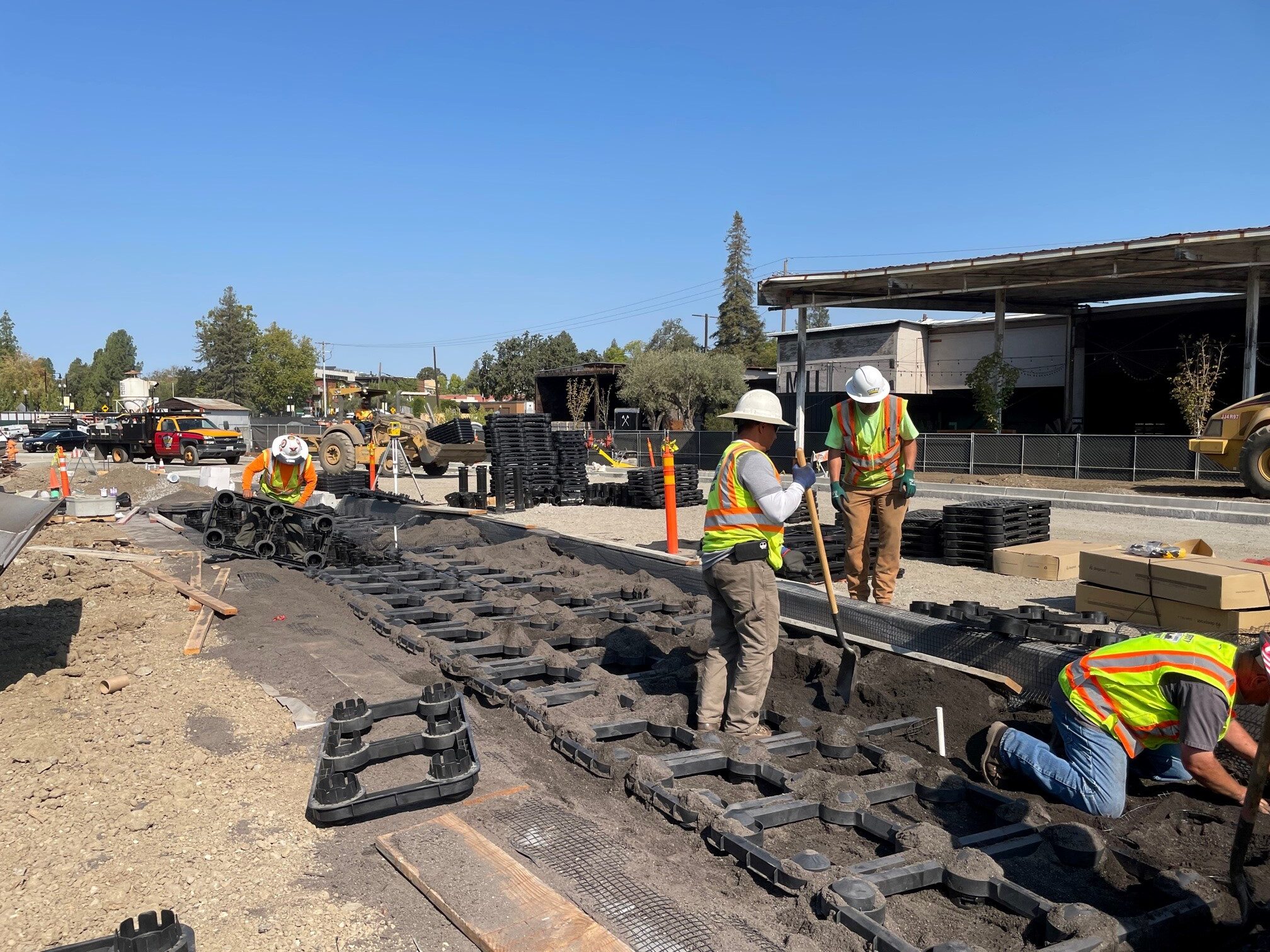
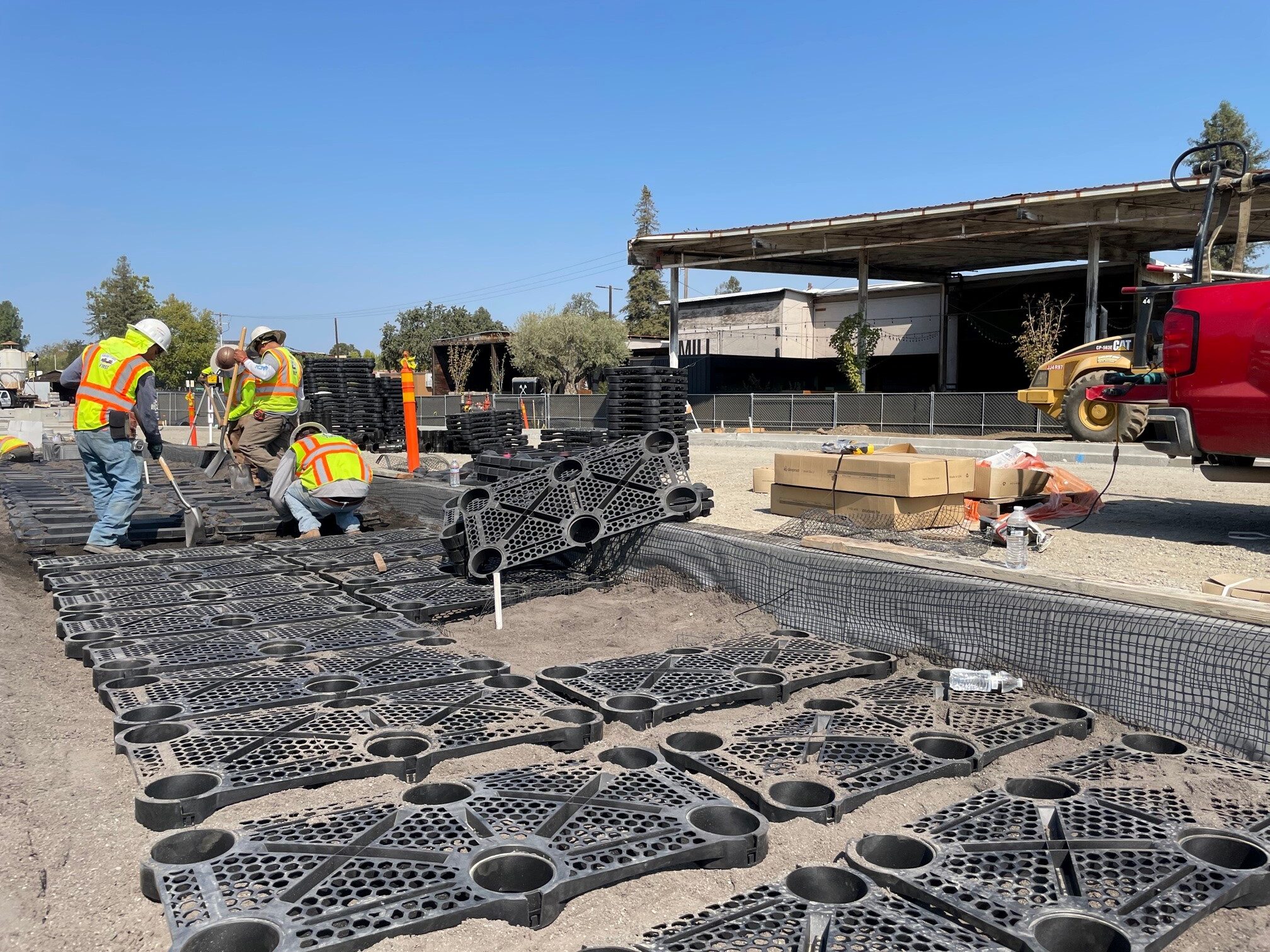
Silva Cells also helped streamline installation on the Mill District project. Because the system’s open architecture allows soil to be placed in large, efficient lifts, contractors can install soil quickly using standard equipment while ensuring the specified soil volume is fully achieved.
The Silva Cell design also allows for walk-through compaction, enabling crews to move through the system during installation to evenly settle soil and eliminate air pockets before stormwater piping is installed. This process helps guarantee the intended soil volume while creating a stable, well-structured soil environment that supports both healthy root growth and effective stormwater drainage.
 Soil. Stormwater. Sustainable Infrastructure.

Request a Quote [email protected]
Tel: 415 781 9700
Toll Free: 800 458 7668
Toll Free: 800 277 7668
Fax: 415 781 0191
