
Silva Cells helped turn limited underground space into a multi-benefit system that supports canopy growth, improves stormwater performance, and strengthens overall streetscape resilience.
Number of Silva Cells: 1,656 (3x)
Number of Trees: 82
Installation: 2018-2020
Project Designer: Brook McIlroy
Project Contractor: CRCE Construction
Average Soil Volume Per Tree: 21 m3
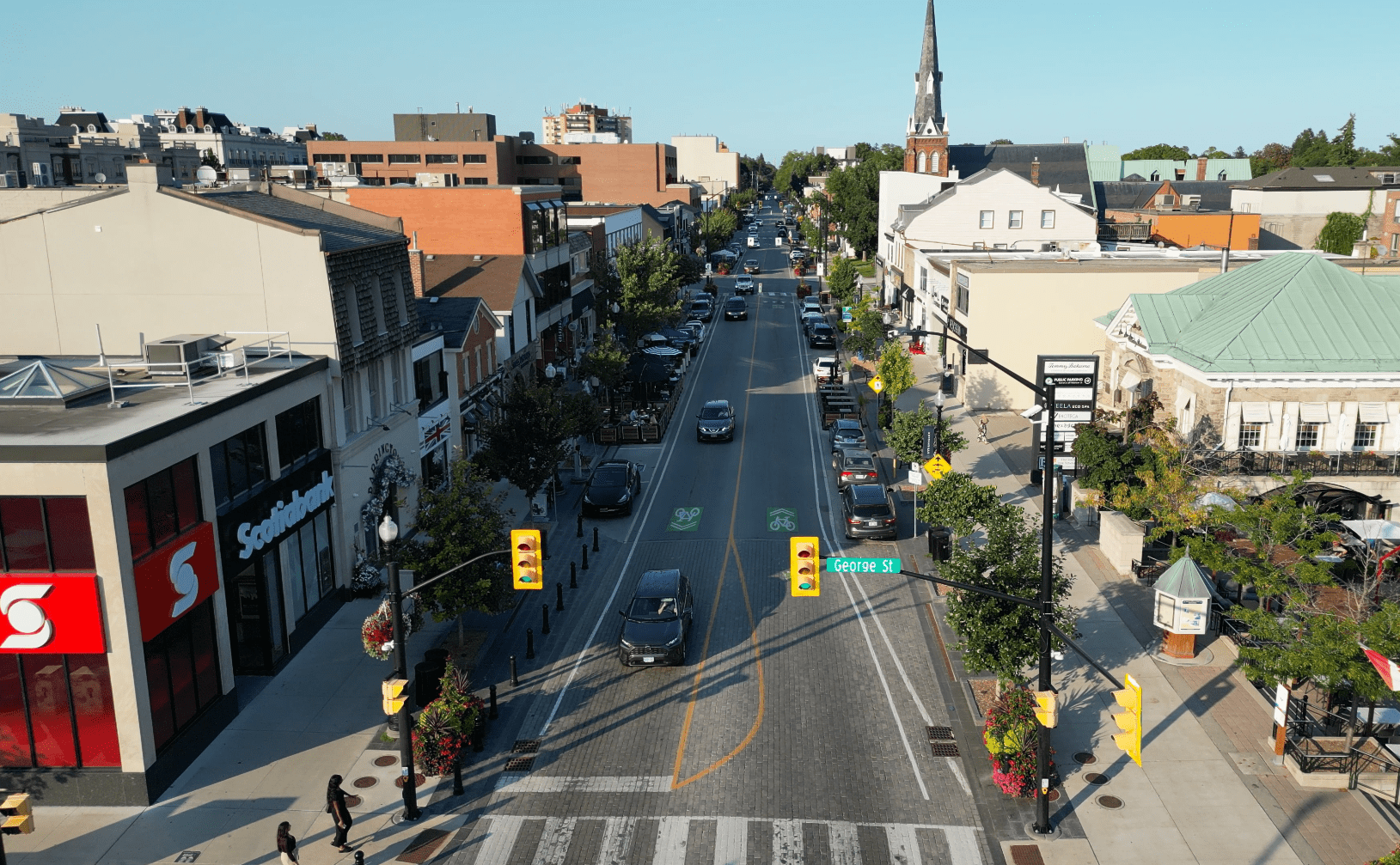
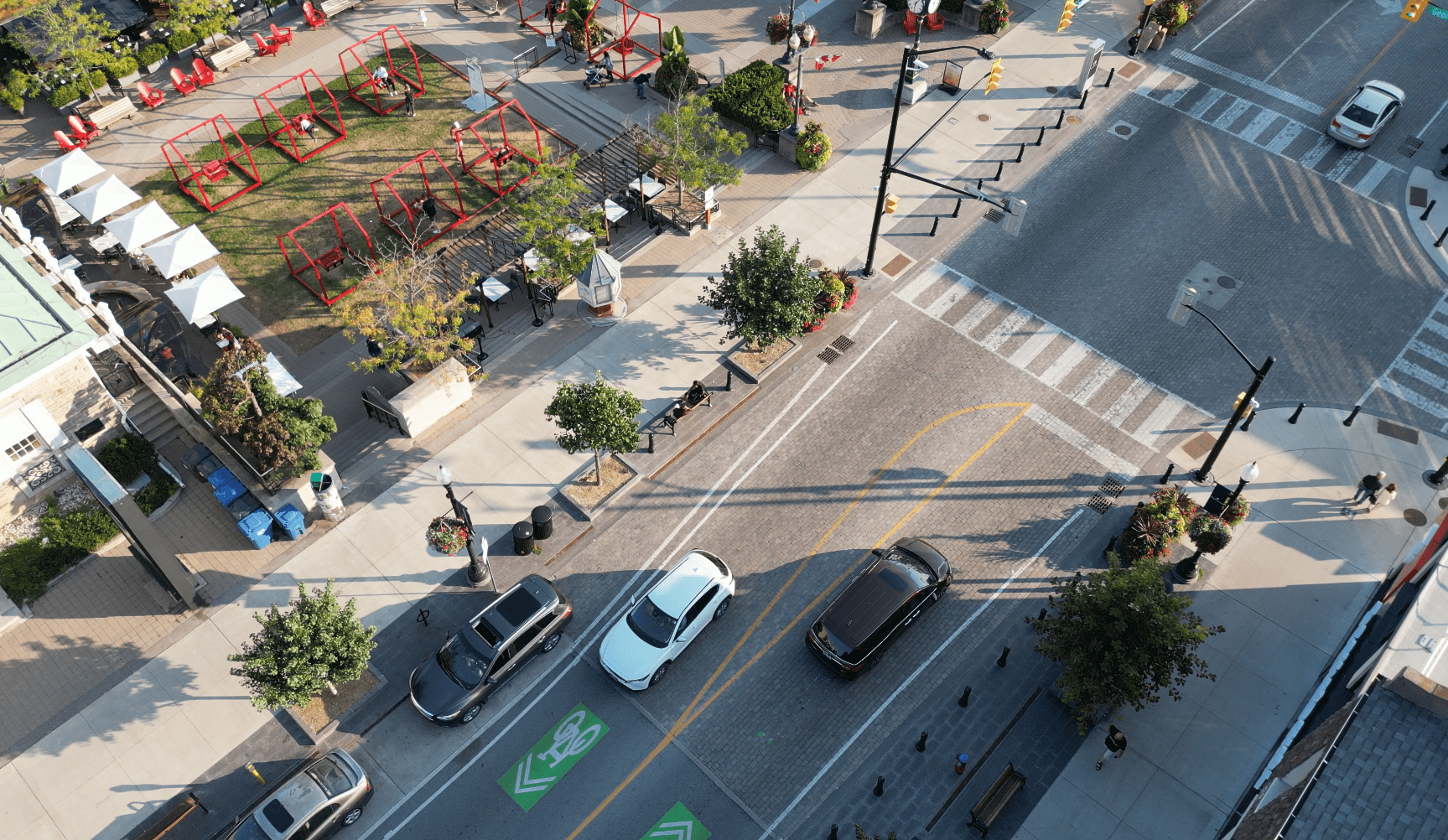
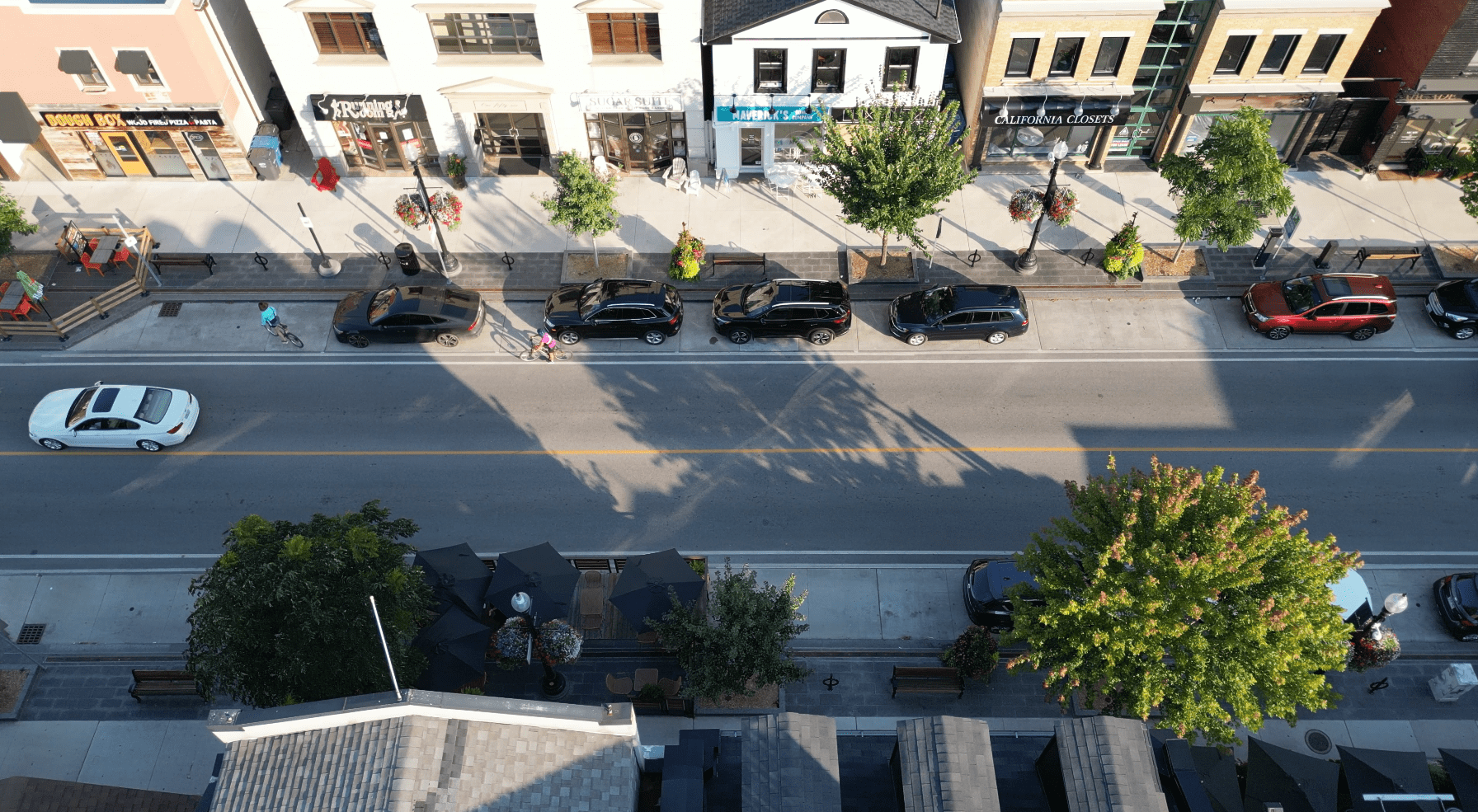
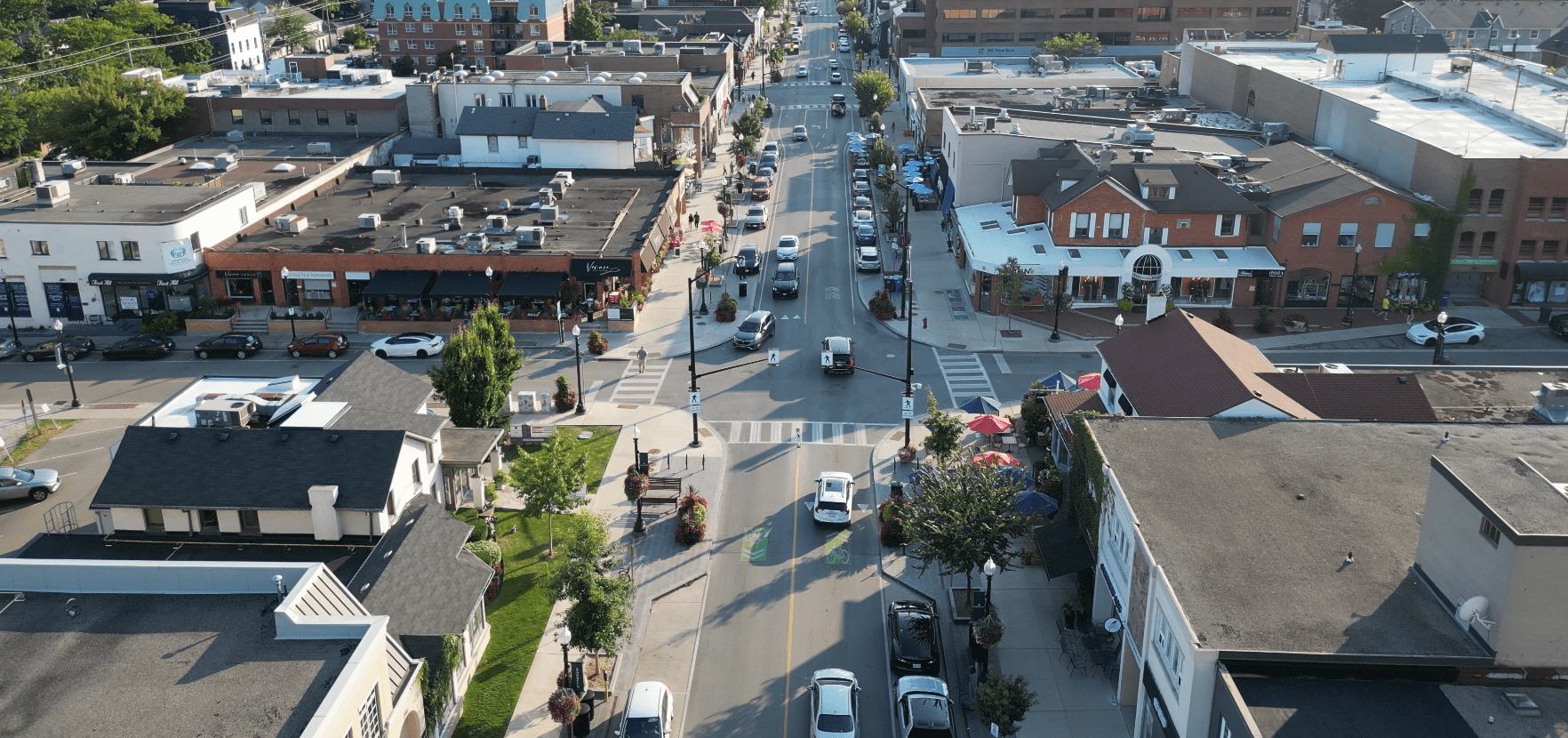
Lakeshore Road in downtown Oakville was more than a road reconstruction project. It was a major public-realm reinvestment designed to improve the street at every level: above ground for pedestrians, businesses, and cyclists, and below ground for utilities, stormwater, and long-term tree health. As part of that effort, Silva Cells were installed beneath the hardscape to provide large volumes of quality soil for 82 new trees while also contributing stormwater management capacity within the rebuilt streetscape. The result is a greener, more resilient downtown corridor built to perform well far into the future.
Oakville’s work on Lakeshore Road reflects a much bigger shift in how the town thinks about trees. Like many municipalities, Oakville had learned that conventional urban planting practices often produced street trees that survived, but never truly thrived. Trees remained small and sickly, limiting both canopy growth and the long-term public value those trees could provide. That realization helped push Oakville toward a more serious urban forestry strategy — one that treated trees not as decoration, but as infrastructure. The town’s policy framework has long called for increasing canopy coverage, aiming to achieve 40 percent canopy cover city-wide in the coming years.
Oakville was not simply replacing trees during a downtown reconstruction; it was trying to correct the underlying conditions that had limited tree success in the past. Soil volume became a central issue. Oakville’s urban forest planning work, along with standards influenced by broader Ontario practices, recognized that healthy urban trees need meaningful quantities of soil if they are expected to reach mature size and deliver long-term canopy benefits.
Soil volume standards are one of the best ways to achieve this, something Oakville instituted to help ensure new plantings were given the conditions they need to thrive — and something Silva Cells are uniquely designed to deliver.
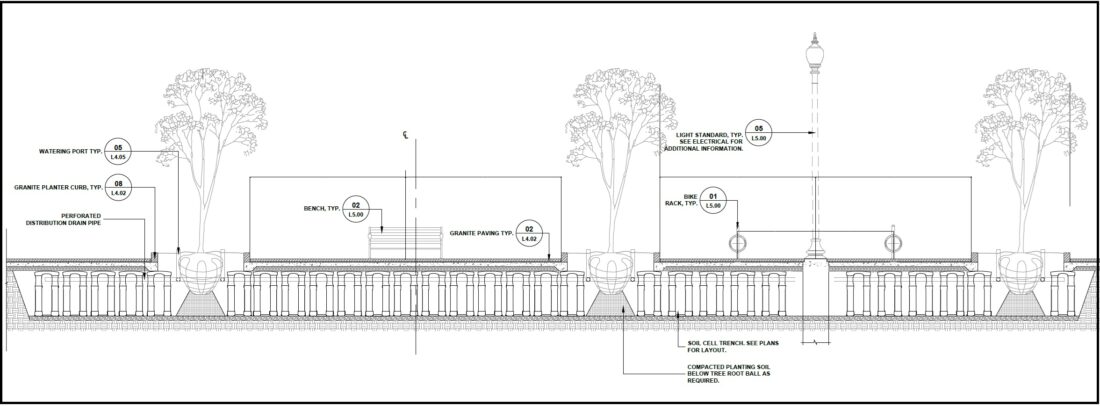
Silva Cells were a strong fit for Lakeshore Road because the project needed more than isolated tree pits. The design team at Brook McIlroy needed a way to provide large soil volumes for new trees while working within a dense downtown corridor that was also undergoing a major utility upgrade. In a project with many priorities competing for space, Silva Cell provided a strategy for seamless integration.
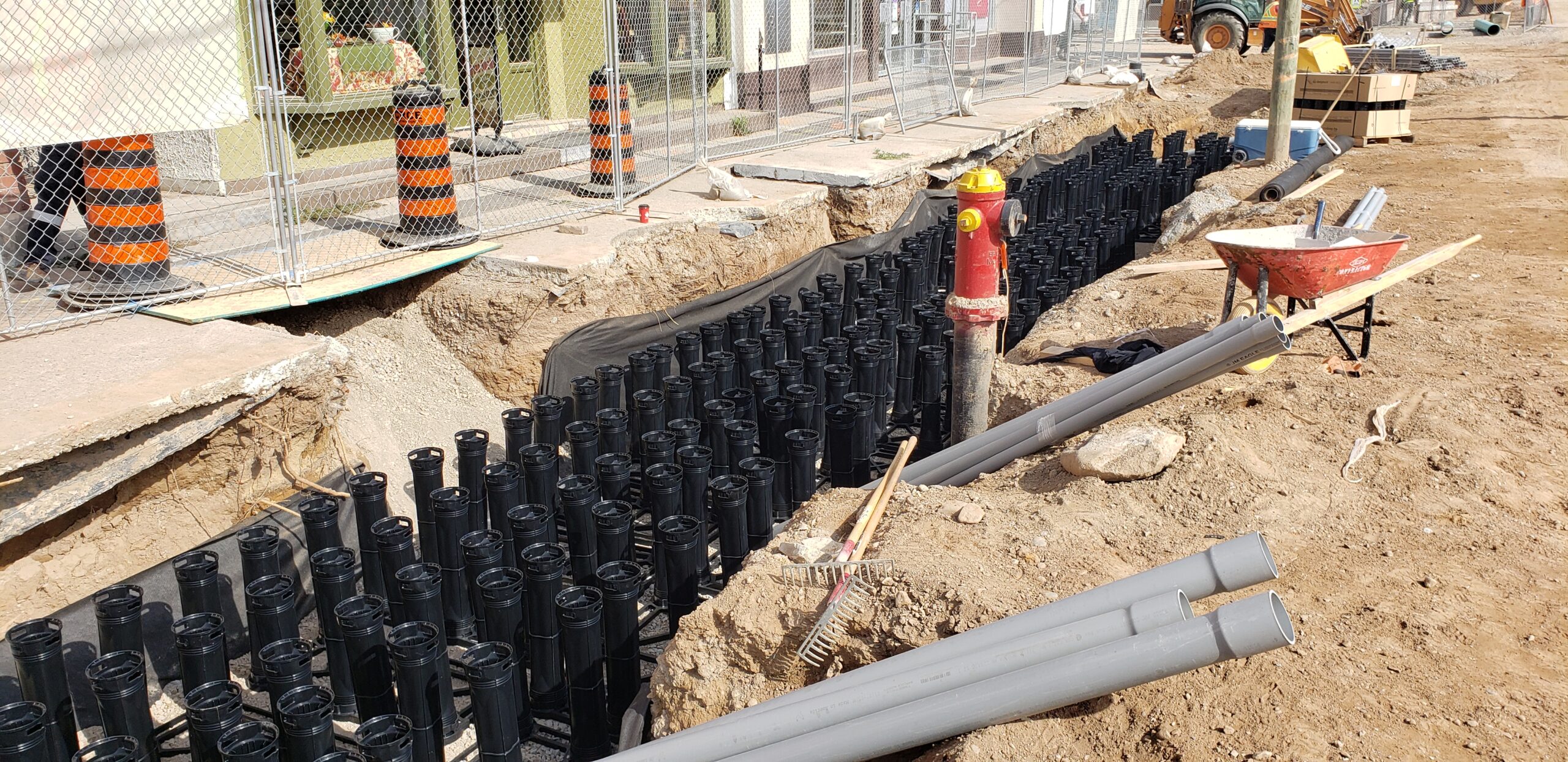
The system also worked well with the broader reconstruction effort: It was one of the main factors that helped make the green infrastructure strategy feasible. As aging underground infrastructure was upgraded and relocated, the project team was able to create room for Silva Cells within the corridor. Brook McIlroy’s Colin Berman described utility relocation as “a huge driver” in enabling the project’s green infrastructure goals, while also noting that sustainability and rejuvenation were central from the beginning. That coordination is part of what makes this project so compelling: Silva Cells were not inserted after the fact but woven into the logic of the streetscape rebuild itself.
The project’s scale reinforces that commitment. More than 1,600 Silva Cells (3x) were installed to support 82 new trees and provide 1,758 total cubic meters of soil volume, or about 21 cubic meters per tree.
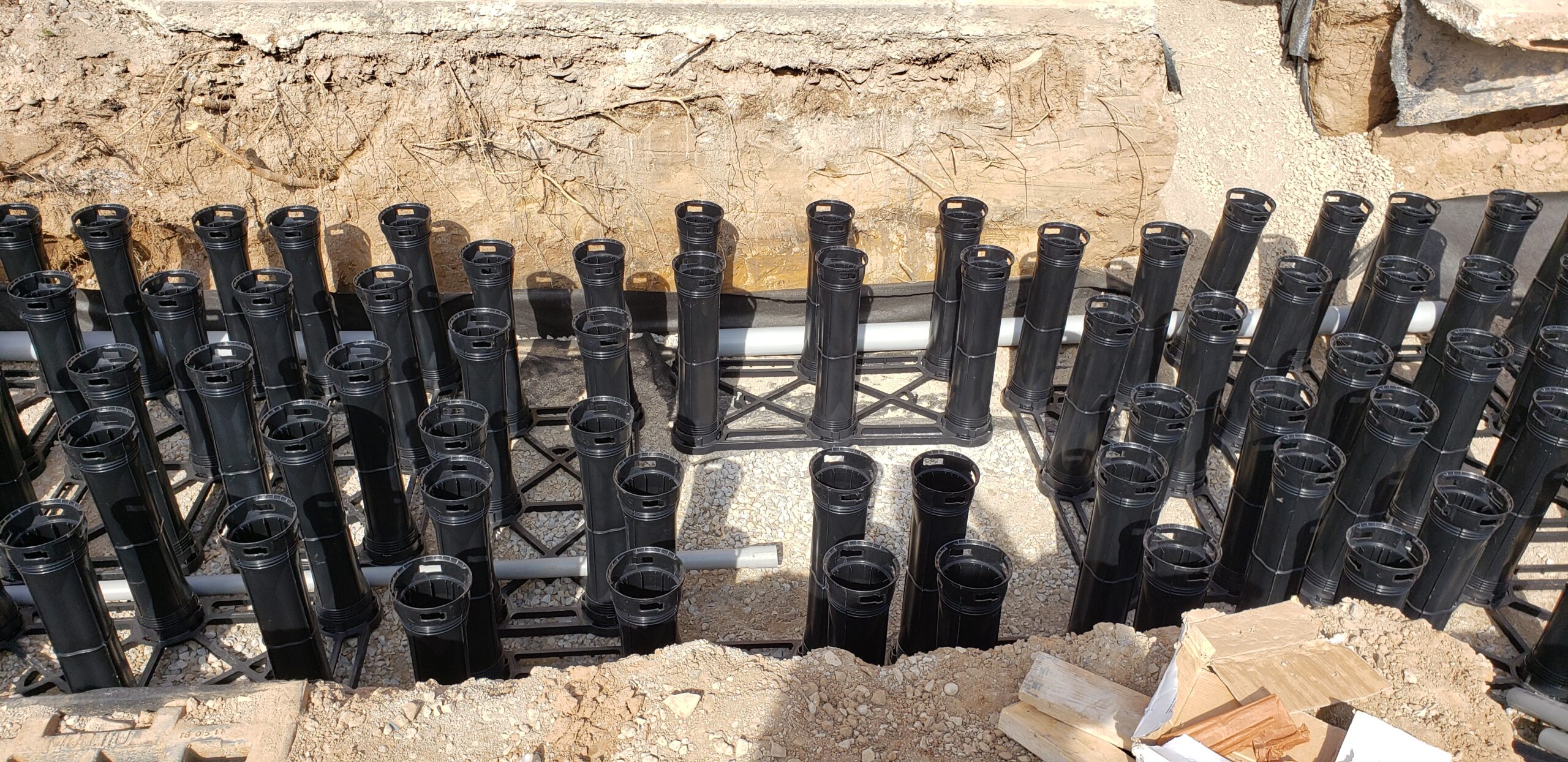
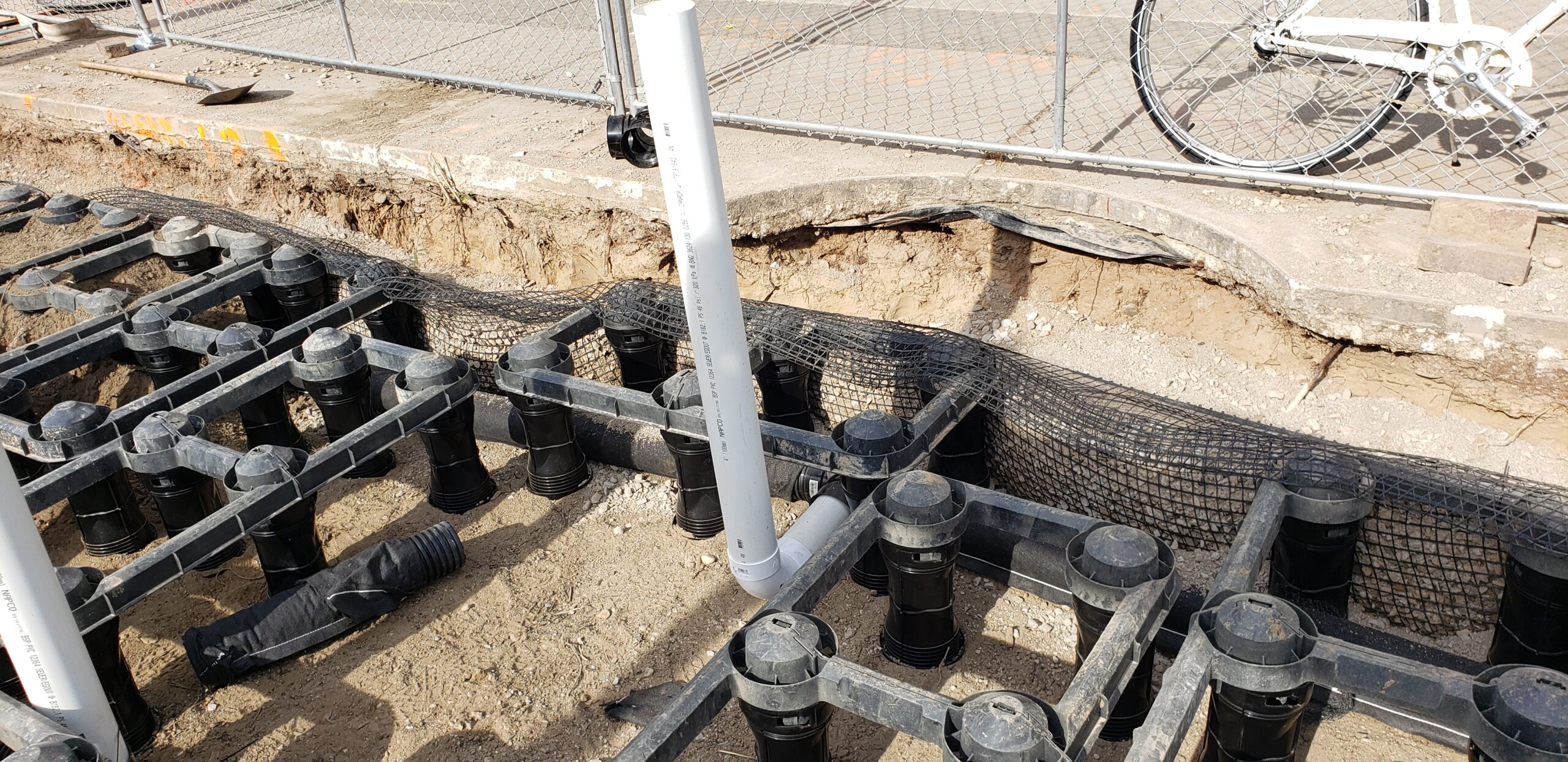
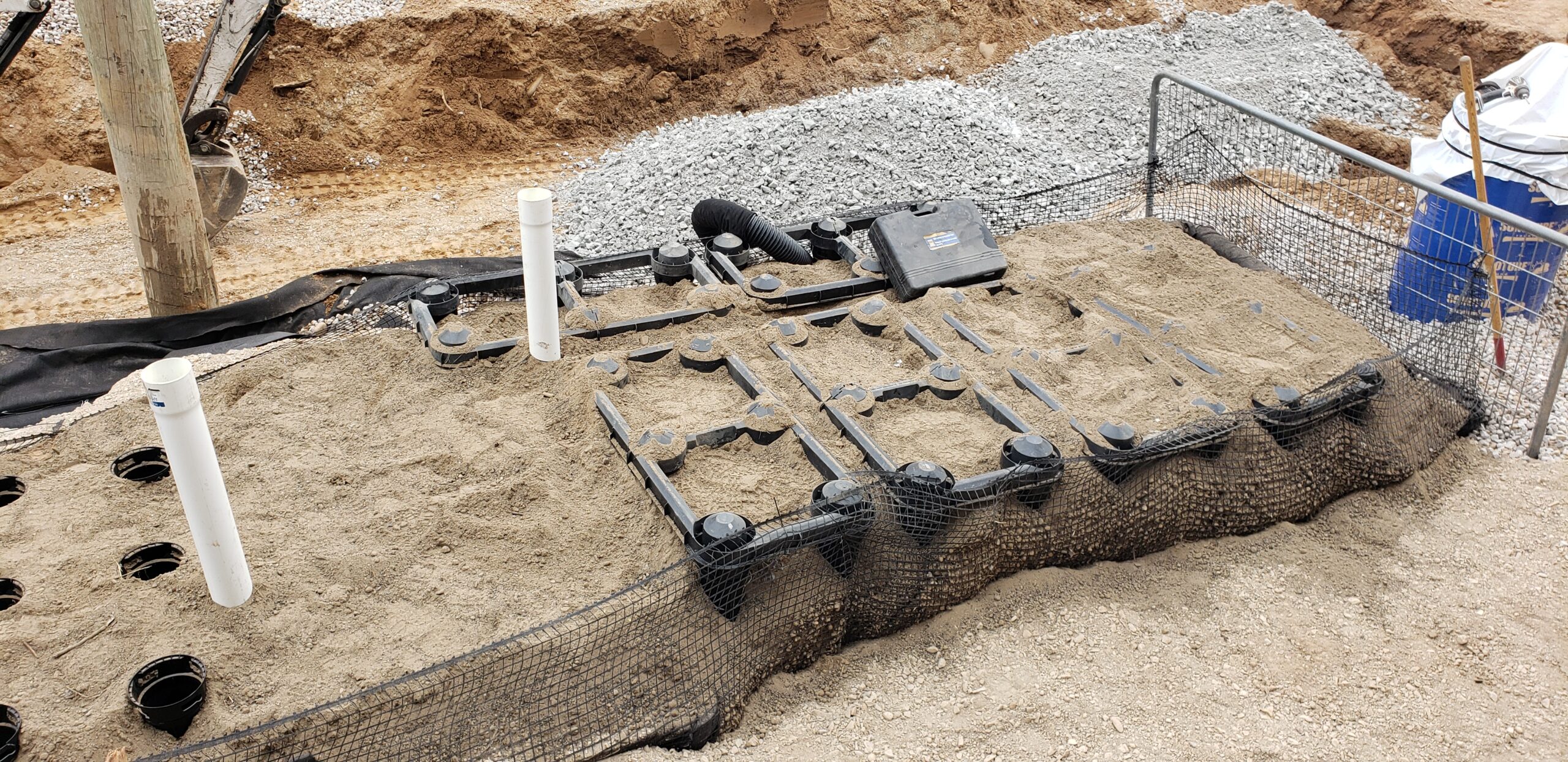
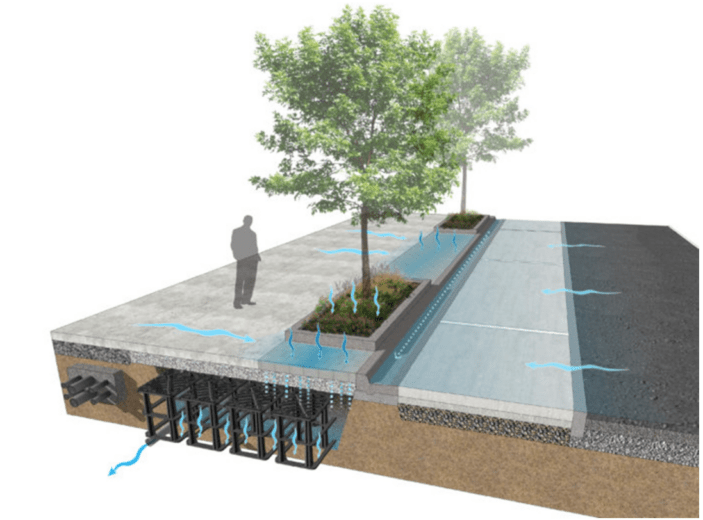
Lakeshore Road is also a strong example of Silva Cells performing beyond tree support alone. In this project, runoff is redirected through trench drains into the Silva Cell system below the sidewalk, where the soil-filled structure helps retain, detain, store, and infiltrate stormwater before excess flow enters the municipal storm system. In other words, the same underground footprint supporting tree growth is also helping the street manage water at source.
That dual function mattered in Oakville. The corridor’s proximity to Sixteen Mile Creek and Lake Ontario creates added concern around significant rain events and flood vulnerability. Oakville’s broader stormwater planning has also emphasized the value of LID (low-impact development) and source controls as part of a more balanced green-and-grey infrastructure approach.
That is ultimately the power of underground bioretention when it is integrated well. A rebuilt downtown street does not have to choose between healthy trees, stormwater management, utility coordination, and a comfortable public realm. On Lakeshore Road, Silva Cells helped Oakville pursue all of those objectives at once — quietly below the surface, without taking up additional space above it.
“It has become clear to many of us that Oakville’s trees were not doing well. They might live 20 or 30 years, but they’d remain small and root-bound, and then they’d die. Once we learned how much more we could be doing, it was obvious to us that had to move in that direction.”
—Allan Elgar, Oakville Councilman
“Throughout the design process, Brook McIlroy worked closely with the community to help everyone understand the benefit of a healthy urban tree canopy, including the benefits of technology currently on the market, such as Silva Cells.”
—Colin Berman, Brook McIlroy
“The need to upgrade utilities — which allowed for relocations to make room for the Silva Cells — was a huge driver in enabling this green infrastructure project.”
—Colin Berman, Brook McIlroy
“From the beginning, sustainability and rejuvenation were the main points for the downtown project in Oakville.”
—Colin Berman, Brook McIlroy
“The project team sought to utilize green infrastructure wherever feasible.”
—Colin Berman, Brook McIlroy
 Soil. Stormwater. Sustainable Infrastructure.

Request a Quote [email protected]
Tel: 415 781 9700
Toll Free: 800 458 7668
Toll Free: 800 277 7668
Fax: 415 781 0191