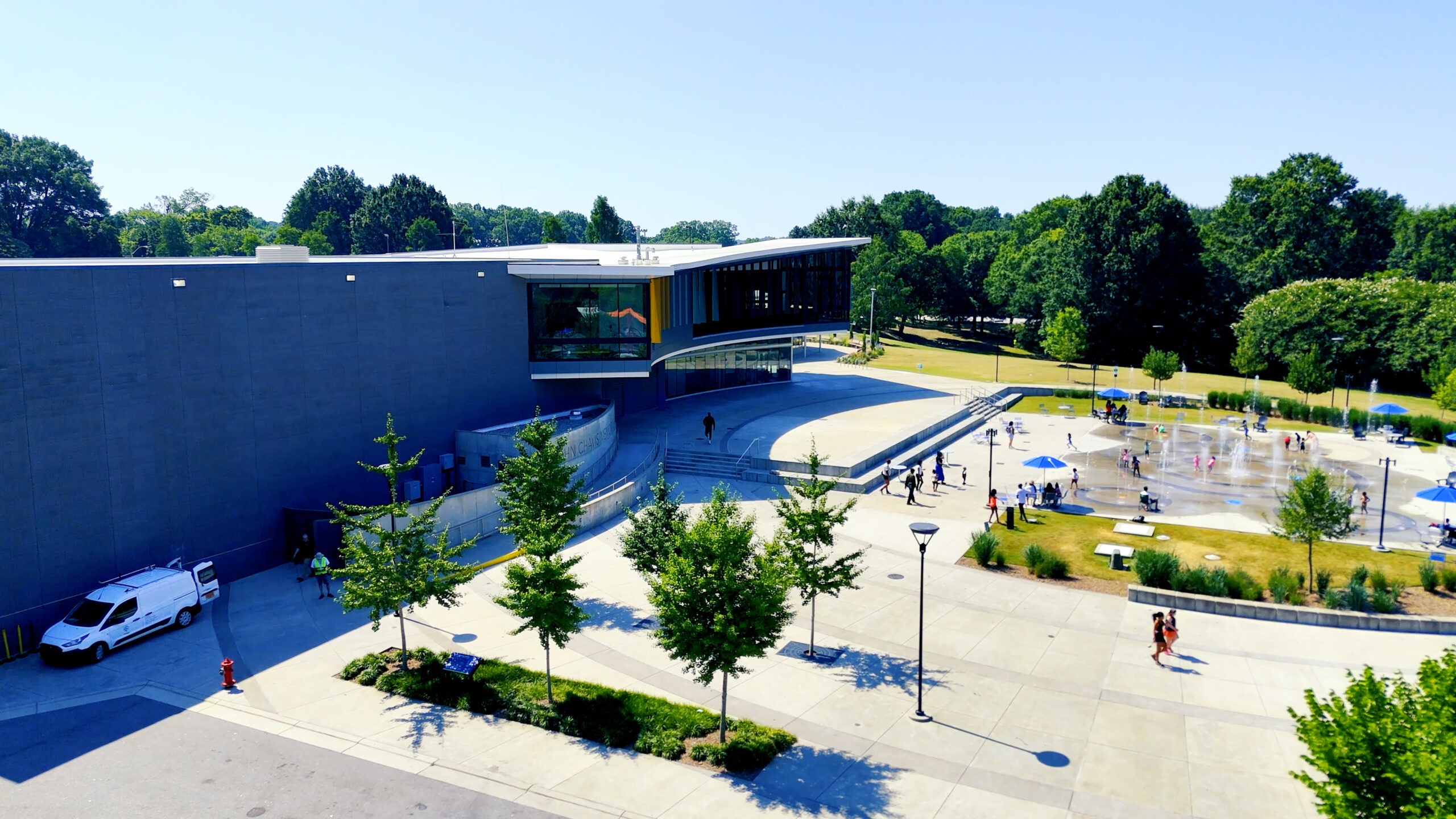
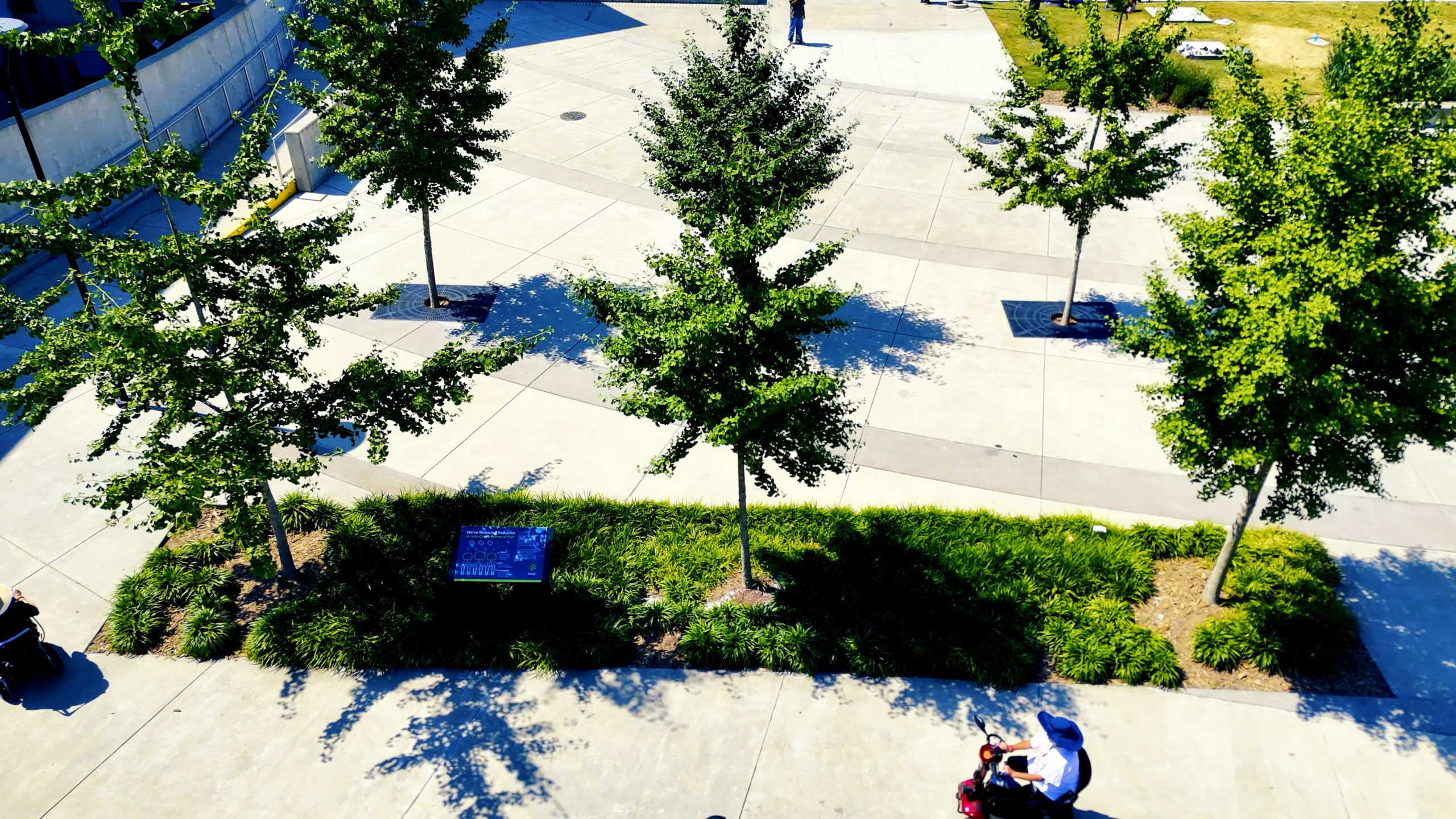
At John Chavis Memorial Park in Raleigh, Silva Cell supports six ginkgo trees while managing stormwater beneath a compact hardscape plaza
Number of Silva Cells: 174 (3x)
Number of Trees: 6
Installation: Fall 2020
Project Designer: Surface 678
Project Engineer: Clearscapes
The renovation of John Chavis Memorial Park (JCMP) in Raleigh, North Carolina, created a refreshed civic destination with a small hardscape plaza designed to serve visitors in a flexible and inviting way. But like many urban retrofit projects, the site also needed to meet stormwater requirements within a limited footprint.
Surface 678, the landscape architecture firm for the project, faced a common design challenge: how do you add stormwater performance to a hardscape-heavy public space without giving up the very plaza area the project was designed to create? Silva Cells offered a different path: locating stormwater functionality below the pavement while supporting six new ginkgo trees above, ensuring the project met its defined stormwater objective while simultaneously preserving the public realm at the surface.
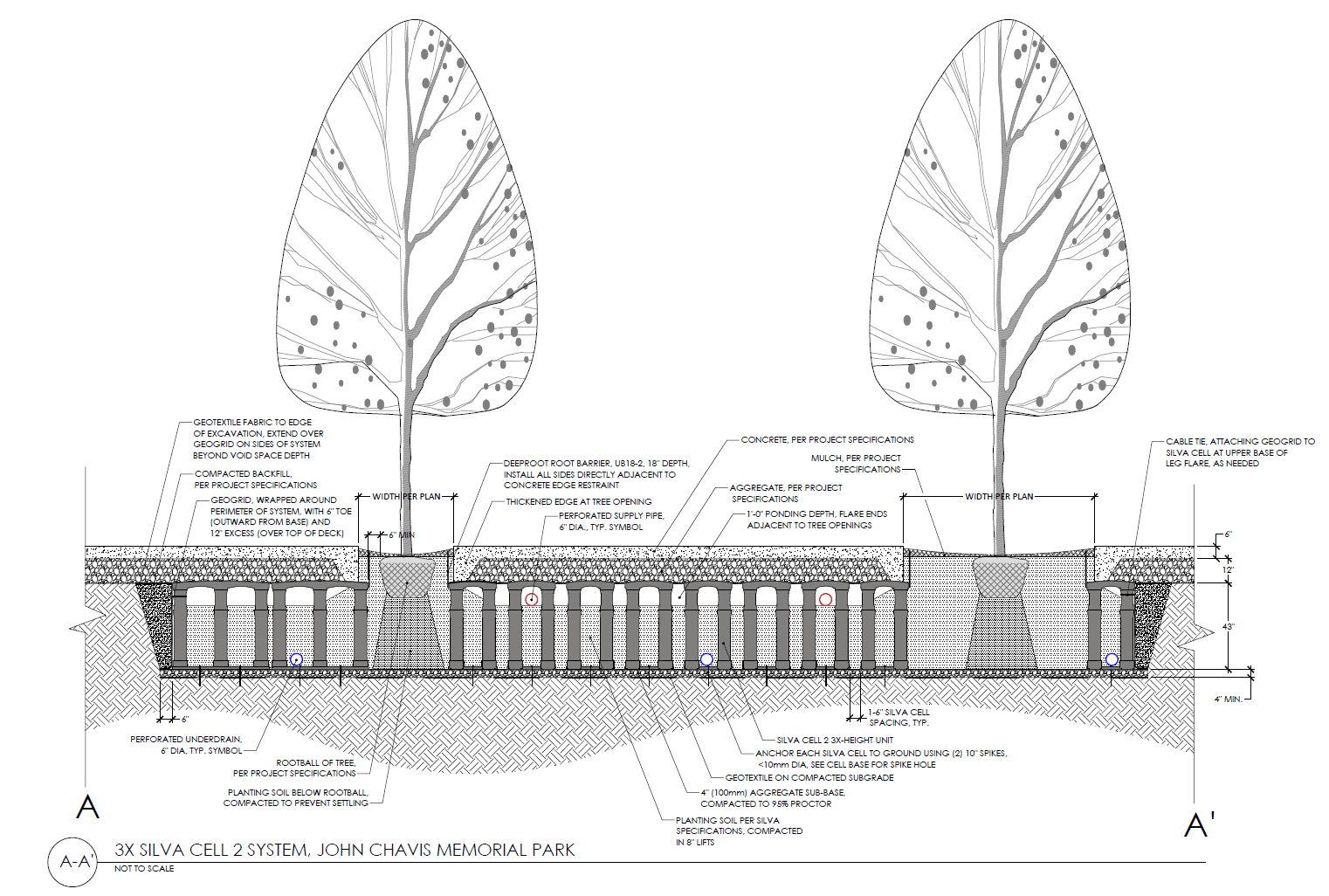
Silva Cells at JCMP work as a hidden green infrastructure system beneath the plaza. Water is directed into the soil volume below the pavement, where the planting soil functions as bioretention media. The system temporarily stores runoff, allowing water to filter through the soil profile and then conveying treated water out through an underdrain.
How does it work?
The project becomes especially useful as a model because Silva Cell did not require the design team to set aside a large surface area for stormwater treatment. Instead, the project used soil — already needed for the trees — as functional stormwater infrastructure below the plaza. The same underground system supports tree growth, receives runoff, provides temporary storage, filters water through planting soil, and helps the site meet stormwater requirements. In a sense, the logic is straightforward: planting soil can do more than grow trees. When designed correctly, it can also help manage water. Smart designers are increasingly recognizing this dual function early in the planning process.
Silva Cells were installed as a single continuous area beneath the plaza hardscape, connecting soil volume and stormwater management media for all six trees. This shared soil strategy also assists root growth, as roots from more than one tree can overlap and grow into adjacent underground space.
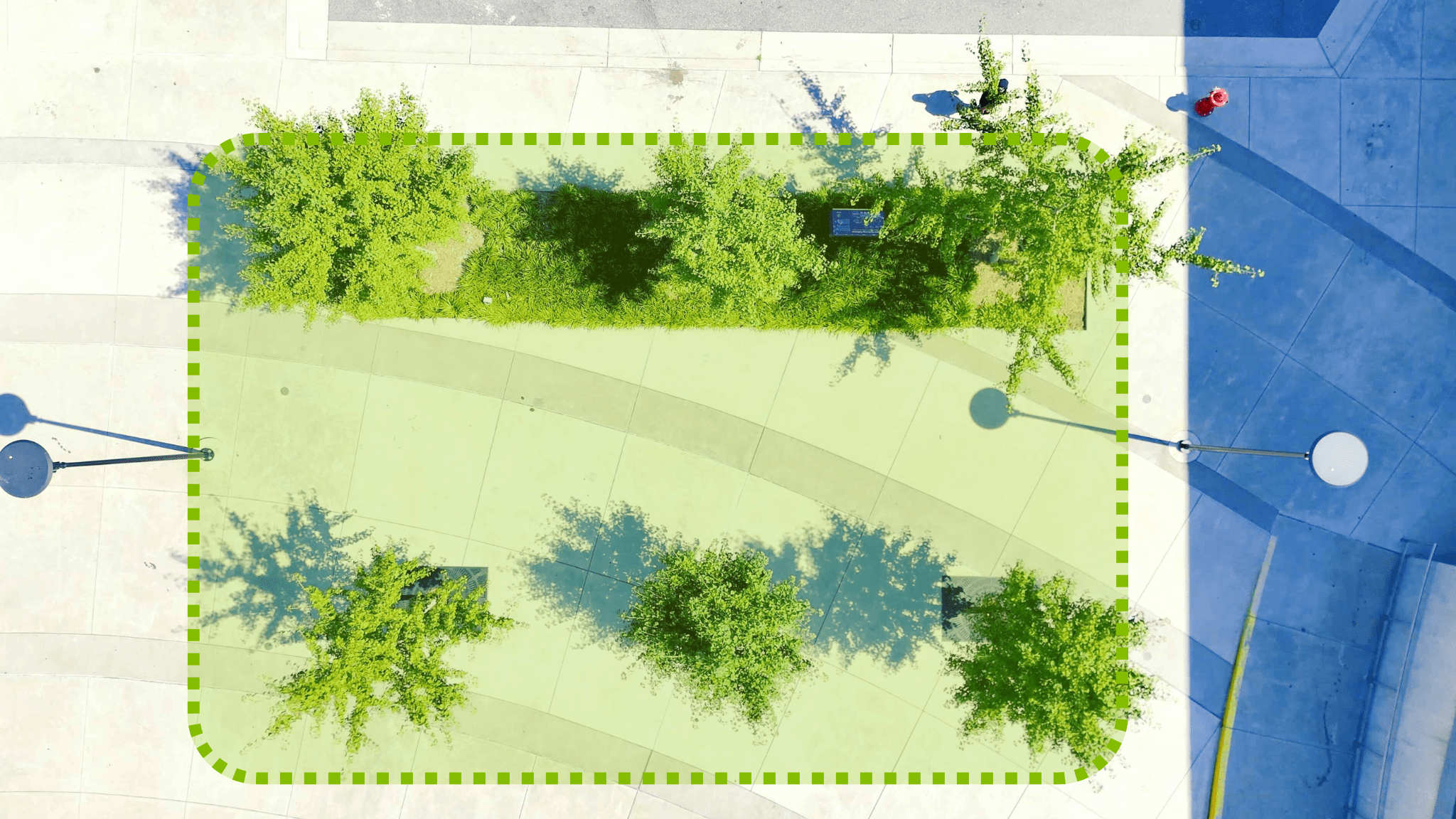
The six trees planted in the plaza are ginkgo species — trees known for being durable in urban environments, but also relatively slow growing. In a hardscape plaza, giving those trees meaningful soil volume and access to water is essential if they are expected to mature into long-term canopy assets.
That is where the stormwater and tree-growth goals work together. The planting soil helps treat runoff, while the runoff helps irrigate the trees. Rather than treating stormwater as a nuisance to be quickly moved away from the site, the design turns it into a resource. A few years after installation — despite area drought conditions — the trees are already performing well.
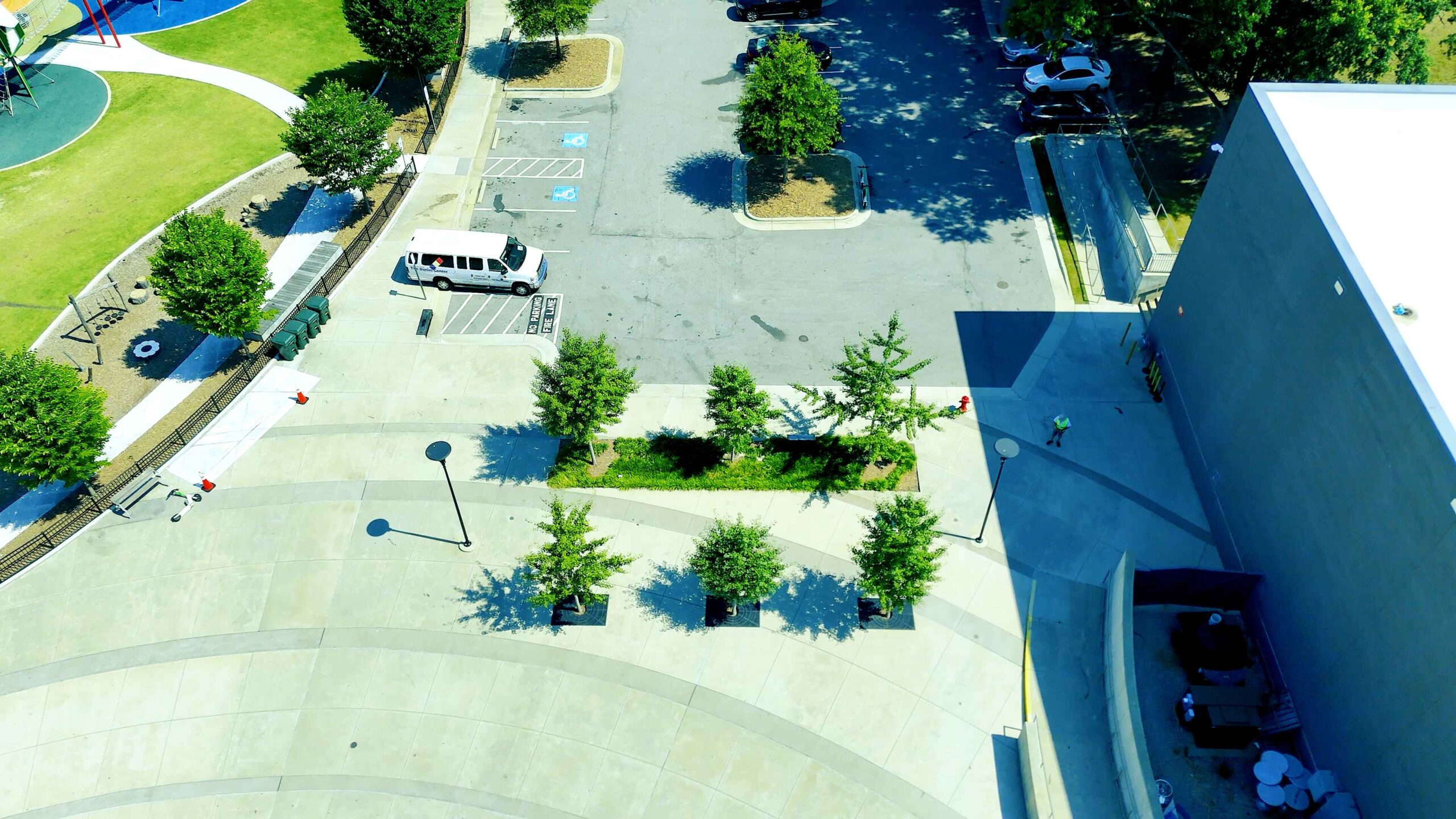
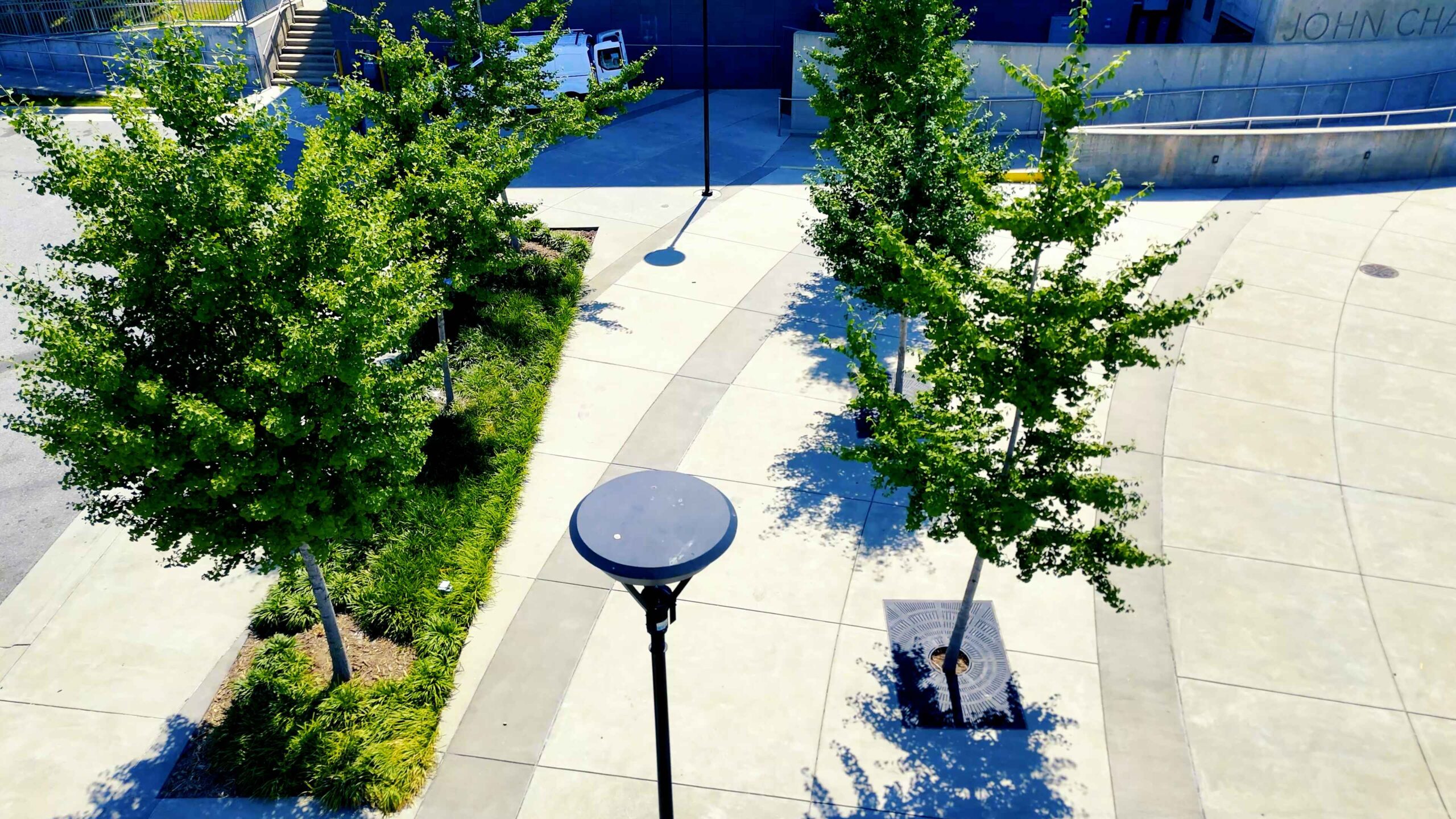
John Chavis Memorial Park was the first time Surface 678 used Silva Cell. The design team saw the project as an opportunity to challenge themselves with a new technology while working with the City of Raleigh on a stormwater-forward solution for a constrained urban site. The experience proved successful enough that Eric Davis and the Surface 678 team later used Silva Cell again for a similar purpose at the Panhellenic Council Gardens project on the University of North Carolina campus.
That repeat use is important. It shows that the John Chavis Memorial Park installation was not treated as a one-off experiment, but as a practical design solution the team felt confident applying again. As Davis put it, “I feel comfortable installing Silva Cell now. I know it works well, and I would not hesitate to recommend it.”
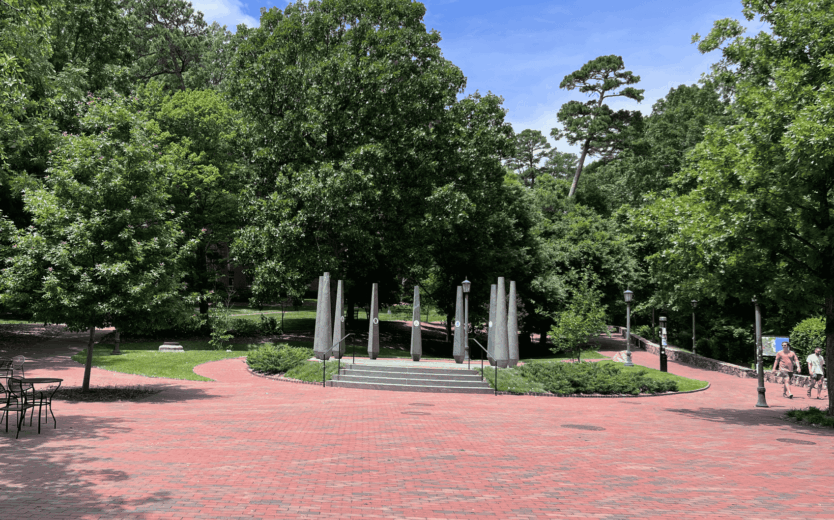
John Chavis Memorial Park is not a massive Silva Cell installation. It does not include hundreds of trees or a long streetscape corridor. Its value lies in what it demonstrates: even a small hardscape tree plaza can become a stormwater management asset when soil volume is planned as infrastructure.
For designers working in dense, space-limited sites, this is the larger lesson. Public space, stormwater management, and urban tree canopy do not need to compete against one another. With early planning, the same below-grade system can help meet stormwater requirements, support long-term tree health, preserve surface amenity, and make better use of every project dollar.
Silva Cell is often selected because trees need soil. John Chavis Memorial Park shows what becomes possible when that soil is asked to do more. Beneath a small plaza in Raleigh, six ginkgo trees are supported by a system that also manages runoff — quietly expanding the role of green infrastructure in the public realm.
 Soil. Stormwater. Sustainable Infrastructure.

Request a Quote [email protected]
Tel: 415 781 9700
Toll Free: 800 458 7668
Toll Free: 800 277 7668
Fax: 415 781 0191
