An iconic military site is reimagined as a walkable, tree-lined neighborhood where sustainability takes root
Number of Silva Cells: 1,200 (2x)
Number of Trees: 10 (More to Be Planted)
Project Designer: Arcadis
Project Contractor: Wilco Contractors
Type of Project: Streetscape, Public Realm
Installation: 2016 and 2018
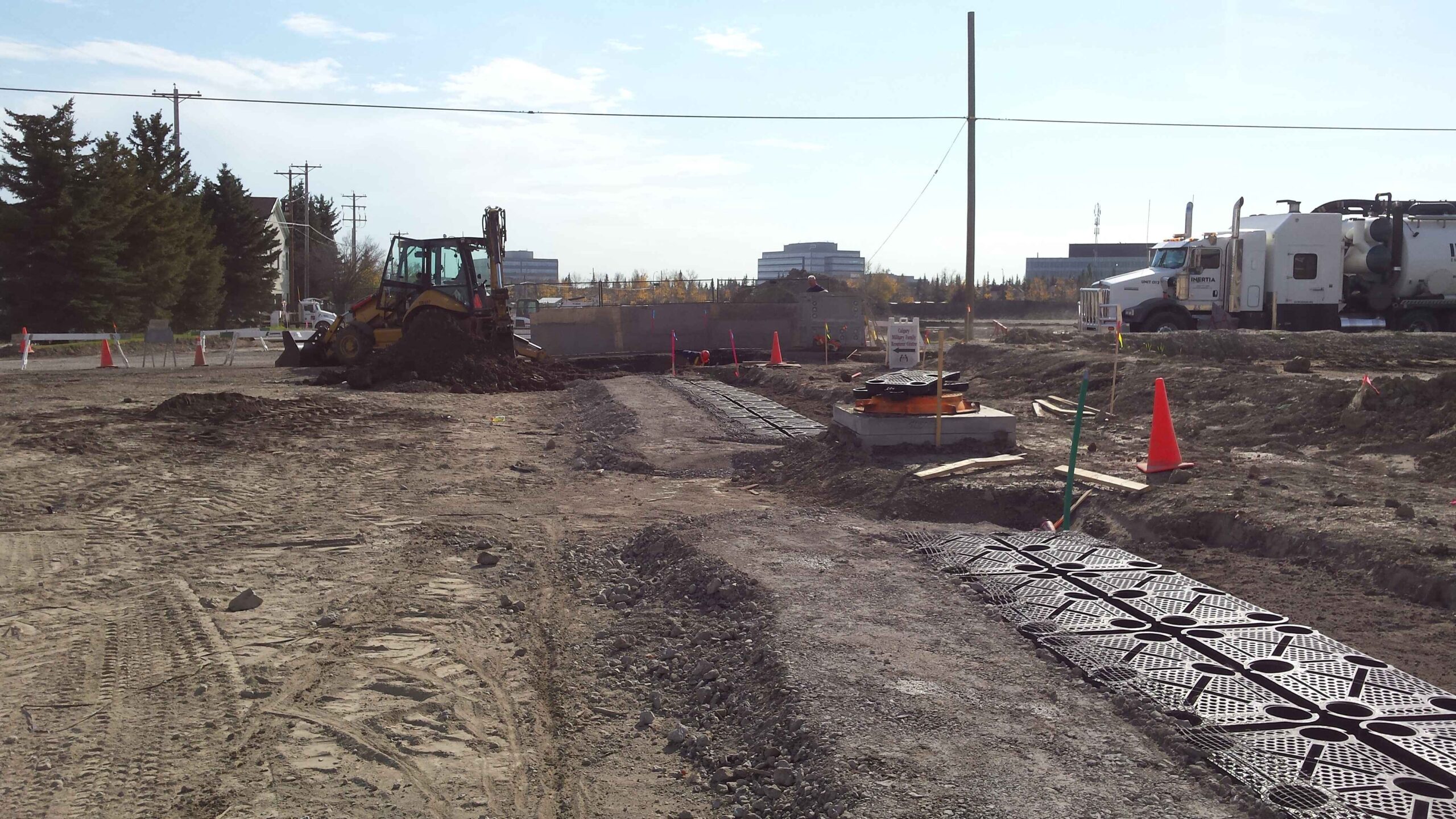
Once home to Canadian Forces Base Calgary, the Currie Barracks site is being redeveloped into one of the city’s most ambitious mixed-use communities — now known simply as “Currie.” This multi-phase transformation integrates historic preservation, modern infrastructure, and environmental design. As part of the streetscape redevelopment, Silva Cells were installed in two separate phases (2016 and 2018), providing vital soil volume beneath the new sidewalks for rows of urban trees. In total, more than 1,200 Silva Cells were placed along the redeveloped corridors — some already supporting thriving street trees, others in place and ready to be “activated” as new plots are developed. Together, they form a flexible green foundation for this evolving neighborhood, creating a welcoming canopy for residents and visitors alike.
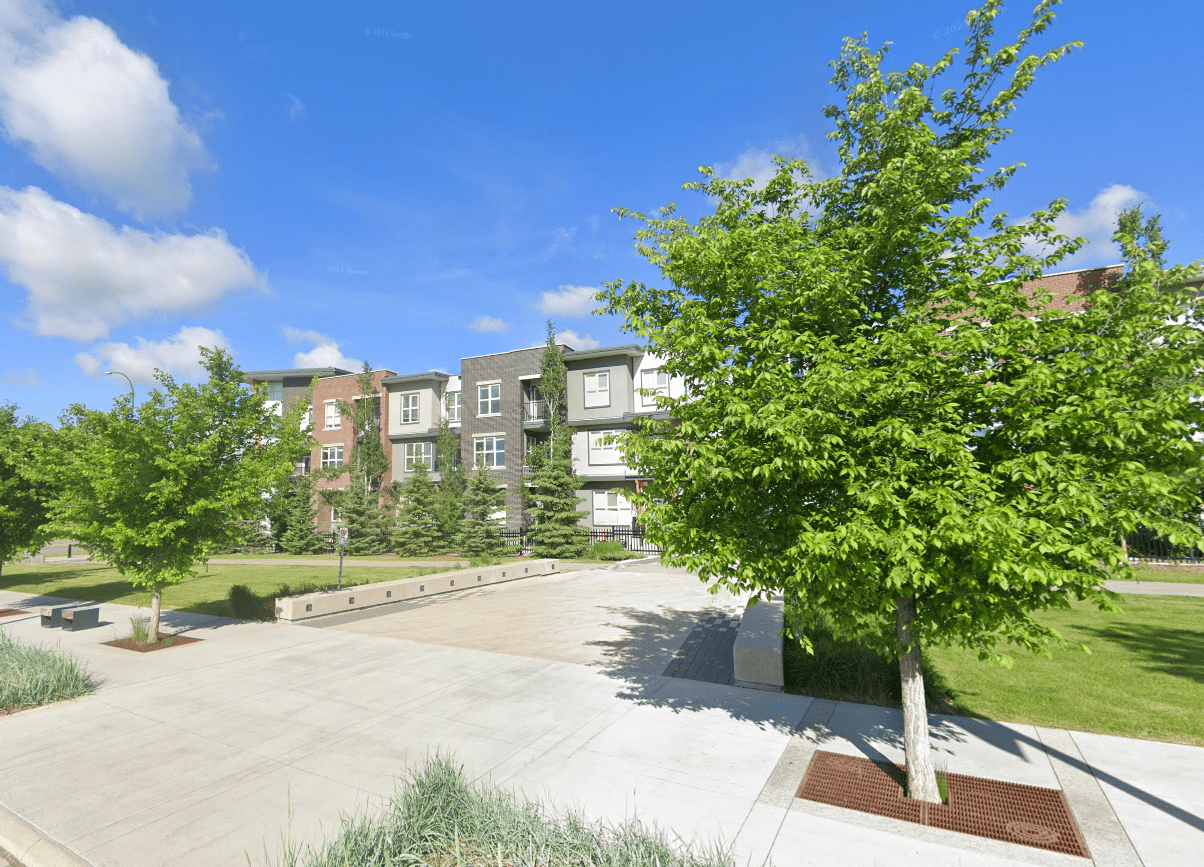
The redevelopment of Currie represents a complete reimagining of an underused military property into a sustainable new urban district. Guided by LEED® for Neighborhood Development (LEED-ND) principles, the master plan blends heritage architecture with new residential and commercial spaces, parks, and public plazas. What was once a closed and utilitarian base is now a connected, people-focused neighborhood — one that celebrates its past while investing in a greener, more livable future.
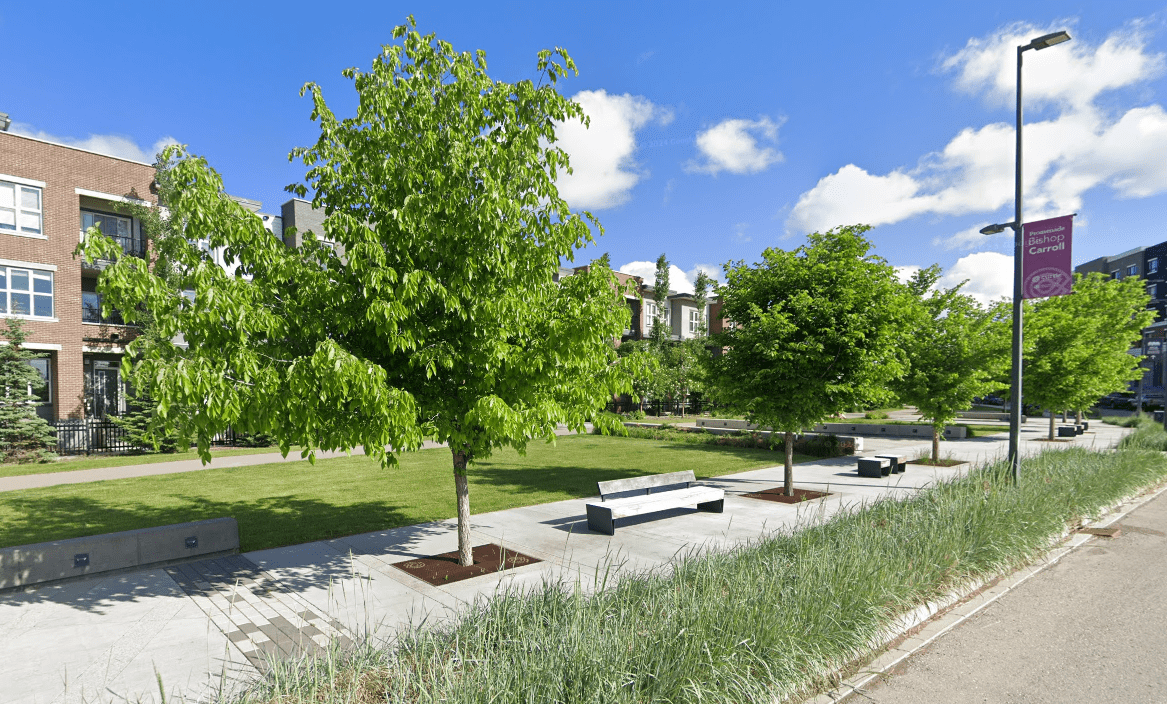
Along Bishop Way, this transformation is already taking shape. A wide pedestrian promenade lined with benches and newly planted trees creates a welcoming green corridor through the heart of the community. Supported by Silva Cells beneath the pavement, these young trees are flourishing — offering shade to pedestrians, comfort to visitors, and a glimpse of the leafy character that will define Currie as development continues to unfold.
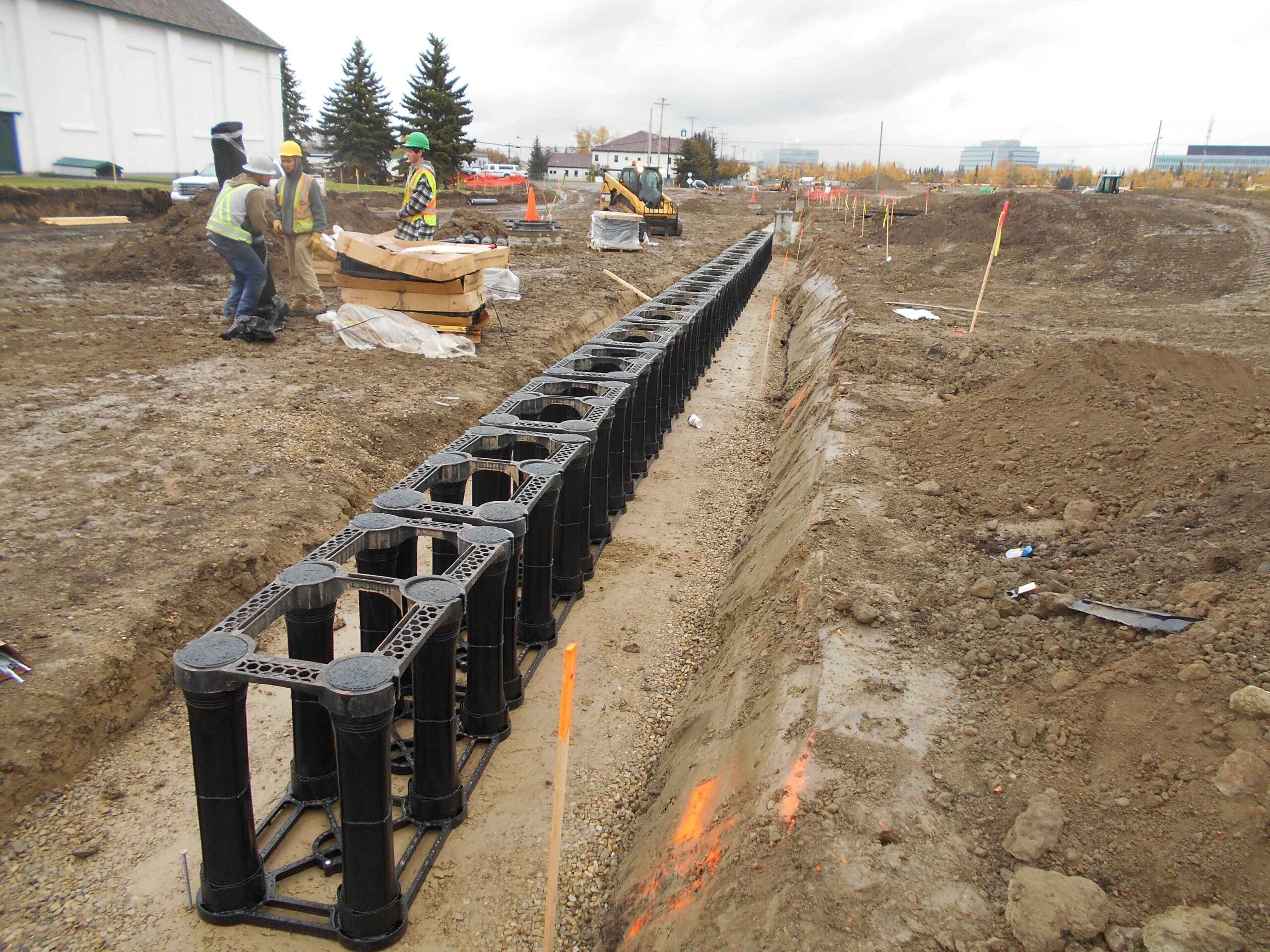
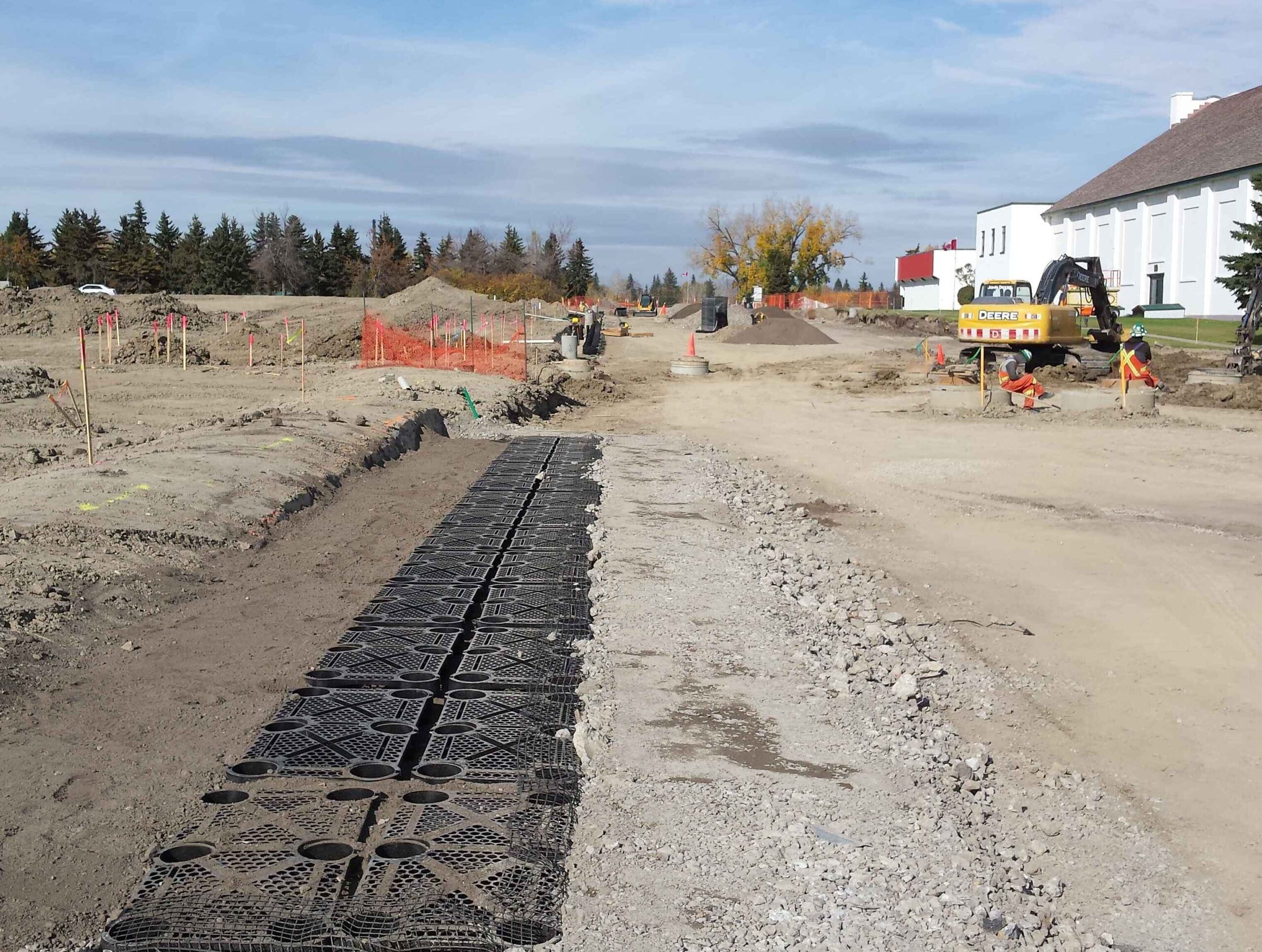
Currie’s phased approach to redevelopment places the public realm ahead of private construction — a bold statement that sustainability and livability come first. Streetscapes, sidewalks, and Silva Cell systems are being completed even before adjacent plots are sold, ensuring that future residents and developers inherit a ready-made green foundation.
Along one of the site’s new green corridors — a landscaped bike path that threads through the district — Silva Cells have already been installed, awaiting their future canopy. This pre-built infrastructure is essentially “green space in waiting,” ready to be activated by future developers. When the time comes, the trees can be planted directly into these existing systems, immediately connecting new buildings to an established network of pedestrian and cycling-friendly streets. It’s an innovative model of urban planning where green infrastructure leads, not follows, the pace of development.
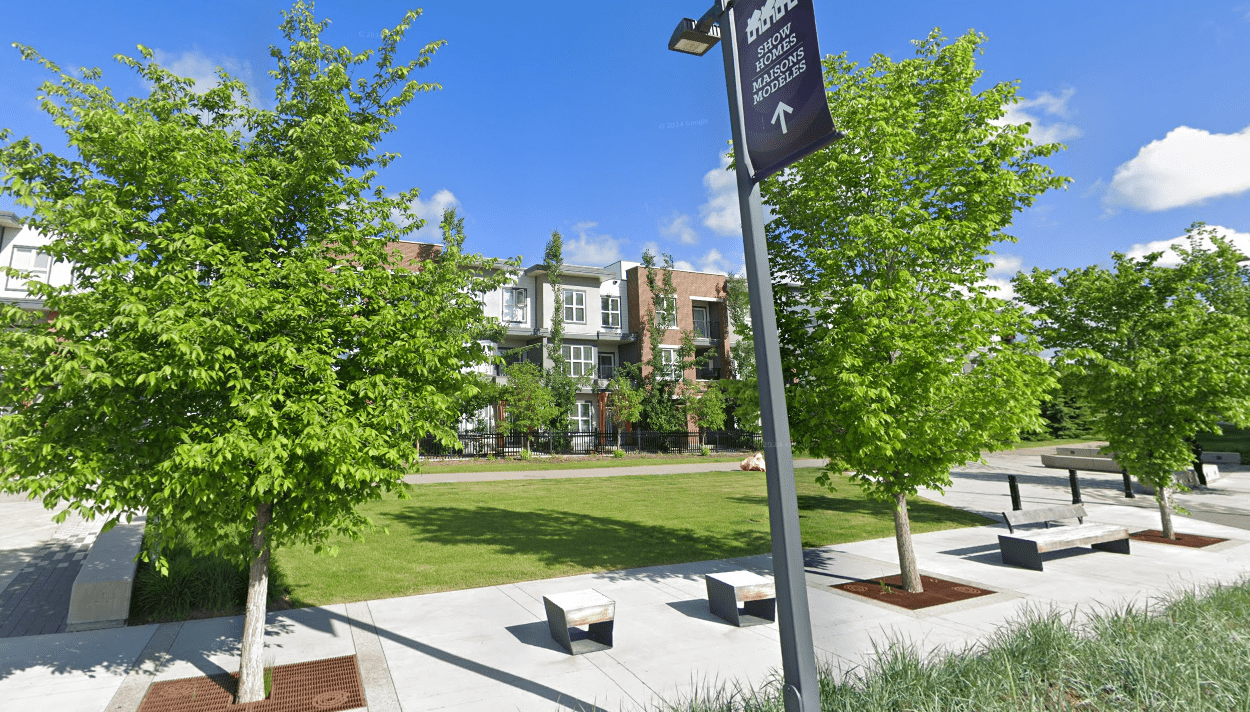

Currie’s sustainability strategy extends far beyond efficient buildings. The development’s open space network, heritage tree preservation, and stormwater-sensitive design embody Calgary’s growing commitment to green infrastructure. Streets will be — and are already, in some areas — lined with healthy trees, bioswales, and raingardens that reduce runoff, improve local ecology, and enhance the pedestrian experience. These efforts have earned the project recognition as one of Canada’s leading examples of low-impact, sustainable community design.
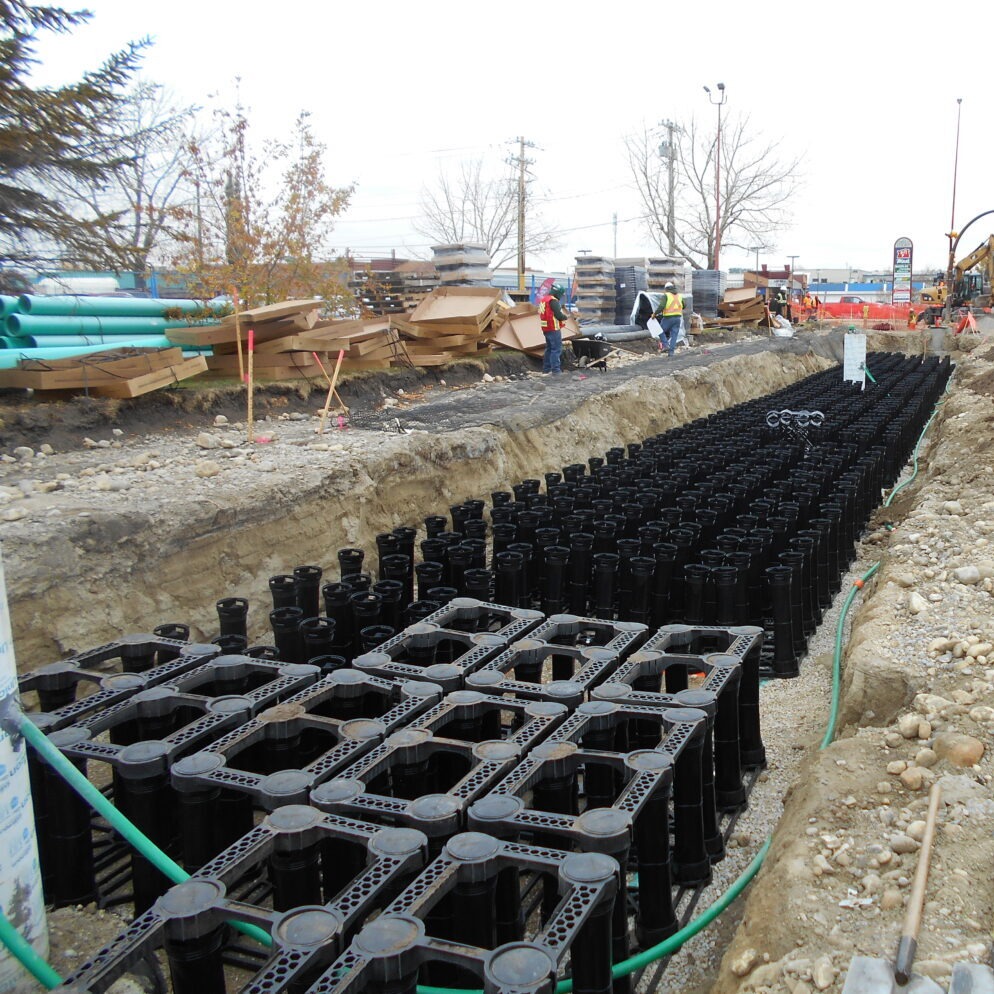
Silva Cells directly contribute to this environmental vision by creating uncompacted, high-quality soil volumes beneath paved surfaces — the foundation for healthy, long-lived trees in dense urban settings. At Currie, they help ensure that each new tree has the space and resources it needs to thrive, even where soil depths and space are limited. As these trees continue to mature, they’ll cool streets, filter stormwater, and strengthen the green identity of this evolving neighborhood.
 Soil. Stormwater. Sustainable Infrastructure.

Request a Quote [email protected]
Tel: 415 781 9700
Toll Free: 800 458 7668
Toll Free: 800 277 7668
Fax: 415 781 0191
