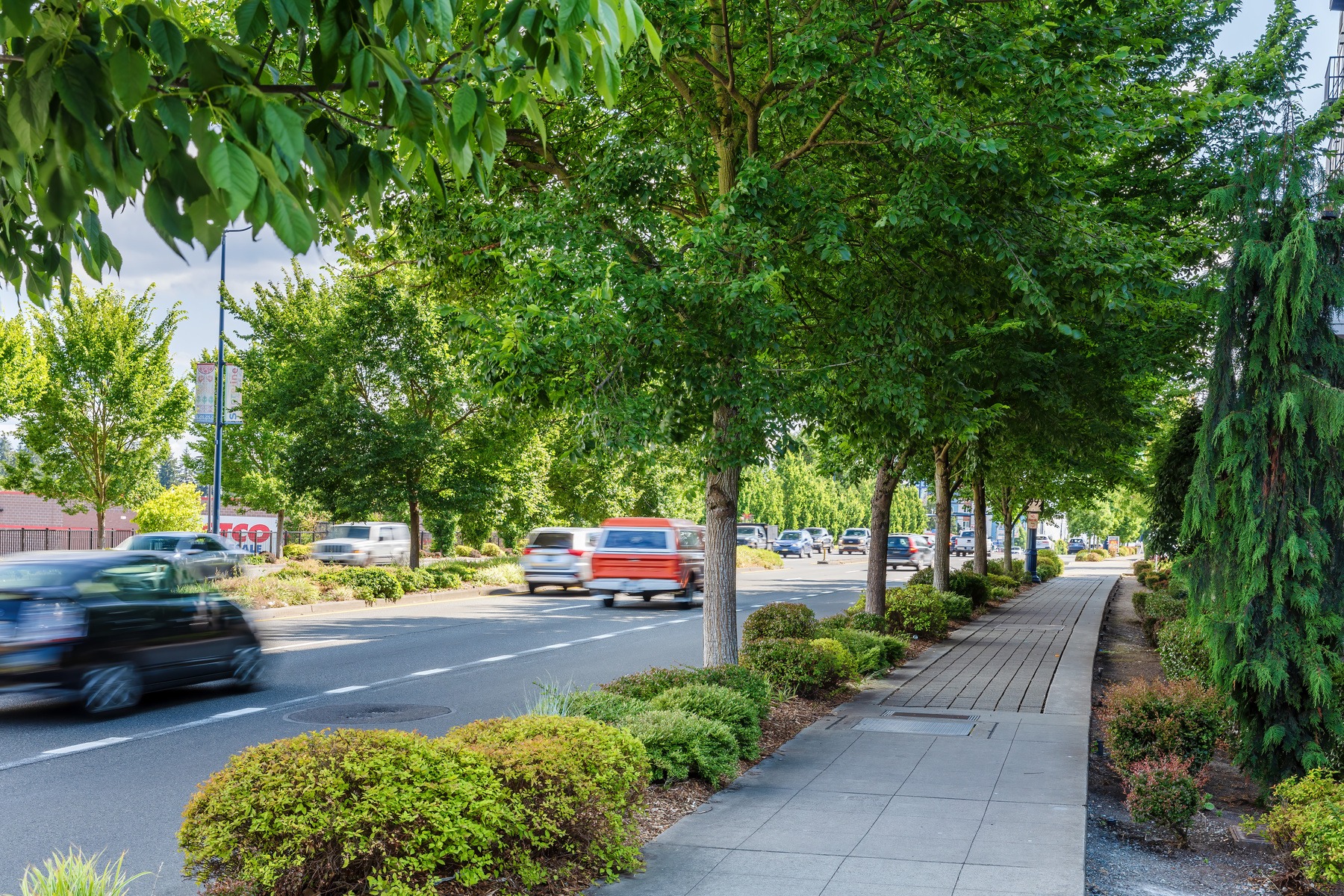
Beginning in 2010, Aurora Avenue successfully adopted Silva Cells to add stormwater treatment capacity and support trees along the overhauled streetscape
Number of Silva Cells: 1,200+
Number of Trees: 50+
Soil Volume Per Tree: 600 ft3
Project Designer: Otak
Installation: 2010-2015 (Multi-Phase)
Contractor: Gary Merlino Construction
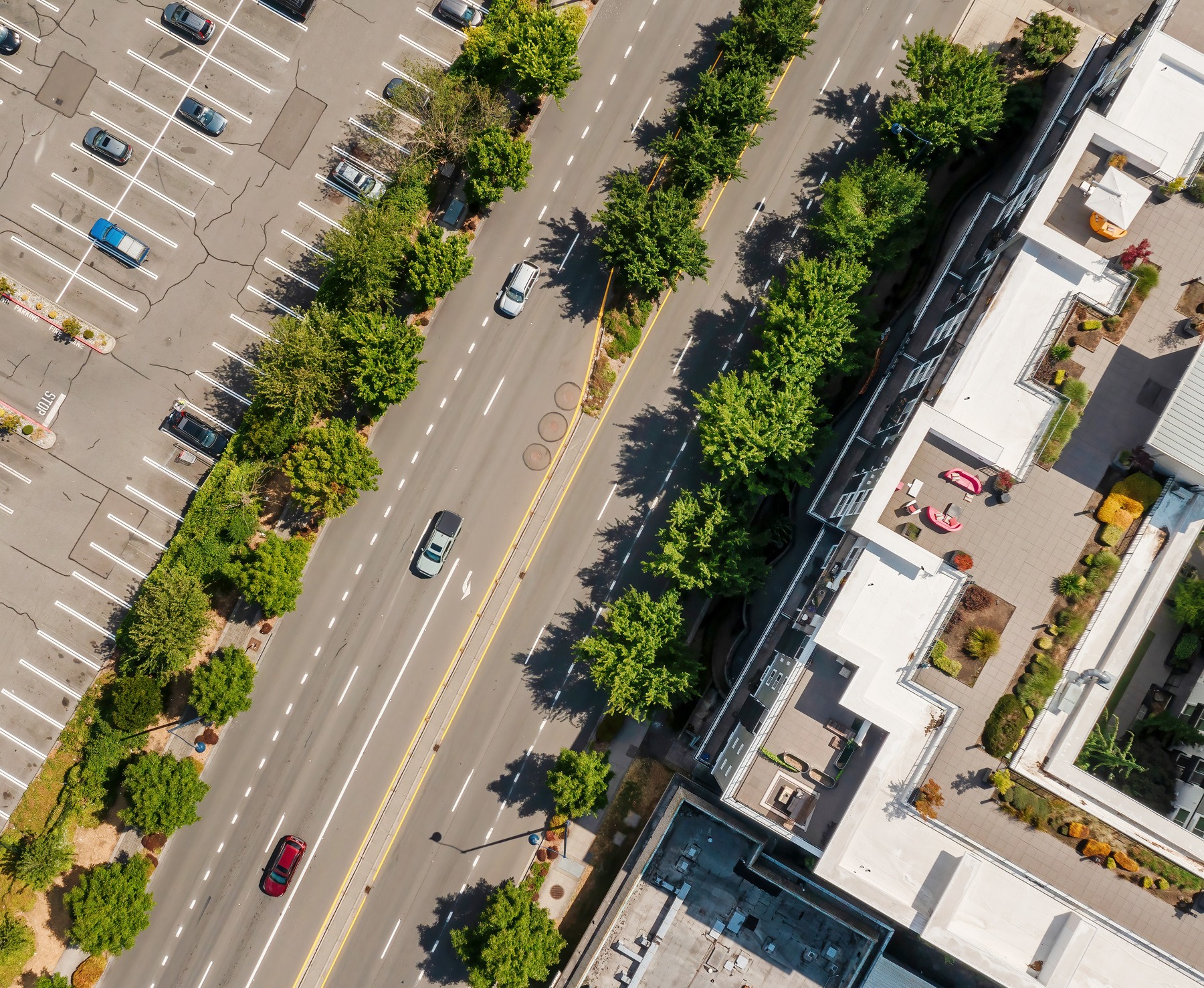
More than a decade ago, the City of Shoreline set out to transform Aurora Avenue into a safer, greener, and more functional corridor. As part of a multi-phase streetscape improvement project between 2010–2015, the city looked beyond traditional gray infrastructure and asked how the right-of-way could do more — not only moving people and vehicles efficiently but also managing stormwater and supporting a healthier urban forest. Silva Cells were installed beneath paved areas along the corridor to provide large volumes of high-quality soil for street trees while also functioning as a subsurface bioretention system. By pairing Silva Cells with porous pavement and curb cuts, runoff from the hardscape could enter the soil, where it would be slowed, filtered, and treated before returning to the watershed. The result was a streetscape where trees and stormwater infrastructure were designed as a single, integrated system — an early success story that helped prove what we now take as a given: that tree planting soil can act as a powerful bioretention device.
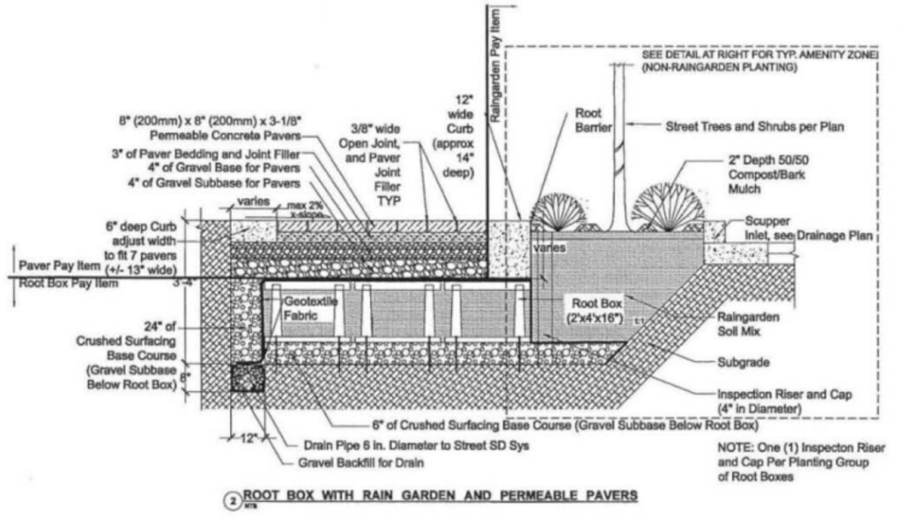
From the outset, the City of Shoreline aimed to increase on-site stormwater treatment capacity without dedicating large areas of valuable right-of-way to surface facilities alone. Traditional raingardens were part of the solution, but they weren’t enough to meet the city’s broader goals for water quality and runoff reduction. Silva Cells allowed the design team to extend treatment capacity below ground, effectively turning the soil beneath the sidewalk into working green infrastructure.
Runoff enters the system through curb cuts and permeable surfaces, where it is distributed into the soil volumes housed within the Silva Cell frames. There, natural processes do the work: pollutants are filtered, and water is absorbed by both soil and tree roots. This approach expanded the functional footprint of stormwater treatment without expanding the surface footprint — a major advantage in a constrained urban corridor. What was once simply sidewalk space became part of the city’s water management strategy.
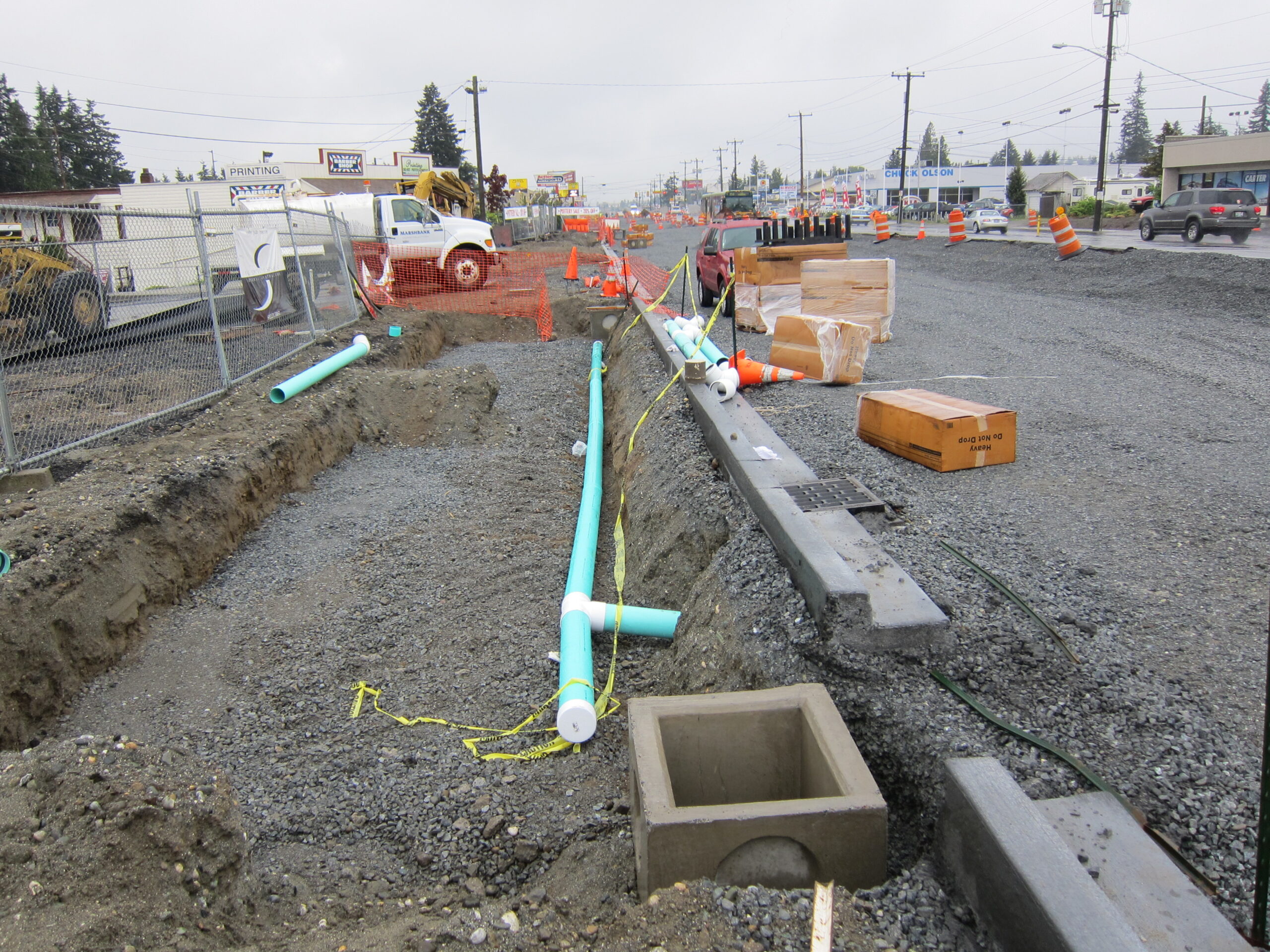
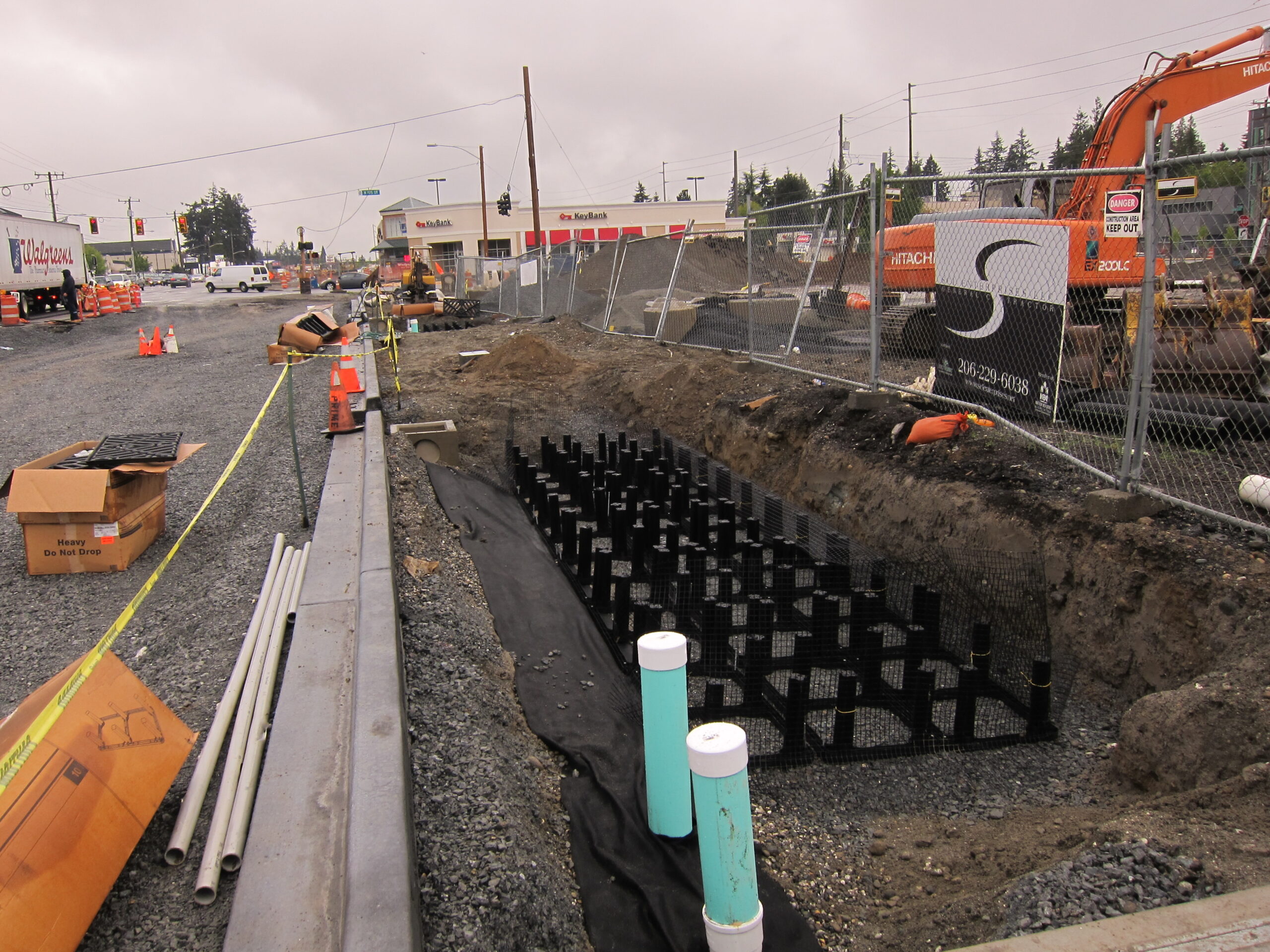
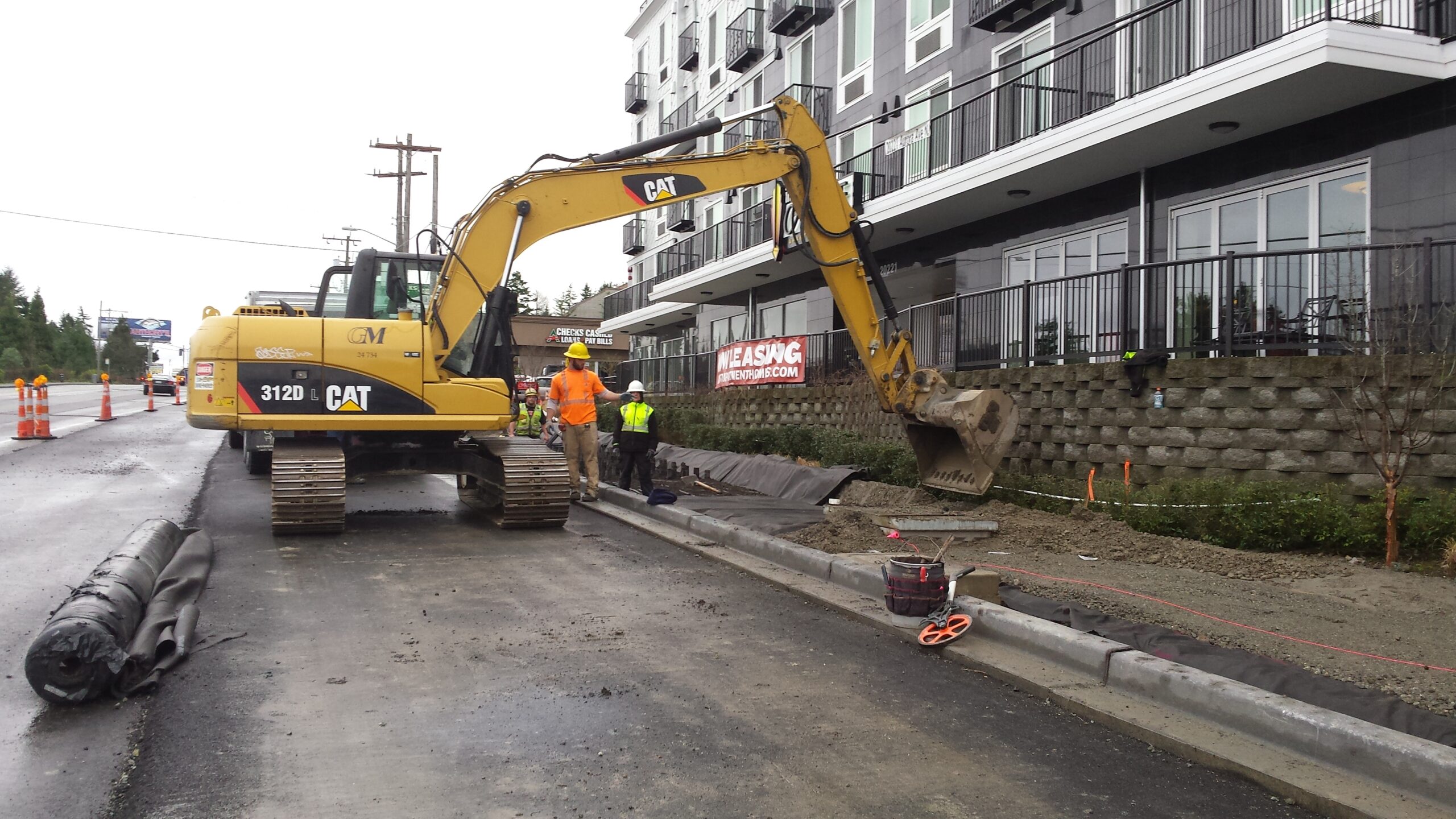
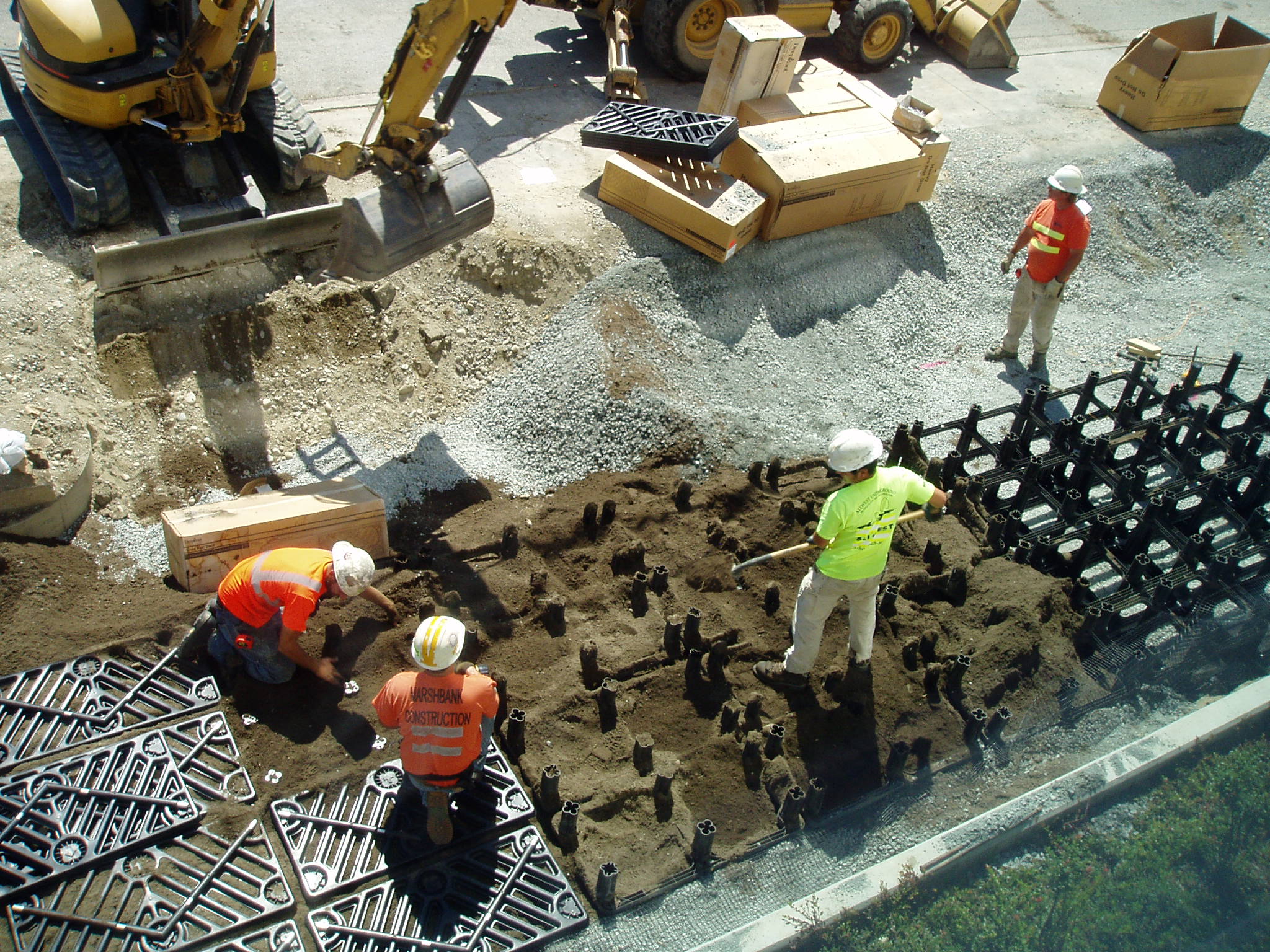
Today, the role of green infrastructure in stormwater management is well established. Designers and municipalities widely recognize that healthy soil and vegetation are powerful tools for improving water quality and reducing runoff. But when the Aurora Avenue project was conceived, these ideas were far less mainstream.
Implementing Silva Cells as part of a stormwater strategy required forward-thinking leadership and a willingness to try new approaches. The City of Shoreline and its design partners embraced the idea that planting soil could function as infrastructure, not just landscaping. Their early adoption helped demonstrate that distributed, soil-based systems could reliably contribute to stormwater goals while delivering multiple co-benefits. In many ways, this project helped foreshadow the integrated GI strategies that are now common practice.
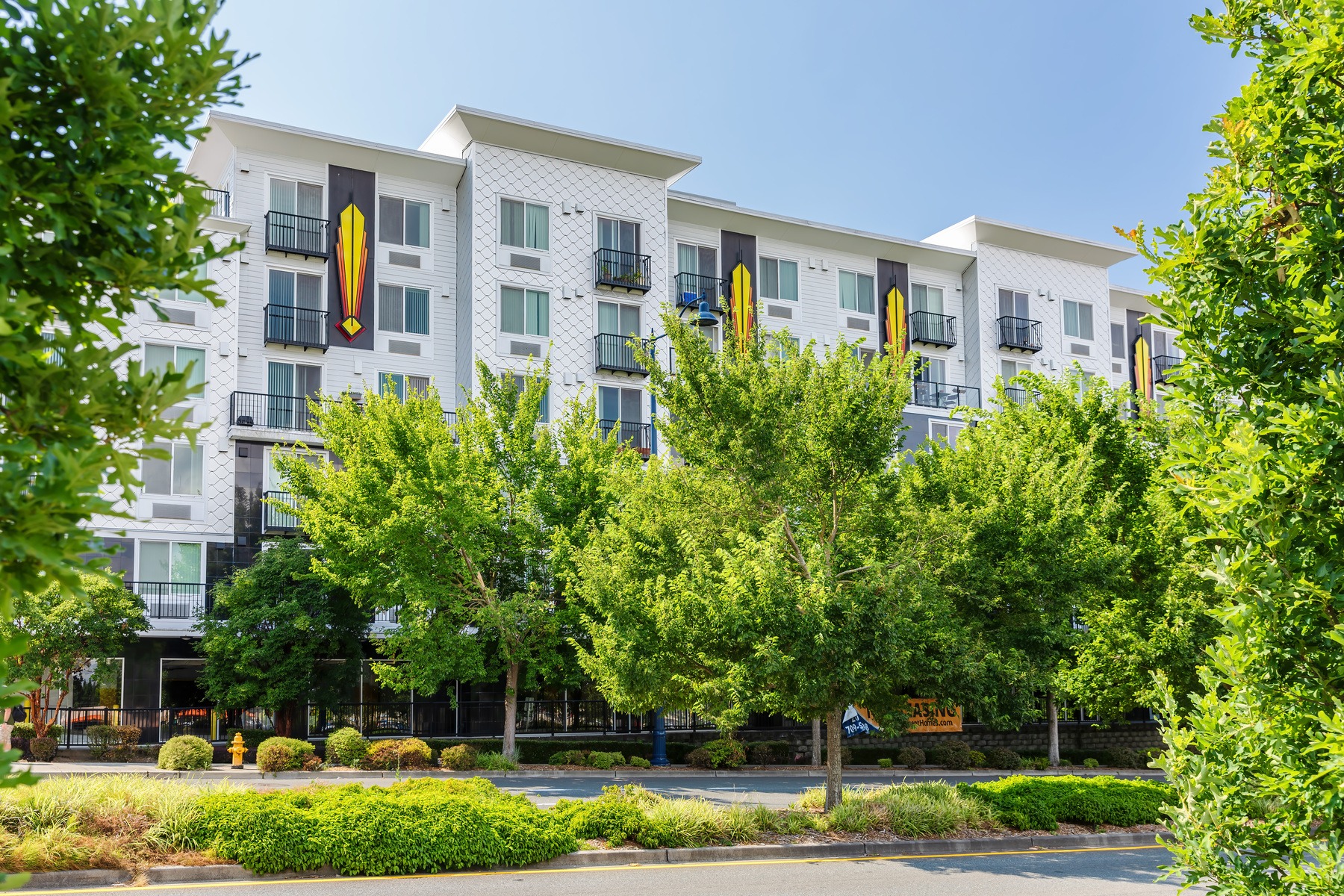
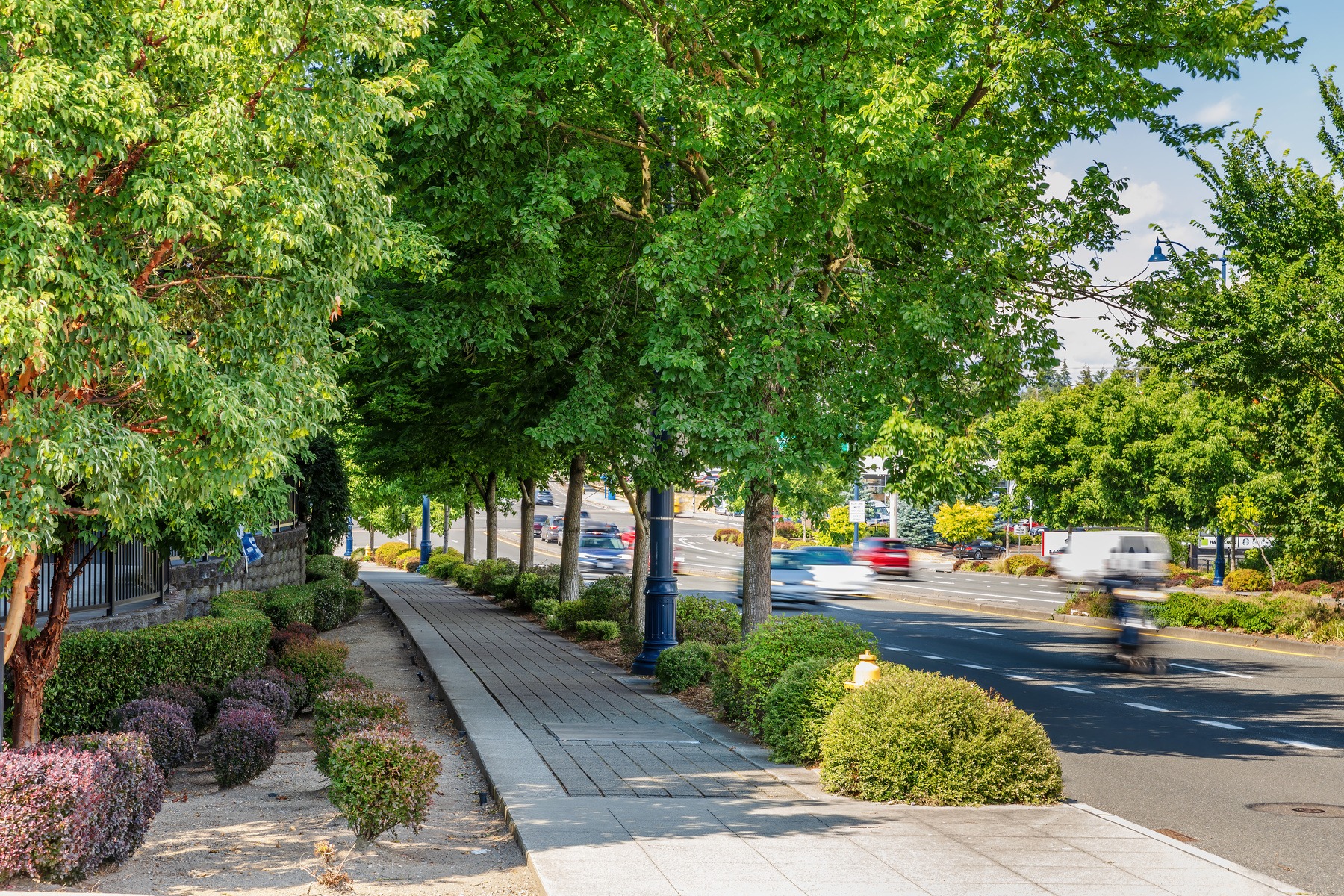
Fifteen years later, the most visible measure of success is overhead. The trees planted in Silva Cells along Aurora Avenue have matured into large, healthy street trees — a clear sign that they were given the soil volume and quality they needed from day one. Uncompacted soil allows roots to expand naturally, while periodic stormwater inflows provide consistent irrigation.
These conditions support vigorous growth, fuller canopies, and longer lifespans compared to typical street tree plantings. What began as small saplings are now significant contributors to shade, urban cooling, and neighborhood character. The trees are not an afterthought to the stormwater system — they are a core part of how it functions.
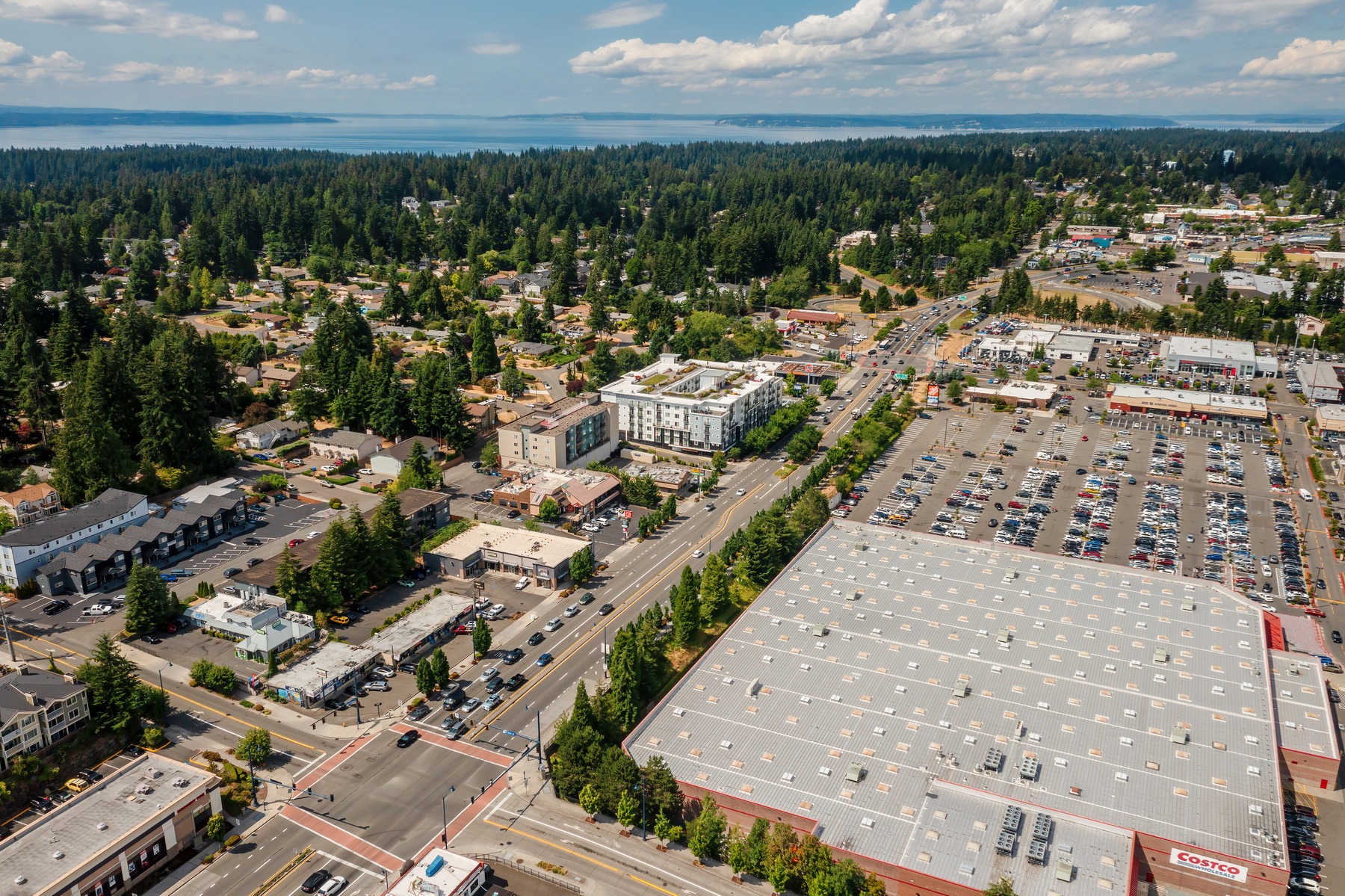
Major streetscape projects are often driven by utility upgrades, safety improvements, or roadway reconstruction. But they also present a rare opportunity to rethink how the entire corridor performs environmentally. Aurora Avenue shows how these moments can be leveraged to build systems that serve multiple purposes at once.
By integrating Silva Cells during reconstruction, the City of Shoreline was able to support tree growth, improve stormwater management, and enhance the pedestrian environment — all within the same footprint. Rather than treating trees, soil, and stormwater as separate line items, the project approached them as a connected ecosystem. For cities planning corridor upgrades today, this model remains highly relevant: when the ground is already open, it’s the ideal time to invest in infrastructure that delivers long-term environmental and community value.
 Soil. Stormwater. Sustainable Infrastructure.

Request a Quote [email protected]
Tel: 415 781 9700
Toll Free: 800 458 7668
Toll Free: 800 277 7668
Fax: 415 781 0191
